
ChatGPT for Finance Teams: The 2026 Guide
Over 2.3 million monthly searches ask how to use ChatGPT for finance. Here is what GPT-4o actually does in a modern finance function and what it cannot replace.
- Adoption is Real:Gartner's 2026 survey finds 64% of US finance teams use ChatGPT or GPT-4o for at least one regular finance workflow, up from 31% in 2024.
- Top Use Cases:Variance commentary, GL account analysis, budget narrative drafting, vendor contract summarization, and AR aging reports dominate actual CFO usage.
- Model Matters:GPT-4o processes text, images, and spreadsheet data simultaneously, making it materially more useful for finance than earlier ChatGPT models.
- Limitations Are Real:ChatGPT does not have live ERP access, cannot process confidential financial data without controls, and will hallucinate on highly specific numerical claims.
- Prompt Quality Drives Output Quality:Finance teams that use structured, role-specific prompts get output that is 3–5× more useful than generic queries (Source: AICPA, 2026).
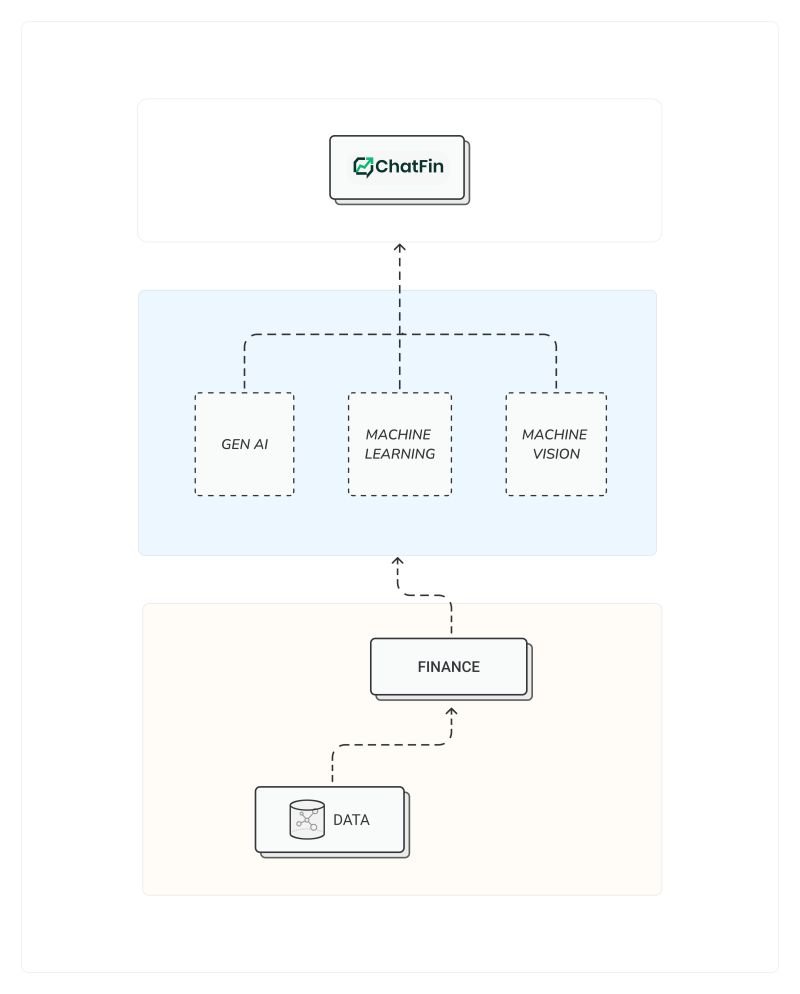
- Integration Gap:For workflows requiring ERP connectivity, audit trails, and output validation, purpose-built finance AI platforms like ChatFin extend what ChatGPT alone cannot do.
No other AI topic generates more search volume in the finance world than "ChatGPT for finance teams." Over 2.3 million monthly searches globally, according to OpenAI's 2026 usage data, reflect a profession that has moved from curiosity to active deployment, but still lacks a clear, practical framework for which workflows ChatGPT actually improves and which it disrupts or risks.
This guide fills that gap. We cover the specific finance workflows where ChatGPT (GPT-4o) delivers measurable value, the prompt structures that produce reliable outputs, the limitations that every CFO and controller needs to understand, and how ChatGPT fits into a broader finance AI architecture when combined with ERP-connected tools.
The AICPA's Q1 2026 guidance on generative AI in accounting practice notes that "the value of AI tools in finance is directly proportional to the quality of task structuring, prompt design, and human review processes applied around them." This guide operationalizes that principle.
What GPT-4o Actually Brings to Finance Teams in 2026
GPT-4o, OpenAI's flagship model as of 2026, is a multimodal model that processes text, images, structured data tables, and documents in a single context window of up to 128,000 tokens.
For finance teams, this means you can paste a P&L table, a budget-to-actual variance schedule, or an AR aging report directly into the chat interface and receive analysis, commentary, and recommendations in seconds.
According to the Journal of Accountancy's 2026 survey of US CPAs, the five most-used ChatGPT applications in accounting and finance are:
"64% of US finance teams now use ChatGPT for at least one regular workflow, but fewer than 20% have a formal governance policy for AI-generated financial content.", Gartner Finance AI Adoption Survey, 2026
The 6 Finance Workflows Where ChatGPT Delivers the Most Value
Prompting ChatGPT for Finance: What Actually Works
The quality gap between a generic ChatGPT prompt and a finance-specific structured prompt is enormous. CFO Magazine's 2026 analysis of prompt effectiveness found that prompts including role context, data structure, output format specification, and tone guidance produce outputs rated "useful without significant revision" 71% of the time, versus 23% for generic queries.
| Finance Task | Weak Prompt | Strong Prompt Structure |
|---|---|---|
| Variance Commentary | "Explain this variance" | "You are a CFO writing board commentary. The revenue variance of -$2.1M vs. budget is due to [reasons]. Write 3 sentences explaining this for a non-finance board audience. Tone: direct, factual." |
| Vendor Contract Review | "Summarize this contract" | "Extract: payment terms, auto-renewal clause, termination notice period, liability cap, and any finance-material obligations. Format as a bulleted table." |
| Close Commentary | "What happened this month?" | "You are a controller writing the monthly close memo. Key facts: [list]. Write the executive summary section. 150 words max. Lead with the bottom line." |
| Technical Accounting | "What is ASC 842?" | "Under ASC 842, our lease has these terms: [details]. Draft the journal entry for initial recognition and explain the classification rationale. Flag any areas I should verify with our auditors." |
The Limitations CFOs Must Understand Before Deploying ChatGPT
OpenAI's GPT-4o system card and enterprise documentation are candid about the limitations that matter most to finance teams. Understanding these prevents costly errors and audit complications.
No live ERP or financial system access. ChatGPT does not connect to NetSuite, SAP, Dynamics, or any financial data system without custom API integration. Every analysis requires manually pasting or uploading data, which means manual reconciliation of what data was used.
Hallucination risk on specific numbers. GPT-4o will sometimes generate plausible-sounding financial figures that are incorrect, especially when performing complex multi-step calculations or referencing historical data outside its training.
The AICPA's 2026 guidance requires human verification of all numerical outputs before use in financial statements, disclosures, or client deliverables.
Context window constraints for large filings. A 200-page 10-K or a multi-entity trial balance may exceed what GPT-4o can process effectively in one session. Finance teams working with large documents need chunking strategies, breaking documents into sections and synthesizing responses.
Confidentiality and data governance. By default, ChatGPT (consumer tier) uses conversation data for model training. Finance teams handling client data, MNPI, or sensitive internal financials must use ChatGPT Enterprise or OpenAI API with data isolation controls. The AICPA's guidance on generative AI in accounting practice specifically addresses this risk.
ChatGPT vs. Purpose-Built Finance AI: Where the Line Is
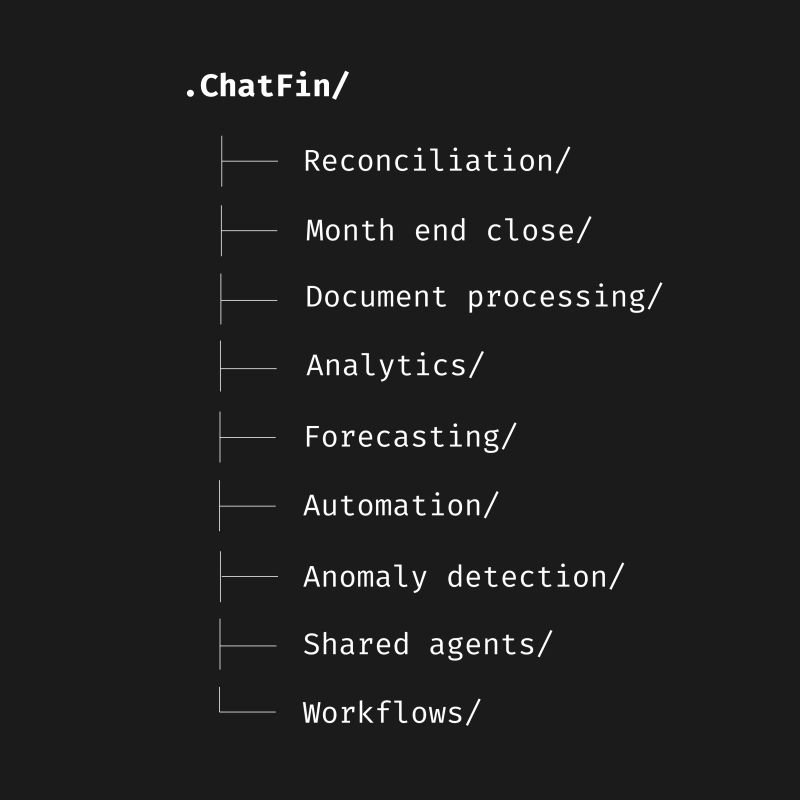
ChatGPT is a powerful text and reasoning tool. It is not a finance workflow system. For tasks that require ERP connectivity, structured audit trails, real-time transaction data, automated reconciliation, and output validation controls, purpose-built finance AI platforms extend what ChatGPT alone cannot do.
For example, ChatFin's AI agents connect directly to NetSuite, SAP B1, and Dynamics 365 to automate reconciliation, invoice matching, and close workflows, tasks that require live data access, not just language generation.
Finance teams with complex ERP environments or high transaction volumes typically use both: ChatGPT for drafting, analysis, and research, and a connected finance AI platform for automated workflows.
The question of when to use ChatGPT versus specialized finance AI depends primarily on whether the task requires real-time data, workflow automation, or audit trail documentation, none of which ChatGPT provides natively.
How to Build a Governance Framework for ChatGPT in Finance
Gartner's 2026 survey found that fewer than 20% of finance teams using ChatGPT have a formal AI governance policy, despite 64% using it regularly. This gap creates material risk for public companies subject to SEC and PCAOB scrutiny, and for any finance team where AI-generated content flows into financial statements or disclosures.
A practical ChatGPT governance framework for finance teams should address five elements:
What the Best Finance Teams Are Building With ChatGPT in 2026
The most sophisticated finance teams in 2026 are not just using ChatGPT ad hoc, they are building structured workflows that integrate ChatGPT outputs into larger finance processes. CFO Dive's 2026 analysis of enterprise ChatGPT deployments in finance identified three workflow archetypes that are generating the most measurable value.
The commentary factory model uses a structured prompt template library where FP&A analysts run budget-to-actual data through standardized GPT-4o prompts to generate first-draft commentary for every business unit simultaneously, then spend time on review and management judgment rather than writing from scratch.
Finance teams using this model report 60–70% reduction in time spent on monthly reporting packages.
The contract intelligence model processes all new vendor contracts through GPT-4o to extract standardized financial terms into a master vendor database, payment terms, termination clauses, renewal dates, liability caps, creating a searchable financial obligations register that previously didn't exist.
The research acceleration model uses ChatGPT to generate first-pass technical accounting research memos for complex transactions, new revenue streams, lease modifications, debt restructurings, that are then reviewed and finalized by the controller or Big 4 advisor.
This cuts technical memo preparation time by 40–60% without sacrificing professional judgment in the final output.
For teams ready to go beyond text-based workflows and connect AI to live ERP data, AI-powered close automation platforms represent the natural extension of ChatGPT-based analysis into full workflow automation.
ChatGPT is the most accessible AI entry point for finance teams in 2026, and for text-based analysis, commentary drafting, contract review, and accounting research, it delivers real, measurable time savings with relatively low implementation friction.
The ceiling of value is determined by three factors: the quality of prompts your team uses, the governance framework you build around AI-generated outputs, and whether you integrate ChatGPT with ERP-connected tools for workflows that require live data and automated execution.
Finance teams that treat ChatGPT as a drafting and analysis accelerator, not a source of financial truth, consistently report better outcomes than those who use it without structured governance.
Frequently Asked Questions
Can ChatGPT connect to our ERP system for financial analysis?
Is it safe to put financial data into ChatGPT?
What are the biggest risks of using ChatGPT for financial reporting?
The Bottom Line: ChatGPT Is a Starting Point, Not the Finish Line
ChatGPT for finance teams in 2026 is real, practical, and measurably valuable, particularly for commentary drafting, contract analysis, and accounting research acceleration. The finance teams extracting the most value are those who have invested in structured prompting, governance frameworks, and deliberate integration of ChatGPT into their existing workflows.
The teams leaving value on the table are those using ChatGPT ad hoc, without prompt libraries, without review policies, and without connecting AI-generated analysis to live ERP data. For workflows that go beyond text, reconciliation, invoice matching, close automation, and real-time financial monitoring, purpose-built finance AI platforms with ERP connectivity deliver capabilities that ChatGPT alone cannot replicate.
The most effective 2026 finance AI strategy combines both: ChatGPT for analysis and drafting, and a connected platform like ChatFin for workflow automation and ERP-integrated intelligence.
Your AI Journey Starts Here
Transform your finance operations with intelligent AI agents. Book a personalized demo and discover how ChatFin can automate your workflows.
Book Your Demo
Fill out the form and we'll be in touch within 24 hours