
The Big 4 AI Takeover: EY's 150 Agents, KPMG's $2B Bet, and Deloitte's Zora — What It Means for Your Finance Team
EY has 150 AI agents serving 80,000 tax professionals. KPMG committed $2 billion over five years. Deloitte's Zora automates invoices. PwC's GL.ai handles journal entries. Here is what the Big 4 AI race signals for mid-market finance teams in 2026.
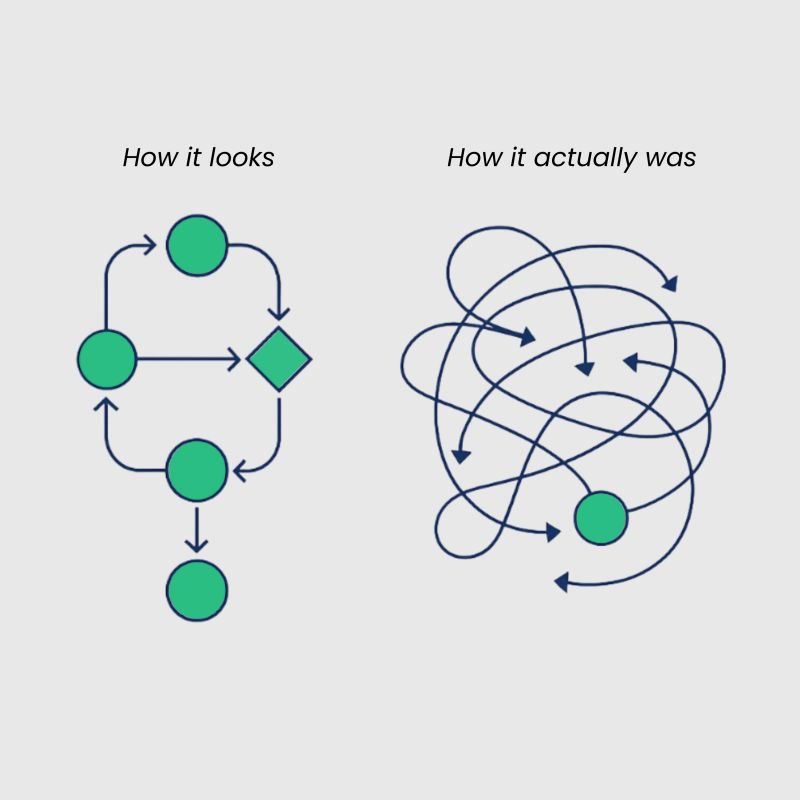
- EY: 150 AI agents deployed to 80,000 tax professionals, handling 3 million+ compliance cases. Sources: Bloomberg Tax, Crowley Media Group, 2026.
- KPMG: $2 billion committed over five years targeting $12 billion in added AI-enabled revenue. Full coverage across audit, tax, and advisory workflows.
- Deloitte: "Zora AI" automates invoice processing and trend analysis (built with Nvidia). "CFO Signals" survey confirms 54% of CFOs name agentic AI as their top 2026 priority.
- PwC: GL.ai handles journal entries and GL review. AI agents now cover tax research, compliance review, and financial statement analysis.
- Big Signal: Big 4 graduate openings fell 44% year-over-year. This is the market confirming that AI is replacing junior-level accounting work, not augmenting it.
- Mid-Market Implication: The AI capabilities Big 4 firms deploy internally are becoming available to mid-market companies through platforms like ChatFin. The gap between Big 4 AI capability and mid-market AI capability is closing rapidly in 2026.
The Big 4 accounting firms have spent more on AI infrastructure in 2025 and 2026 than most mid-market companies spend on their entire technology stack. EY, KPMG, Deloitte, and PwC are not testing AI. They have committed capital, built production systems, and are operating AI agents across their core service lines at scale.
The immediate question for corporate finance teams is not academic. If your external auditors, tax advisors, and CFO consultants are running AI agents against your financial data, the quality and structure of your data, your internal controls documentation, and your closing packages matters in new ways. The Big 4 AI rollout is an external pressure on internal finance operations, not just a supplier-side technology story.
The second question is competitive. The same AI capabilities EY, Deloitte, KPMG, and PwC have built internally are increasingly available as standalone platforms for mid-market finance teams. Understanding what the Big 4 have built is a map to what mid-market finance teams should be building. This article covers what each firm has deployed, what it does technically, and what the three most important implications are for corporate finance teams in 2026.
What AI Agents Has Each Big 4 Firm Actually Deployed?
| Firm | AI System | Scale | Primary Use Cases |
|---|---|---|---|
| EY | EY.ai — 150 AI agents | 80,000 tax professionals, 3M+ cases | Tax research, compliance analysis, return preparation, document review |
| KPMG | KPMG AI — $2B investment | Full firm deployment across audit, tax, advisory | Audit evidence analysis, risk assessment, tax compliance, advisory insights |
| Deloitte | Zora AI (with Nvidia) | Invoice processing and trend analysis at scale | Invoice automation, financial trend detection, document processing |
| PwC | GL.ai + AI tax agents | Audit and client finance operations globally | Journal entry review, GL analysis, tax research, compliance document prep |
"Big 4 graduate openings fell 44% year-over-year in 2024. EY cut cohorts by 30%. This is not a hiring cycle blip. It is the market confirming that AI is replacing the work." — Going Concern, citing ex-PwC Partner analysis, 2026
What Does EY's 150-Agent Deployment Actually Do for 80,000 Tax Professionals?
EY's AI deployment is the most aggressive in scale among the Big 4. The 150 agents are specialized: each handles a defined category of tax work with a specific set of tools, data sources, and output formats. They are not general-purpose assistants. They are purpose-built agents with narrow, highly reliable task definitions.
What Does the Big 4 AI Race Mean for Corporate Finance Teams?
Implication 1: Your auditors are running AI against your data. Your data needs to be AI-readable. EY, KPMG, Deloitte, and PwC audit agents work best on structured, well-organized financial data. Finance teams that still produce PDF-heavy reporting packages, maintain inconsistent GL coding across periods, or have fragmented audit evidence in scattered spreadsheets will create friction in AI-assisted audit workflows. The move to structured, consistent data is no longer optional for companies with Big 4 auditors.
Implication 2: Junior-level accounting work is being repriced. Plan your team accordingly. A 44% drop in Big 4 graduate openings is not driven by economics. It is driven by AI absorbing the work. The same repricing is coming to corporate finance teams. Junior accountants who perform only reconciliation, data entry, and report formatting are in a role category that AI is systematically replacing. Mid-market CFOs who invest in in-house AI now reduce their exposure to this talent market shift.
Implication 3: Big 4 AI capabilities are now available as platforms for mid-market companies. EY built 150 agents because no vendor offered the same capability at scale for professional services. The underlying technology, document AI, ERP integration, structured data analysis, and reasoning-based automation, is available through platforms built for corporate finance. ChatFin gives mid-market finance teams the same agentic capability that Big 4 firms have built internally, without the capital investment EY or KPMG made.
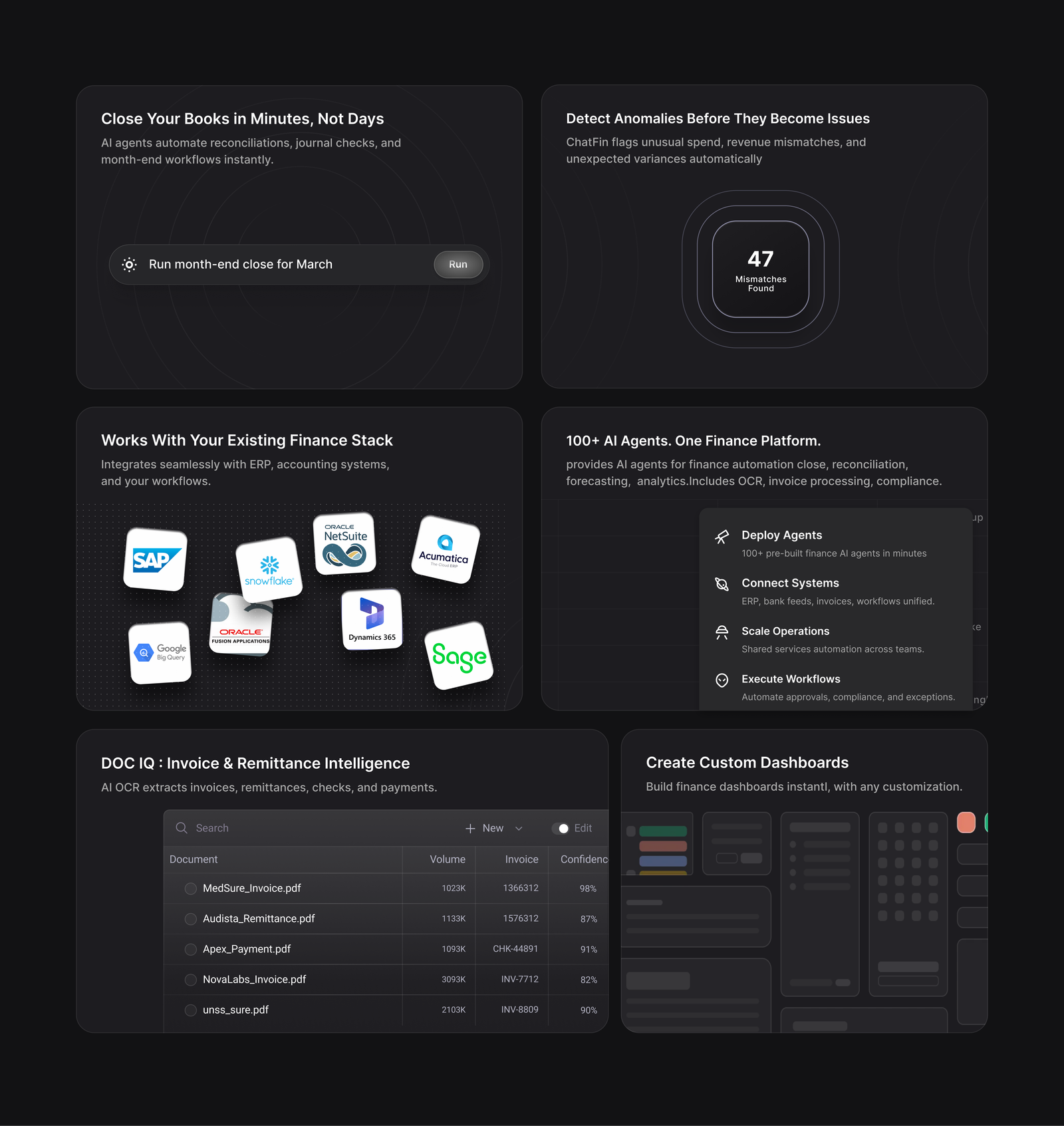
How Do Big 4 AI Capabilities Compare to What Mid-Market Finance Teams Can Deploy in 2026?
Frequently Asked Questions
What AI agents has EY deployed in 2026?
How much is KPMG investing in AI?
What is Deloitte's Zora AI?
What is PwC's GL.ai?
What does Big 4 AI adoption mean for mid-market finance teams?
The Big 4 Built AI Because the Technology Reached Capability Threshold. Now It Is Available to Everyone.
EY did not build 150 AI agents because it had unique access to technology. It built them because the technology reached the capability threshold where investment made economic sense. That threshold was crossed for professional services firms in 2024 and 2025. It was crossed for mid-market finance platforms at approximately the same time.
The Big 4 AI race is not a distant benchmark. It is a direct map to the AI capabilities that are now available through platforms designed for mid-market finance operations. The invoice automation that Deloitte's Zora provides internally is available through ChatFin. The GL review that PwC's GL.ai handles is available through ChatFin's AI Reconciliation agent. The financial analysis that EY's research agents produce is available through ChatFin's Analytics Agent.
The question for mid-market CFOs is not whether to match Big 4 AI capability. It is how quickly to close the gap before your competitors do.