
FP&A AI Agents: Real-Time Forecasting & Budget Analytics
Build intelligent planning systems that forecast revenue and optimize budgets in real-time
Financial planning has traditionally been a static, quarterly or annual exercise. Budget forecasts are built bottom-up using spreadsheets, then forgotten until the next period. AI is transforming FP&A into a continuous process.
Modern FP&A agents continuously monitor actual performance against forecast, update projections based on new data, and alert leadership to material variances in real-time. They handle scenario modeling and sensitivity analysis automatically, turning what used to take days into milliseconds.
Real-Time Forecasting Engines
Continuous Forecast Models
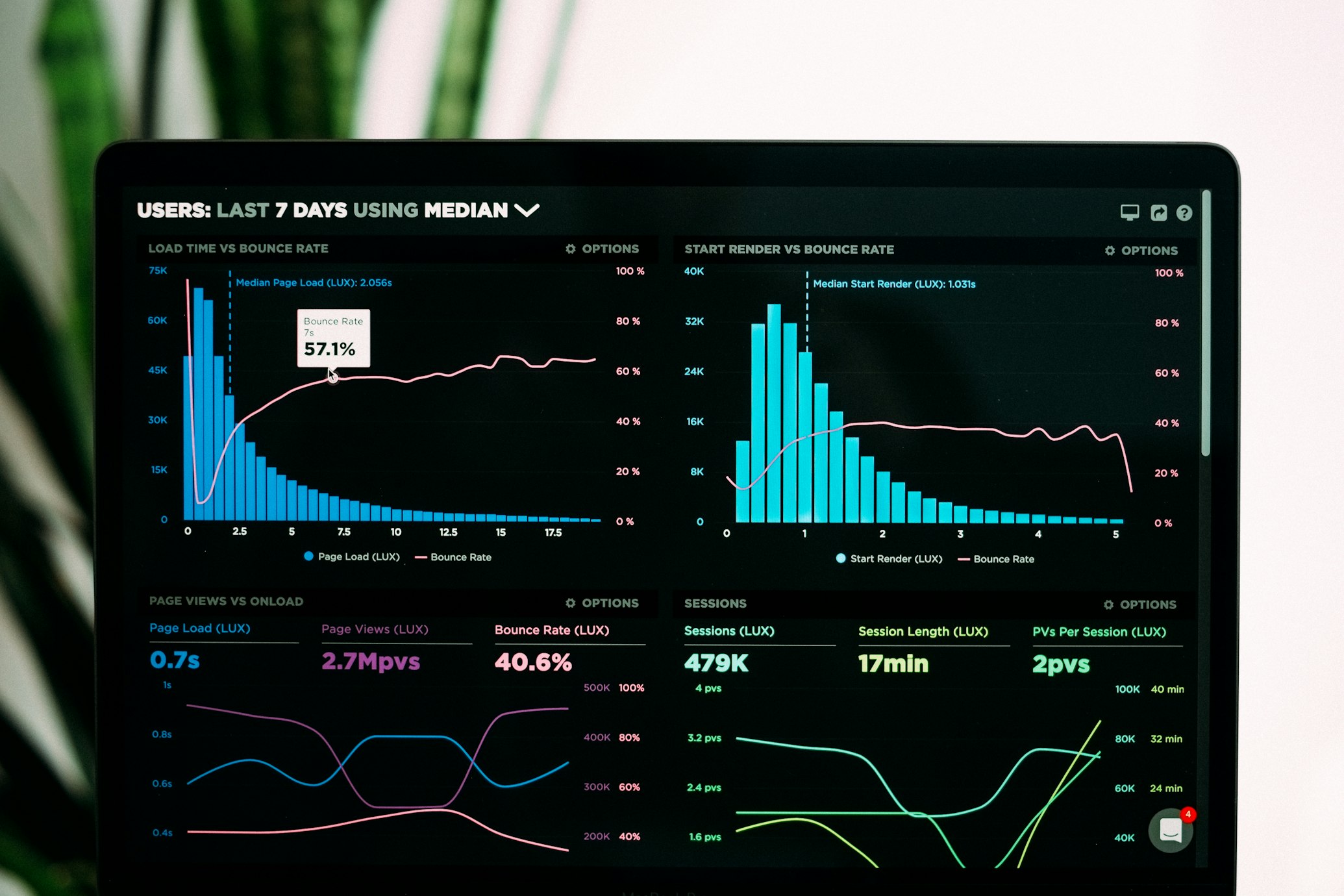
Instead of static forecasts, AI agents build adaptive models that update as new data arrives. Revenue models incorporate pipeline data, close rates, and sales velocity. Expense models incorporate headcount plans, utilization rates, and growth trends. Traditional annual forecasts become obsolete by Q2. Continuous forecasting maintains accuracy throughout the year, enabling better planning and faster response to changes.
The key insight: forecasting is most uncertain far into the future (next year) and most accurate near-term (next month). Continuous models continuously update near-term forecasts with actual data, maintaining accuracy. As time passes, today's "next month" forecast gets validated or corrected. The model learns and adapts.
- Time series forecasting with ARIMA and Prophet models—analyzing historical patterns to project forward
- Causal models linking business drivers to financials—revenue forecast based on pipeline, not just historical average
- Ensemble methods combining multiple forecasting approaches—using 5 models, weighting by historical accuracy
- Uncertainty quantification with confidence intervals—"revenue will be $5M ±$200K with 95% confidence" vs "revenue will be $5M"
- Automatic retraining as new actuals arrive—monthly actual closes, model retrains immediately vs quarterly retraining
- Rolling forecast windows—continuously forecasting rolling 13-month window vs fixed annual forecast
Real-World Forecasting Scenarios
Continuous forecasting delivers significant value across business scenarios:
- Mid-quarter forecast updates: SaaS company builds annual plan in January forecasting $50M revenue. By March (2/12 through year), actual results show faster sales velocity than expected. Model reforecasts: $55M likely. Finance can build H2 plan based on improved view vs Jan's estimate. By June, forecast updated again to $60M.
- Headcount-driven expense forecasting: Technology company plans to hire 50 engineers in 2026. Each engineer adds salary, benefits, equipment, overhead. Headcount forecast agent links hiring plan to expense forecast. When actual hiring pace lags plan (only 15 engineers by June vs planned 25), expense forecast automatically decreases, improving projected year-end profitability.
- Customer churn sensitivity: Subscription business forecasts revenue based on customer acquisition, retention, and expansion. Model shows revenue highly sensitive to churn rate: 1% increase in churn = $500K revenue impact. Finance alerts product team to churn sensitivity. Product team prioritizes retention features. Result: churn stays at 2.5% vs trending to 3.5%, preserving $500K revenue.
- Scenario planning with forecasts: Manufacturing company considering major capital expenditure ($50M investment in new facility). CFO needs to understand impact on profitability and cash flow. FP&A agent models scenario: with investment, revenue grows faster (new capacity enables growth), but near-term cash is constrained. Without investment, steady state continues. Agent shows: investment scenario reaches profitability breakeven in year 3, non-investment scenario has lower peak profitability.
- Variance-driven re-forecasting: Publishing company budgeted 8% YoY print ad growth. Actual first quarter shows -5% decline (digital shift accelerating). Model immediately reforecasts: -10% annual print ad decline likely. Finance alerts business unit: print is in structural decline, need revenue growth from digital. Business unit redirects resources. Early insight prevents year-end surprise.
Driver-Based Planning
Effective forecasting connects financial numbers to business drivers. Revenue forecast should link to sales pipeline. Hiring forecast should link to headcount plans. Expense forecast should link to projects and initiatives. AI agents maintain these connections automatically. Rather than changing a revenue forecast number directly, a business user changes the underlying driver (hiring plan, pipeline, deal size assumption) and the forecast automatically updates.
- Pipeline-to-revenue modeling—linking pipeline value, close probability, and sales cycle to revenue forecast
- Headcount-to-expense relationships—headcount plan drives salary, benefits, recruiting, equipment forecasts
- Customer acquisition cost tracking—tracking CAC and payback period automatically in forecasts
- Churn and retention impact modeling—linking customer retention rate to revenue forecasts
- Project-based cost forecasting—linking project plans and timelines to resource and expense forecasts
- Macroeconomic sensitivity—linking forecasts to macro variables (GDP growth, interest rates, currency rates)
Variance Analysis and Anomaly Detection
Intelligent Variance Explanation
When actual results deviate from forecast, AI agents investigate automatically. They break down variance by driver, calculate impacts, and surface root causes. A revenue shortfall might be due to lower deal volume, smaller deal size, or extended sales cycles, each with different implications and different corrective actions. Traditional analysis requires finance team to manually decompose variance, often days after close.
Intelligent variance analysis is immediate and comprehensive. Within hours of month close, system presents detailed variance breakdown. Which drivers caused the variance? How material is each? What's the forward impact? Is this a one-time issue or trend?
- Automatic variance decomposition and attribution—breaking revenue variance into: volume (fewer deals sold), price (lower ASP), mix (more low-margin products)
- Root cause analysis and correlation detection—identifying that deal volume is down in specific region, correlating with competitor activity
- Variance trending and pattern recognition—is this variance repeating (seasonal pattern) or anomalous? Are variances getting better or worse?
- Forward-looking impact analysis—if this variance continues, what's the full-year impact? If we take corrective action, when does impact show up?
- Exception alerting for material variances—variance <5% doesn't trigger alert, 5-10% gets notification,>10% gets escalation
- Variance quality metrics—tracking forecast accuracy over time, identifying which forecasts are reliable vs unreliable
Real-World Variance Analysis Scenarios
Intelligent variance analysis drives faster decision-making:
- Quarterly revenue variance decomposition: B2B SaaS company forecasted $25M quarterly revenue. Actual: $23M (8% variance). Agent decomposes: (1) Deal volume down 10 deals (-$1.5M), (2) Average deal size down 5% (-$1.25M), (3) New product mix better than expected (+$0.75M). Net: $2.25M variance. Finance team immediately understands: volume issue (sales underperforming) and price realization issue (discount rate too high). VP Sales addresses with sales team. VP Sales calls discount authority focus on a few large deals, not across-board discounting.
- Headcount expense variance with trend analysis: Planned 50 engineers headcount end of Q1, actual 45 (10% variance, but planned). Variance for salaries alone is $500K. Agent shows trend: Q4 hiring plan also missed by 15%. Extends forecast: at current hiring pace, will end year with 180 headcount vs planned 200. Finance calculates: full-year salary savings $2.5M vs plan. Adjusts profitability forecast upward. But also flags: if headcount shortage constrains product development, revenue growth could suffer. Trade-off analysis needed.
- Gross margin variance by product line: Forecast 60% gross margin, actual 57% (3% variance, significant). Agent breaks down: Product A performed to plan (60%), Product B underperformed (55% vs 58% planned). Investigation reveals: supply chain constraints increased COGS on Product B in February. Agent forecasts: assuming supply normalizes in March, margin recovers to plan. If supply shortage persists, annual margin impact $1.5M. Procurement team prioritizes supply chain issue resolution.
- Advertising spend variance with efficiency correlation: Marketing budgeted $10M advertising, actual $11M (10% over). BUT customer acquisition numbers exceeded plan by 15%. Agent shows: incremental spend was highly efficient (generated 50% of incremental customers at 20% incremental cost). Marketing VP present data to CFO: case for increasing ad budget because ROI is strong. Budget adjusted mid-year.
Anomaly Detection
AI agents detect unusual patterns that might indicate problems. Unusual transaction sizes, unexpected timing of expenses, or atypical revenue recognition all trigger investigation. This catches fraud, errors, and process breakdowns early. Examples: a sudden spike in a vendor payment (possible fraud), a major customer paying significantly early (possible early churn?), or unexpected journal entry (possible error). These anomalies get flagged immediately rather than discovered months later during audit.
- Transaction-level anomaly detection—flagging unusual transactions (size, timing, counterparty) for review
- Pattern-based anomaly detection—identifying when spending pattern changes (vendor usually pays $50K invoices, suddenly $200K)
- Statistical anomaly detection—flagging metrics deviating >2 standard deviations from historical norm
- Comparative anomalies—this customer usually pays in 30 days, paying today (day 10), possible cash crisis?
- Combination anomalies—single large vendor payment + single large unexpected revenue = possible related-party transaction?
- Fraud risk scoring—assigning risk scores to transactions based on anomaly characteristics, flagging high-risk for approval
Scenario Modeling and Sensitivity Analysis
What-If Analysis at Scale
Planning requires understanding impact of different scenarios. What if we hire 50 fewer engineers? What if customer churn increases? What if the economy enters recession? AI agents instantly model these scenarios and calculate impacts on profitability, cash flow, and growth trajectories. Traditional scenario modeling takes days: finance team manually builds 3-5 scenarios in spreadsheets, calculations propagate through linked cells with inevitable errors. AI agents model 100+ scenarios in seconds, avoiding spreadsheet errors.
Scenario models become decision-support tools for executives. Considering an acquisition? Model the impact. Considering a product line exit? Model the impact. Consider raising prices? Model the impact. Fast scenario analysis enables better strategic decisions.
- Rapid scenario model generation—create "recession scenario" (revenue -20%, churn +2%) in seconds vs hours
- Sensitivity analysis across variables—showing which variables most impact outcomes (revenue sensitivity > headcount sensitivity)
- Tornado chart generation for driver importance—visualizing which drivers matter most for decision-making
- Monte Carlo simulation for uncertainty—modeling outcomes across probability distributions, showing range of potential outcomes with confidence
- Scenario comparison and optimization—comparing outcomes across scenarios (plan vs conservative vs aggressive), finding optimal strategy
- Scenario version history—tracking how forecasts changed as scenarios evolved, enabling learning
Real-World Scenario Analysis Examples
Intelligent scenario modeling drives strategic decisions:
- Acquisition scenario modeling: Technology company considering $500M acquisition. FP&A agent models: Base Case (assuming smooth integration, 20% revenue synergy), Conservative (10% synergy, delayed by 6 months), Aggressive (35% synergy, achieved within 12 months). Models show: Base Case reaches breakeven year 3, Conservative year 4, Aggressive year 2. Board evaluates risk/reward and decides Conservative case is acceptable, sets expectations accordingly.
- Pricing sensitivity analysis: Subscription business considering 5% price increase. Agent models scenarios: (1) 5% price increase, churn stays same (revenue +5%), (2) 5% price increase, churn increases 0.5% (revenue +3%), (3) 5% price increase, churn increases 1% (revenue +1%). Data shows: churn sensitivity critical. If price increase causes >0.5% churn increase, not worth it. Product/success team validates: estimated churn impact 0.3%, so price increase recommended.
- Headcount optimization scenario: Technology company needs to improve profitability. CFO models scenarios: (1) Keep hiring plan, achieve plan profitability targets, (2) Slow hiring by 20%, push profitability target to year 2, reduce risk, (3) Accelerated hiring (if growth opportunities emerge), hit targets faster but higher risk. Board chooses scenario 2: lower risk given macro uncertainty.
- Economic downturn scenario planning: Retail company builds scenarios around economic conditions. Base case (continued growth), Recession scenario (sales decline 20%), Depression scenario (sales decline 40%). Models show: current headcount unsustainable in recession (costs still high, revenue down). Recession scenario shows cash position remains positive for 18 months, adequate for corrective action. Depression scenario shows cash depletion in 10 months, need immediate action. Planning team prepares contingency plans for both.
- Product mix optimization: Enterprise software company has 5 product lines with different margins and growth rates. Agent models: current portfolio mix, optimized mix (higher-margin products), aggressive mix (maximize growth). Models show: current mix balances profit and growth, optimized mix improves margin by 3% but lowers growth, aggressive mix increases headcount costs but drives faster revenue growth. CEO evaluates and chooses mix aligning with strategic priorities.
Transform FP&A
ChatFin's FP&A agents deliver real-time forecasting and continuous planning.
FP&A transformation with AI agents delivers continuous planning, real-time forecasting, and instant scenario analysis. Your FP&A team shifts from creating static forecasts to managing dynamic financial strategy.
Start with ChatFin today.