
High-Impact AI Use Cases, Without Replacing Your Sage Intacct ERP
Seven finance workflows AI runs end to end on Sage Intacct today. Intacct already ships its own AI, so this is not a replacement for Sage Copilot. It is the multi-step workflow layer that runs on top of it, through the REST API and the AI Gateway, with a controller still signing.

- Seven finance workflows where AI delivers now on Sage Intacct: capture-to-posting AP, dimensional variance, month-end close, multi-entity consolidation, collections and cash application, anomaly detection, and board reporting.
- Intacct genuinely has native AI now, including Sage Copilot, the AI Gateway, and an MCP Server. ChatFin does not compete with that. It runs on top and adds the multi-step workflow that spans several screens and an approval.
- The connection uses Intacct's own REST API, which reached general availability and is Sage's recommended direction, plus the AI Gateway where it fits. Nothing here works around the platform.
- The pattern repeats across all seven: AI carries the volume and drafts the work, a controller reviews the exceptions and approves. Every write-back lands in Intacct with its dimensions and trail intact.
Most finance teams on Sage Intacct do not need a new ERP, and in 2026 they do not need to be sold on AI either. Intacct ships Copilot, a variance assistant, a close assistant, and an AI Gateway, and they cover the in-platform questions well. What none of that does is run the long workflow: the process that starts with an email, crosses AP, the general ledger, and an approval, and ends with a posted transaction that carries the right dimensions. That gap between a helpful assistant and a completed workflow is where a layer on top earns its place.
The seven use cases below are the ones we see deliver the fastest, and they share one design choice. Each connects to the Intacct you already run through its own REST API and AI Gateway, leaves Intacct as the system of record, applies your policy, and hands the sign-off back to a person. ChatFin consumes Sage's AI surface rather than replacing it, and adds the steps that happen between the question and the posting.
AP from the inbox to a posted bill
AP is the highest volume manual process in most Intacct shops. Bills arrive by email, portal, and PDF, and someone keys them, codes the dimensions, chases the approval, and posts. Copilot can help read a document, but the end-to-end run across capture, matching, approval, and posting is still stitched together by a person.
How it runs
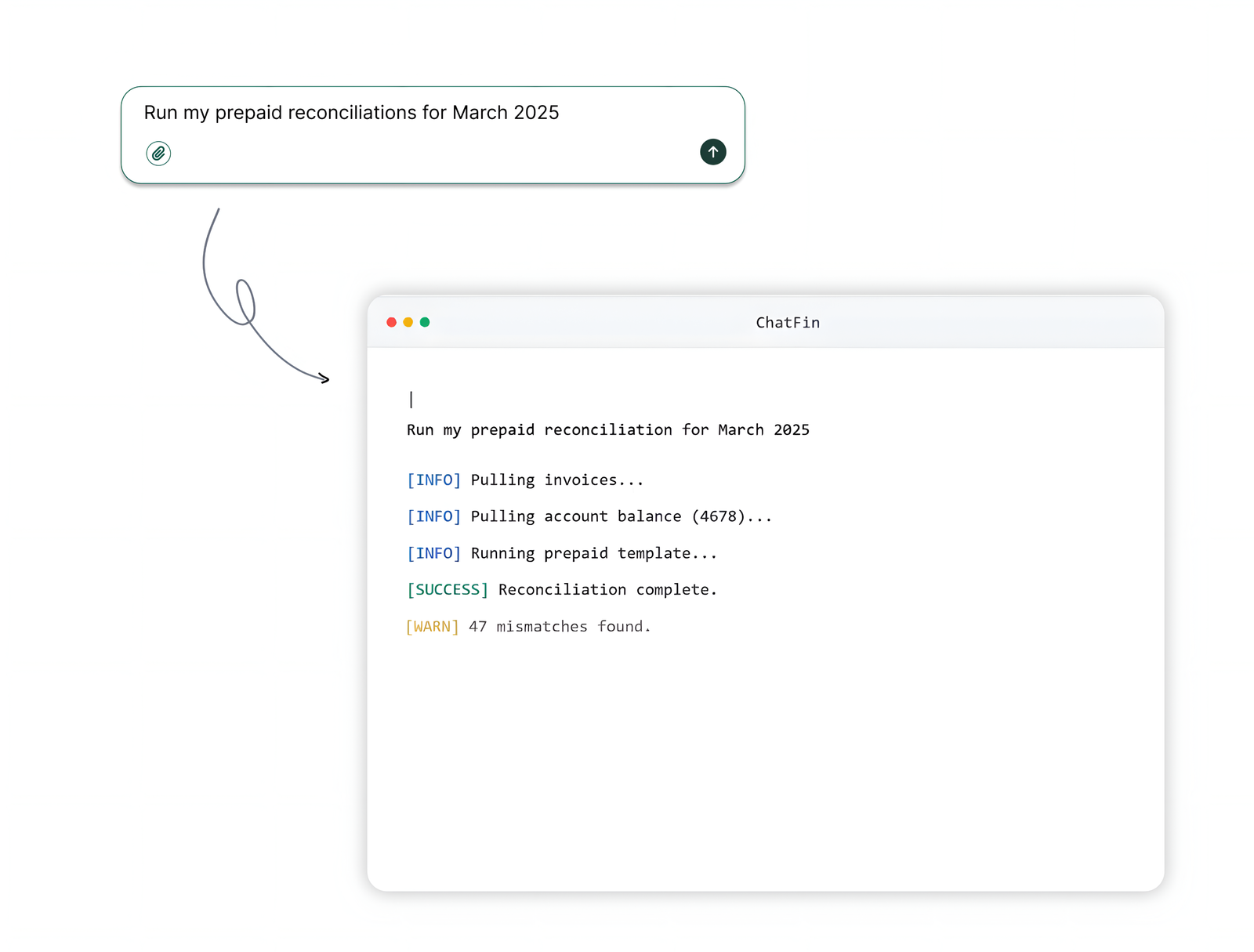
The AP inbox is watched and bills are pulled in from email, portal, or upload. Fields are extracted and validated against vendor master and open purchase orders, the three-way match runs where a PO exists, and the dimensions are assigned from transaction context rather than a default. Clean bills are drafted for approval and posted through the REST API, and only the exceptions reach a person. The dimensions land right the first time, which is what keeps the reporting clean downstream.
Leave the ledger where it is
The case for adding AI to Sage Intacct instead of replacing it rests on keeping one clean system of record. Automation sits around it rather than inside it.
I guess my bias is really to have your ERP system be kind of standalone as that system of record.
Dave Sackett, on the AgentCFO podcast
Every bill below still posts into Intacct under your existing controls. The inbox-to-ledger work is what moves.
Variance explained by dimension
Intacct's real strength is its dimensions: every transaction is tagged by location, department, project, class, customer, vendor, and more. That makes for powerful analysis and slow analysis, because slicing variance across those dimensions by hand is still a day of work.
How it runs
Actuals and budget are read across any dimension, material variances are detected, the drivers are named, and finance reviews the explanation before it goes out. A typical output reads like this: margin down in the West location, driven mainly by one project's labor cost, partially offset by volume in the enterprise class. Sage Copilot answers a variance question inside the platform; the layer on top writes the full commentary across dimensions and carries it into the board pack.
Sage Intacct already gives you an assistant. What it does not give you is the finished workflow, the run from an email to a posted, dimensioned transaction a person signed.
Ashok ManthenaA close that coordinates itself
Intacct's Close Assistant flags where the close stands, but the work between the flags still falls on the team: dependencies across people, last-minute adjustments, and manual checks that turn into rework every month.
How it runs
Ledger activity, subledger data, and operational metrics are read continuously. Checklists and dependencies are tracked in real time while the system monitors readiness, flags missing entries, and predicts where the close will stall. Accountants get guided tasks in order, journal entries are drafted for approval, and leadership gets a live view instead of a status email. The controller's role shifts from chasing to reviewing.
Multi-entity consolidation without the scramble
Multi-entity is where Intacct shines and where the close often stalls. Entities share one chart of accounts and dimension structure, inter-entity lines post automatically, and yet reconciling across entities and currencies at period-end still becomes a rush.
How it runs
Balances are reconciled across entities continuously through the period rather than in a month-end scramble. Inter-entity payables and receivables are matched, currency differences are identified, and cross-entity eliminations are checked with supporting schedules generated as the work runs. The group view is assembled from the entities you already share a structure with, so the consolidated number is ready when the last entity closes, not days after.
Collections that know where to look first
Revenue leakage and slow collections build up when billing errors, short pays, and disputes are not caught early. By the time an account looks bad in the AR aging, the easy remedies are gone.
How it runs
Invoices, contracts, and payment data are connected, and billed amounts are validated against agreed terms. Discrepancies are flagged before the invoice goes out, collections teams get prioritized and context-rich follow-ups, and incoming payments are applied to open invoices, including partials and multi-invoice remittances. The aging view becomes a priority list, with the highest-risk accounts surfaced first rather than buried in a report.
A check before the misposting spreads
With so many dimensions, a coding error is easy to make and hard to spot: a cost booked to the wrong project, a duplicate bill, a posting that lands outside its usual range. On volume, these slip through and quietly distort the dimensional reporting Intacct is prized for.
How it runs
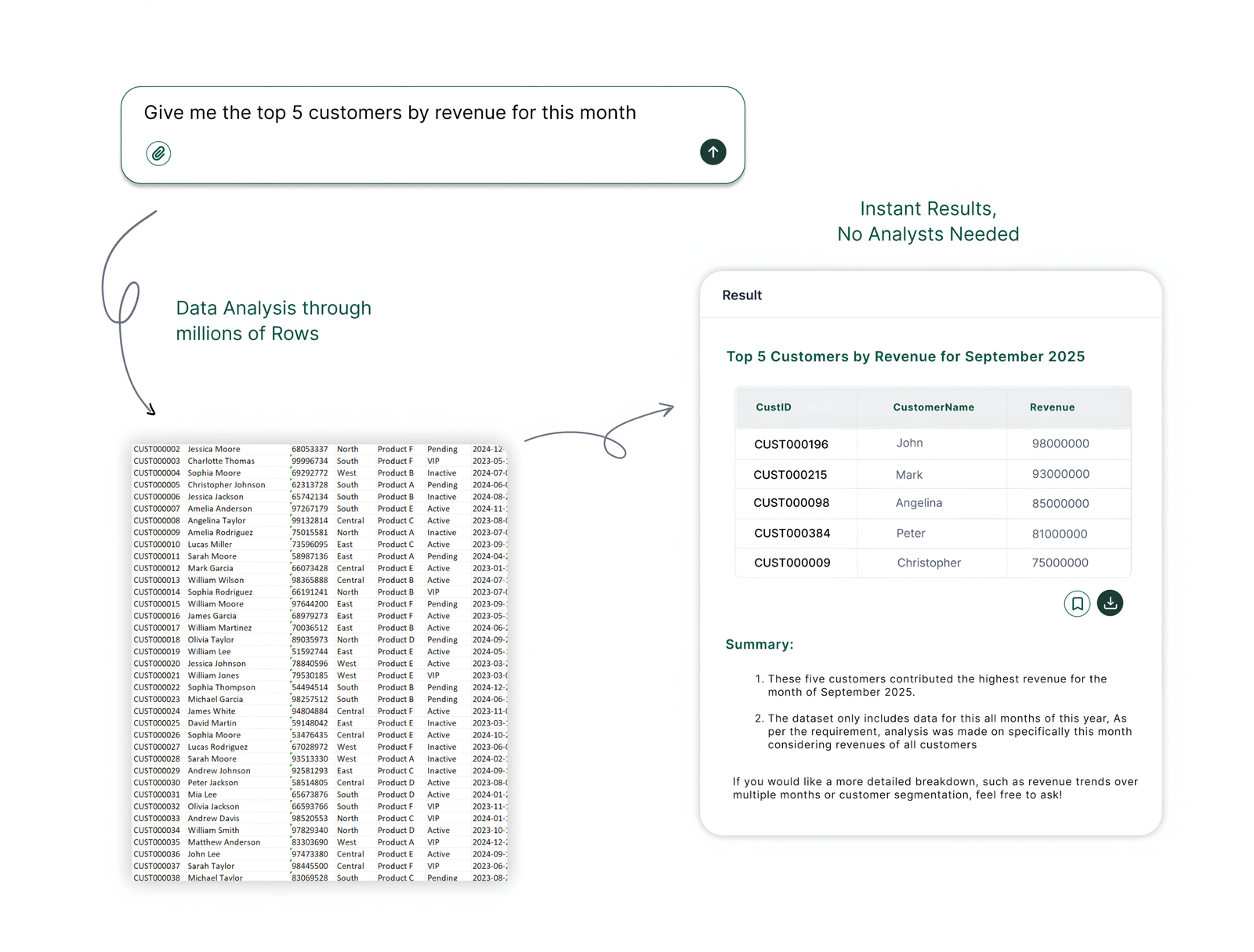
Transactions are scanned continuously for entries that do not fit the pattern, with each flag carrying the reason and the record behind it. Duplicates are caught before a second payment, mispostings across dimensions are surfaced for correction, and unusual activity is raised while it is still one entry rather than a trend. Finance reviews a short list of real exceptions instead of auditing every line.
Board reporting that writes itself
The management pack and board deck get rebuilt by hand every period, and most of the effort is assembly rather than insight. The work describes the period instead of pointing at what to do about it.
How it runs
Recurring reports are pulled from Intacct across the dimensions that matter and assembled on a schedule, with the movement in each number explained rather than just tabulated. Leadership gets a pack that reads like a briefing, and finance spends its hours on the questions it raises. When someone asks a follow-up, the answer is one more query against the data, not another export.
One caution worth repeating across all seven. Sage Copilot is a capable assistant, but an assistant and a completed workflow are different things, and a general purpose chatbot is further still from either. The distance between answering a question and standing behind a posted, dimensioned transaction is the same distance between a generalist copilot and a specialist finance system, and it is where most tools come apart.

Seven workflows, one layer, on top of the Intacct AI you already have.
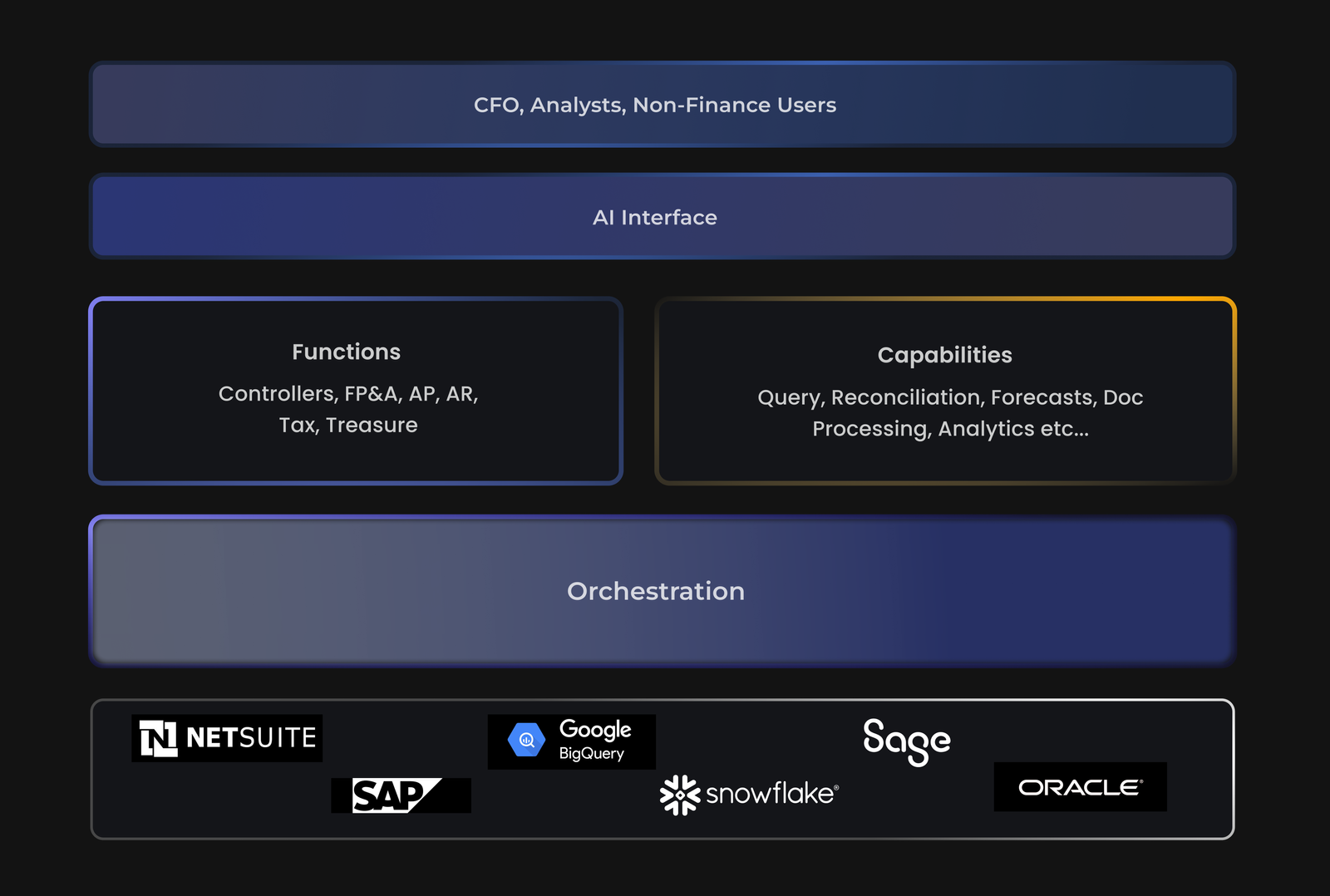
ChatFin runs as the workflow AI layer above Sage Intacct. It connects through Intacct's own REST API and AI Gateway, consumes Sage Copilot rather than competing with it, and executes approved workflow across AP, variance, close, consolidation, collections, anomaly detection, and reporting. Every write-back goes through supported endpoints with dimensions and audit trail intact, and final sign-off stays with a controller.
Because the layer is ERP-agnostic, the same workflows run on NetSuite, SAP Business One, Acumatica, and JD Edwards, so a group on more than one system gets one way of working across all of them. That is what makes autonomous finance hold up in a real multi-entity estate, and defensible during an audit.
The goal is not to replace the assistant Sage already gave you. It is to finish the workflow that starts where the assistant stops.
Book a demoSee these seven running on your own Intacct data.
AP, variance, close, consolidation, collections, anomaly detection, and reporting run in one workspace on top of the Sage Intacct you already use, with a shared audit trail. Tell us which workflow hurts most and we will walk through it live.