
AI use cases on JD Edwards, without replacing the ERP
Seven finance workflows AI runs on JD Edwards today.

- The workflows are business-unit reconciliation, month-end close, job cost, document processing, flux analysis, AP three-way match, and AR validation.
- Each runs on the JDE EnterpriseOne you already have. The agents read through the Application Interface Services REST API and JDBC, and post approved work back through Orchestrator. None of it needs a migration.
- JDE never shipped with a native finance AI copilot, so the agent layer runs the cross-module workflow and the ledger records the result.
- In each one the agents do the volume work and draft the answer, and a named controller reviews the exceptions and signs. JDE records every write-back with its audit trail.
For most finance teams on JD Edwards, the ERP is fine. The work between the ledger and the decision takes a week, and that is where AI pays off first. Across most finance functions on JDE that work is high-volume, rules-heavy, and done in spreadsheet extracts out of habit.
JD Edwards EnterpriseOne has run enterprise finance for decades. Its depth in job costing, manufacturing orders, and multi-currency is hard to match in the mid-market. It was engineered before large language models, API-first integration, or any expectation that a system could read the ledger and answer in plain language. The use cases below close that gap. Each connects to the JDE you already run through the Application Interface Services REST API, Orchestrator, and read-only JDBC, leaves JDE as the system of record, applies your policy, and hands the sign-off back to a person.
Business-unit reconciliation
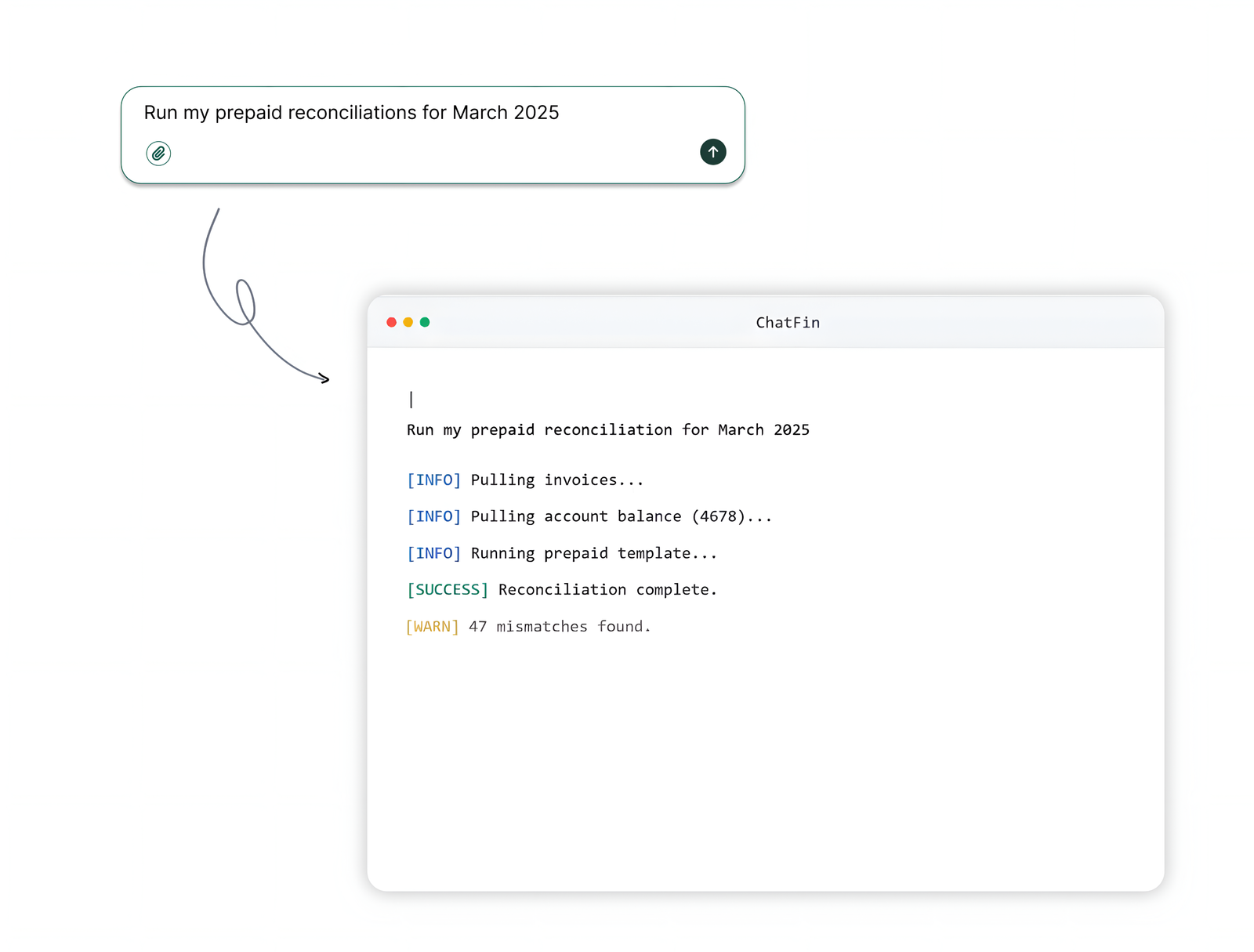
A JDE estate usually spans many business units, bank accounts, and subledgers. Tying the AP, AR, and inventory subledgers back to the general ledger in F0911 is slow, spreadsheet-driven work, and the close slips while people chase breaks by hand. It is repetitive work and a good first job to hand off.
How it runs
The agents read transaction data from JDE business views and the bank feed into one place, then normalize and match it using rules and historical patterns. They handle intercompany balances across business units the same way and flag each break with a plain explanation of why it did not match. Finance reviews only the breaks, in a shared workspace. Status and audit trails roll up into a live close view, so anyone can see how many items are still open.
Month-end close
Period-end on JDE means dependencies across teams, last-minute adjustments, and manual checks that turn into rework and stress every month. Much of it is extract, reconcile in Excel, and re-key, and the coordination takes longer than the accounting.
How it runs
GL activity from F0911, subledger data, and operational metrics come in continuously. The agents track checklists and dependencies in real time, monitor readiness, flag missing entries, and predict where the close will stall. Accountants receive guided tasks in order, and leadership sees progress live. The controller still reviews the accounting judgments and approves the final result.
JD Edwards has run enterprise finance for decades. What it never shipped with is a layer that reads the ledger, applies your policy, and hands the sign-off back to a person.
Ashok ManthenaJob cost tracked against budget
Job costing in JD Edwards is deep but reactive. You see a cost only after it hits the job, so a budget overrun shows up at period-end, when the money is already committed.
How it runs
Agents read the job master, the job cost ledger, open purchase orders, and work orders continuously, and calculate commitment against budget at any point in the project. When a job is trending over, they flag the variance with its drivers and route it to the project manager while there is still time to act. For manufacturing, distribution, construction, and other asset-intensive teams, project managers see profitability while the job is still running.
Document processing
Finance teams on JDE handle thousands of invoices, statements, and remittances in different formats every month. Manual extraction slows processing and introduces errors that compound downstream.
How it runs
Documents arrive by email, portal, or upload. The agents extract fields such as vendor, invoice number, date, amount, and purchase order, and validate them against JDE master data. They route exceptions to a person for review and pass approved data into JDE and the downstream workflow with no re-keying. The write-back runs through Orchestrator against JDE business functions, so entries post the same way JDE's own screens create them, with no direct table writes. The agents track processing metrics so the team can bring the exception rate down over time.
Variance analysis
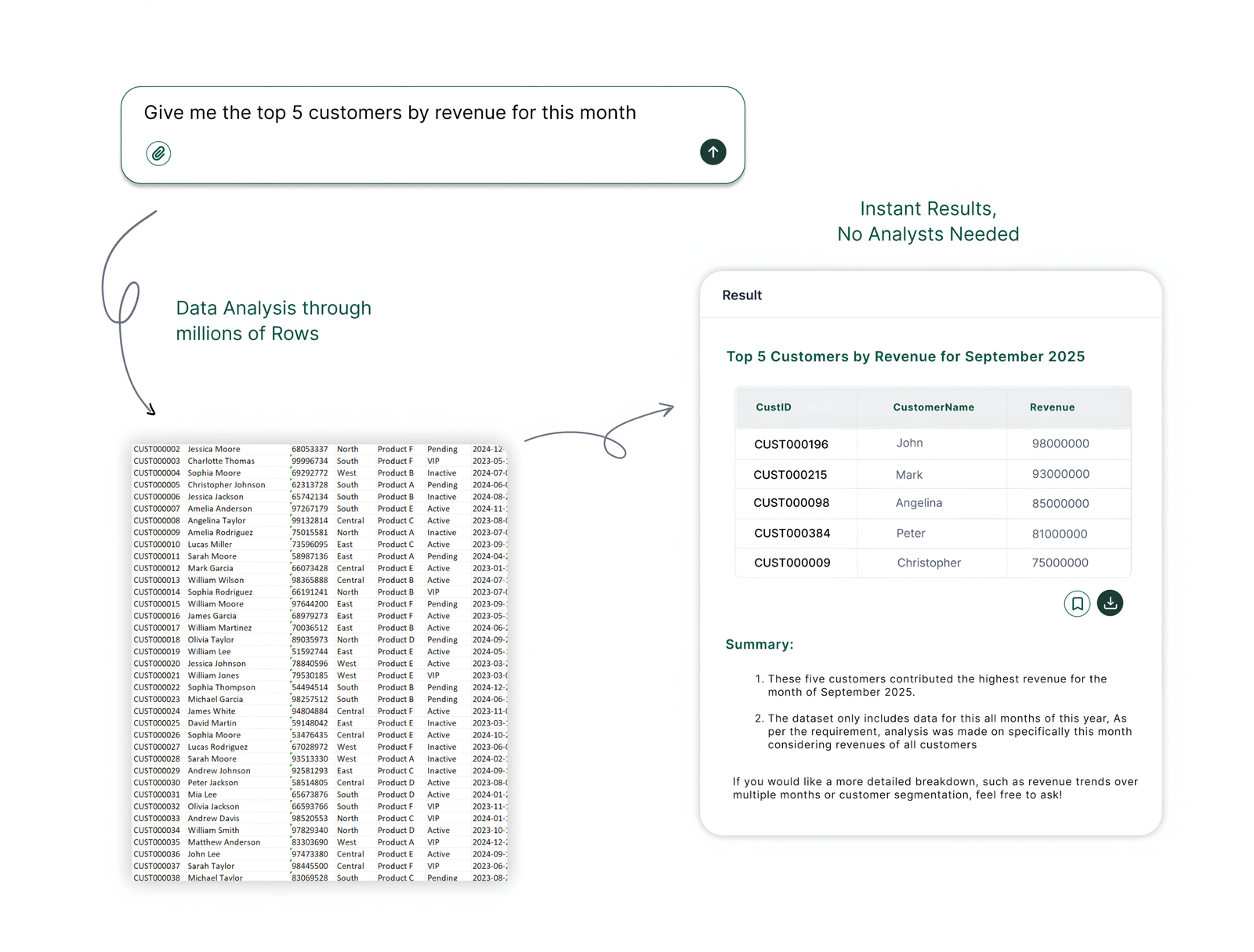
Variance analysis on JDE takes days of pulling F0911 detail, mapping it against the budget ledger, and slicing it by business unit and object account. By the time the analysis is ready, the chance to act on it has usually passed. Finding the driver is separate work from explaining it, and both fall on the same analyst.
How it runs
Actuals stream in against budget from the JDE ledger. The agents detect material variances and patterns, identify the drivers, and draft a written explanation. Finance reviews and refines it before it goes to stakeholders.
A typical output reads like this: margin compression in the West business unit driven mainly by raw material cost on a set of object accounts, partially offset by volume growth in the enterprise segment.
AP three-way match
Invalid invoices, duplicate vouchers, and pricing errors slip through on volume and manual checks, creating leakage and vendor disputes that take weeks to unwind. In a PO-heavy JDE shop the cost is hard to see, so it persists.
How it runs
The agents ingest and digitize each invoice, then validate it against the purchase order and receipt on price, quantity, and terms, using the same three-way match logic JDE applies in Voucher Match (P4314). They flag risky invoices with the reason, AP reviews only the exceptions, and the agents create vouchers in F0411 for the clean invoices through Orchestrator, with a full validation history.
AR validation and collections
Revenue leakage and delayed collections happen when billing errors, short pays, and disputes are not caught early. The cost compounds through DSO and write-offs, and by the time an account looks bad in the JDE AR ledger, it is harder to recover.
How it runs
With invoices, contracts, and payment data connected, the agents validate billed amounts in F03B11 against agreed terms. They flag discrepancies before the invoice goes out, give collections teams prioritized follow-ups with the context included, and feed resolution outcomes back into billing enforcement. The aging view is sorted by risk, with the highest-risk accounts first. Collectors spend less time gathering information and deciding which accounts to work first.
A general purpose assistant struggles in finance, and more so on JDE, because any AI has to work through JDE's own authentication, orchestration, and security model. Summarizing a number is easier than standing behind it, which is the difference between a generalist copilot and a specialist finance system.
Connecting AI to JD Edwards
Any AI that touches finance data has to work inside the ERP's own controls and security. On JD Edwards that means two interfaces Oracle documents and supports.
Oracle describes the Application Interface Services (AIS) Server as a JSON over REST interface that lets clients interact with EnterpriseOne applications and forms. The Orchestrator uses the AIS Server as its foundation, and an orchestration becomes a published REST service as soon as it is saved in Orchestrator Studio. A call to it has to carry security parameters that grant access to the orchestration and to any EnterpriseOne application it invokes.
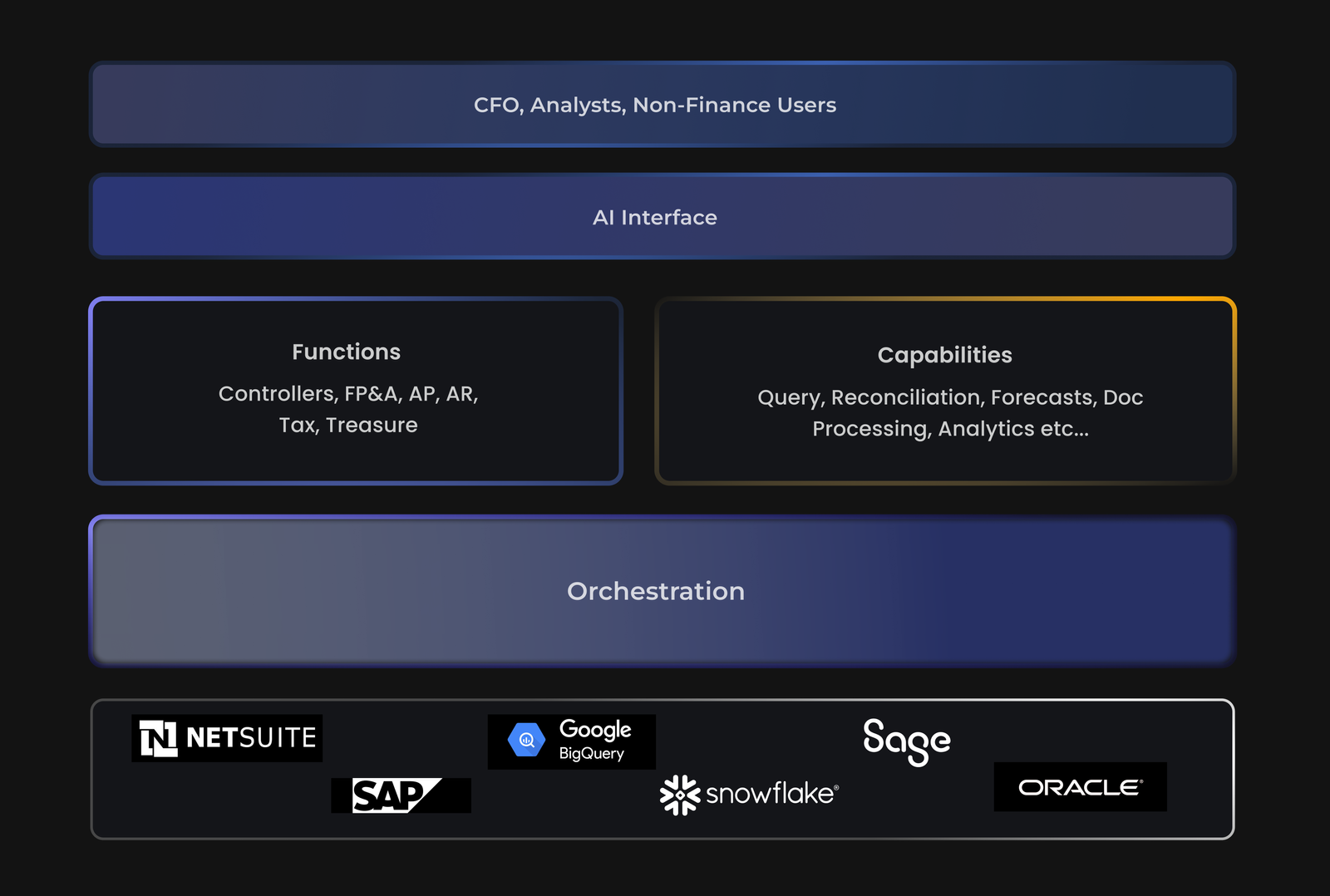
An AI application therefore sits outside EnterpriseOne and reaches it only through AIS and Orchestrator. The agents read documents, match transactions, classify, summarize, and analyze exceptions. JD Edwards stays the only financial record.
Picking the first workflow
Start with one process, and pick one that has:
Reconciliation, invoice processing, close management, variance analysis, and AP matching usually fit.
Sources
One AI layer on the JD Edwards you already run
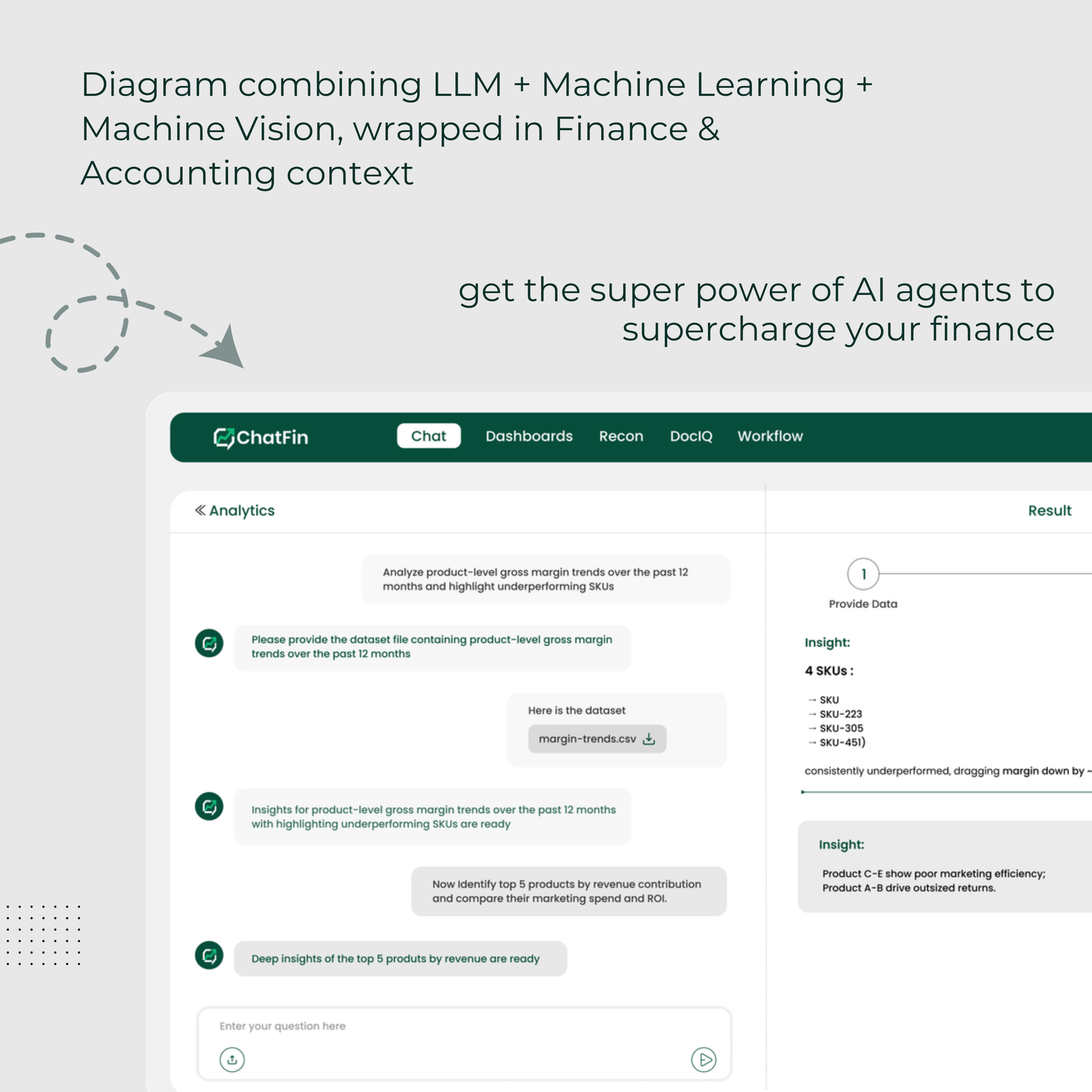
ChatFin runs as the AI layer above JD Edwards EnterpriseOne. It reads through the Application Interface Services REST API and read-only JDBC, and executes approved workflow across reconciliation, close, job cost, document processing, flux, AP, and AR. Every write-back goes through Orchestrator against JDE business functions, mirrors your existing JDE security model, and leaves final sign-off to a controller. Your JDE instance stays as it is. There is a step-by-step account of how that connection works if you want the detail.
Because autonomous finance has to end in the system of record, ChatFin writes every action back to JDE with its audit trail, so an auditor can trace it. See the full integration coverage if you want to check your stack.
One layer runs these workflows on the ledger you already use, so you do not buy a separate tool for each.
Book a demoSee these workflows running on your own JDE data
Reconciliation, close, job cost, document processing, flux, AP, and AR run in one workspace above the JD Edwards you already use, with a shared audit trail. Tell us which workflow hurts most and we will walk through it live.