

Your Close Calendar Has Hidden Dependencies
The close is not slow because tasks take long. It is slow because tasks wait, and the waiting is invisible in a calendar that shows only dates.
A close dependency map records which close tasks cannot begin until others finish, which turns a list of dated tasks into a network with a critical path. It matters because the length of a close is set by the longest chain of dependent tasks, not by total effort. Adding people to tasks that are not on the critical path shortens nothing, which is why most close acceleration efforts produce disappointing results.
- Close duration is determined by the longest dependency chain, not by total workload. Effort applied off the critical path changes nothing.
- Most calendars record dates and owners and omit dependencies entirely, which makes the critical path invisible.
- Waiting time is usually a larger share of the close than working time, and it is never measured.
- Many dependencies are conventional rather than genuine. Testing each one often removes days without any process change.
- ChatFin timestamps when tasks actually complete, exposes the real chain, and shows where the close is waiting rather than working.
Close acceleration projects usually begin by asking which tasks take the longest. That is the wrong first question, and it explains why so many of them deliver a day at most.
A close is a network. Reconciliations wait for subledgers to close, which wait for the last transactions to post. Consolidation waits for every entity. Flux analysis waits for the consolidated trial balance. The management pack waits for the commentary. The total length is set by the longest chain of dependencies, and a task with three days of slack can take a week without affecting the close at all.
This page sets out how to map the dependencies, how to distinguish genuine ones from conventional ones, how to measure waiting rather than working, and what to do with the critical path once you can see it.
A close is a network, not a list
The standard close calendar is a table: task, owner, due date, status. It is useful for tracking and it hides the only structural fact that determines duration, which is what each task is waiting for.
Converting it to a network requires one additional column per task, recording the tasks that must complete before it can begin. That single field turns the calendar into something that can be analysed, because once dependencies are recorded the longest chain can be calculated rather than guessed.
| Task | The unit of work, defined at a level where it has one owner and one clear completion point |
| Predecessors | The tasks that must finish first, which is the field almost every calendar omits |
| Owner | One named person, since a task owned by a team has no accountable start time |
| Duration | How long the work takes once it can start, which is different from how long it currently occupies |
| Actual start and finish | Recorded rather than assumed, because the gap between due date and actual is where the information is |
The distinction between duration and elapsed time in the fourth row is the one that changes conclusions. A task that takes two hours and completes on day four has two hours of work and several days of waiting, and only one of those is worth attacking.
Genuine dependencies and conventional ones
When teams first map dependencies, most tasks appear to depend on almost everything. Testing each link individually removes a large share of them, and each removal is a candidate for parallel working.
Data dependency
The task literally cannot start because the input does not exist. Consolidation cannot run before entity trial balances exist.
Sequence by habit
The task has always been done after another one, and nobody has tested whether it needs to be. Frequently a scheduling convention from a previous system.
Person dependency
Two tasks are sequential because the same person does both. Genuine as a constraint but solvable by reassignment rather than by process change.
Materiality dependency
The task needs most of the input, not all of it. Flux analysis can begin on ninety percent of the balances while three entities finish.
The partial category is where the largest gains usually sit. Many close tasks are treated as all or nothing when they could begin on the majority of the data and be completed as the remainder arrives, which removes them from the critical path entirely.

Measuring waiting rather than working
Ask a close team how long a task takes and they will tell you the working time. Ask how long it occupies in the calendar and it is often several times longer. The difference is waiting, and it is rarely measured because nothing records when a task actually became able to start.
Capturing two timestamps per task changes this: when its predecessors completed, and when it actually started. The gap between them is queue time, and queue time across the close is usually the largest single opportunity available.
The last point recurs constantly and has a cheap fix. Sequencing so that handoffs land in the morning rather than late in the day can remove a day from a close without changing any underlying process.
What close management platforms provide
Close management software has matured considerably in this area. FloQast, BlackLine, Numeric and Trintech all provide task management with dependencies, status tracking, sign off and visibility across teams, and some support critical path identification directly.
The constraint is the accuracy of what is recorded. Status is updated by people, and people update status when they have time, which is frequently late in the working day or the following morning. A task marked complete on Wednesday morning may have finished on Tuesday afternoon, and the queue time analysis built on those timestamps will be wrong in the direction that hides the problem.
Deriving actual completion from ledger activity rather than from status updates is what makes the analysis reliable, and it is part of how ChatFin supports AI financial close software.
Shortening the chain
Once the critical path is visible, the options are limited and specific, which is what makes the analysis worth doing.
Remove a link
Test whether a dependency is genuine. Removing a conventional or partial dependency takes the successor off the critical path entirely and is the cheapest available gain.
Move work earlier
Anything that can be done before period end should be. Pre close reconciliation of stable accounts and standing entries removes them from the chain.
Shorten the longest task
Only worth doing for tasks actually on the critical path. This is where automation pays, and where it is usually misapplied to tasks with slack.
Attack the handoffs
Reduce queue time at transfers between teams, particularly late in the day. Often the largest single gain and requires no process redesign.
Recalculate
Shortening one chain reveals another. The critical path moves, and the next round targets a different set of tasks.
The final step is the one teams skip. Once the original critical path is shortened, a different chain becomes the constraint, and continuing to optimise the old one produces nothing.
How ChatFin exposes the real path
ChatFin derives completion timing from evidence rather than from status updates. Because it reads the ERP directly, it can see when the last posting to an account occurred, when a reconciliation was completed, when a subledger closed and when the consolidation ran.
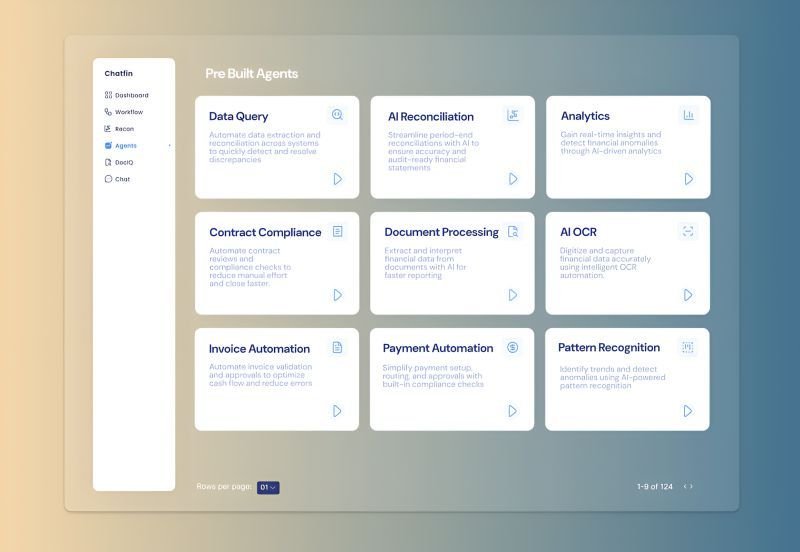
The analytics agent builds the actual timeline from that evidence, calculates ready time against reported start time, and quantifies queue time by task and by handoff. The pattern recognition agent identifies tasks whose position on the critical path is consistent across periods, which distinguishes a structural constraint from a bad month. The conversational finance AI layer answers questions such as which task the close spent longest waiting for.
| Data query agent | Establishes when work actually completed from ledger and reconciliation evidence |
| Analytics agent | Calculates ready time, actual start, queue time and the critical path from real timestamps |
| Pattern recognition | Identifies persistent bottlenecks across periods rather than one off delays |
| Reconciliation agent | Executes the reconciliation tasks themselves, removing them from the chain where appropriate |
| Governed write back | Prepares standing and recurring entries early so they leave the critical path, subject to approval |
The fourth and fifth rows are where the duration actually falls. Analysis identifies the constraint, and moving reconciliation and recurring entry preparation earlier in the cycle removes links from the chain rather than compressing them, which is the approach described in three day close.

Mapping your close in one cycle
This can be done during a single close with no tooling beyond what you already have.
Add one column to the calendar
Predecessors for every task. Ask each owner what they wait for rather than deducing it, since owners know and calendars do not.
Record two timestamps this close
When each task became able to start and when it actually started. Even approximate figures reveal the pattern.
Calculate the longest chain
Trace the dependencies from first task to final deliverable. The result is frequently not what the team expected.
Test the three longest dependencies
For each, ask whether the successor genuinely cannot begin, or only cannot finish. Partial dependencies are where the days are.
Most teams doing this for the first time find the critical path runs through a task nobody considered important, and that the tasks receiving the most attention had days of slack all along.
A task with three days of slack can take a week without affecting the close. Effort spent there feels productive and changes nothing.
ChatFin
Frequently Asked Questions
What is the critical path in a financial close?
It is the longest chain of dependent tasks running from the start of the close to the final deliverable. Its length determines the duration of the close, because every task on it must finish before the next can begin. Tasks not on the critical path have slack, meaning they can overrun without delaying anything, which is why adding effort to them produces no improvement.
Why do close acceleration projects fail to shorten the close?
Usually because effort is applied to the tasks that take the longest rather than to the tasks on the critical path, and those are frequently not the same. A task can occupy several days of the calendar while requiring two hours of work, with the remainder being queue time. Without a dependency map, the difference between working time and waiting time is invisible, so improvement effort is directed at the wrong target.
How do you find hidden dependencies in a close calendar?
Ask each task owner what they are waiting for rather than deducing it from the calendar, because owners know and calendars do not record it. Then test each dependency: is the successor genuinely unable to begin, or only unable to finish? Partial dependencies, where a task needs most of its input rather than all of it, are the most common finding and usually the largest opportunity.
Can ChatFin measure how long close tasks actually take?
Yes. ChatFin derives completion timing from ledger evidence rather than from self reported status, using postings, reconciliation activity and subledger close events to establish when work genuinely finished. It compares that against when each task became able to start, quantifies queue time by task and by handoff, and identifies which bottlenecks persist across periods rather than reflecting a single difficult month.
See ChatFin build your close timeline from ledger evidence.
ChatFin establishes when close tasks actually completed from postings and reconciliation activity, calculates queue time against ready time, and identifies the real critical path.
Reconciliations and recurring entries can then be prepared earlier in the cycle, removing links from the chain, with every entry approved by a person before posting.
Book a DemoBring your close calendar and one period of ledger data.
ChatFin will reconstruct the actual timeline from ledger evidence, show where the close waited rather than worked, and identify the true critical path.