

Who Owns Account 14520?
Every balance sheet account should have one person who can explain what is in it. In most organisations a meaningful share of accounts have nobody at all.
An account ownership matrix assigns every balance sheet account to a named preparer and a named reviewer, with a risk rating and a required reconciliation frequency. Its purpose is to ensure no account can carry an unexplained balance without somebody being accountable for it. The common failure is not the absence of the matrix but its drift: accounts added after the matrix was built inherit no owner, and nobody notices until a balance needs explaining.
- Reconciliation coverage is usually measured against the accounts on the list, not against the accounts in the ledger. Those are different populations.
- New accounts are the leak. An account opened mid year has no owner, no frequency and no risk rating, and appears in no coverage statistic.
- Risk rating should drive frequency and review depth. Rating every account the same wastes effort on the ones that never move.
- Certification means something only when the certifier could realistically explain the balance. Bulk sign off at period end is a signature, not a control.
- ChatFin compares the live chart of accounts against the ownership matrix each period and reports every account with a balance and no owner.
Ask a controller what percentage of balance sheet accounts were reconciled last period and you will usually get a high number. Ask how the denominator was determined and the answer is almost always the reconciliation list.
That list was built at some point, probably carefully, and the chart of accounts has moved since. Accounts get added for a new entity, a new product line, a new tax jurisdiction or a one off transaction. Each arrives without an owner, a frequency or a risk rating, and because coverage is measured against the list rather than against the ledger, none of them reduces the reported percentage.
This page covers how to build an ownership matrix that stays current, how to rate accounts so effort goes where the risk is, what certification has to involve to be worth anything, and how to detect drift automatically instead of during a year end scramble.
Why the matrix drifts
An ownership matrix is built once, usually as part of a controls project, and maintained by nobody in particular. The chart of accounts, by contrast, changes continuously and through several routes.
The third route is the most underestimated. Interface and clearing accounts created by a system implementation frequently have no business owner at all, and they are exactly the accounts where unmatched items accumulate silently.
What the matrix has to contain
A useful matrix is short per row and complete across rows. The temptation is to add fields; the discipline is to keep it to what actually changes behaviour.
| Account and entity | The specific account in the specific entity, since the same account number can behave differently across entities |
| Preparer | One named person, not a team or a function, because shared ownership is no ownership |
| Reviewer | A different named person, with the authority and knowledge to challenge the preparation |
| Risk rating | High, medium or low, driven by volume, volatility, judgement content and manual entry exposure |
| Frequency | Monthly, quarterly or annually, derived from the risk rating rather than set individually |
| Expected content | One line describing what should be in the account, which is what makes a wrong balance identifiable |
The last row is the field most often omitted and the most valuable. An account with a stated expected content can be tested against it. An account without one can only be reconciled to itself, which is how suspense balances survive for years.

Rating accounts so effort follows risk
Rating everything the same is the most common failure and it produces the worst outcome, which is uniform shallow coverage. Effort is finite, so it should be concentrated.
Judgement and manual exposure
Accruals, reserves, provisions, suspense and clearing accounts, and anything where manual entries are posted. Monthly, with substantive review.
Volume driven
Subledger controlled accounts with high transaction volume where the reconciliation is largely systematic but a break would be material.
Static and small
Accounts that rarely move and carry small balances. Quarterly or annual review is proportionate, and pretending otherwise wastes the capacity the high risk accounts need.
Rating is not permanent
An account that receives an unusual manual entry, or whose balance moves outside its normal range, should escalate for that period regardless of its standing rating.
The escalating trigger is what makes a risk based approach safe. Without it, a low rated account can absorb a significant error for a full year because the rating decided nobody would look.
Making certification mean something
Certification at period end is widespread and frequently hollow. A preparer signs a list, a reviewer signs the same list, and neither action required anyone to explain a balance.
The distinction worth enforcing is between confirming that a reconciliation was performed and confirming that the balance is understood. The second requires the reconciliation to contain an explanation of what makes up the balance, not merely a match to a supporting schedule.
Ageing with a hard limit is the single highest value item on that list. Almost every material balance sheet surprise began as a small reconciling item that was carried forward because it was immaterial.
The close platforms and what they need from you
Account reconciliation is a mature software category. BlackLine, FloQast, Trintech and Numeric all manage the matrix, assign preparers and reviewers, enforce frequency by risk rating, hold supporting evidence and produce certification records with a full audit trail.
What they require is that the account exists in their configuration. A platform reports coverage against the accounts loaded into it, which returns to the original problem: an account created in the ERP last month is not in the platform, and every coverage statistic remains reassuring. Keeping the platform synchronised with the live chart of accounts is a manual process in most implementations.
Comparing the live chart of accounts to the assigned population each period is a straightforward reconciliation, and it is one ChatFin performs automatically as part of automated close management.
How ChatFin keeps ownership current
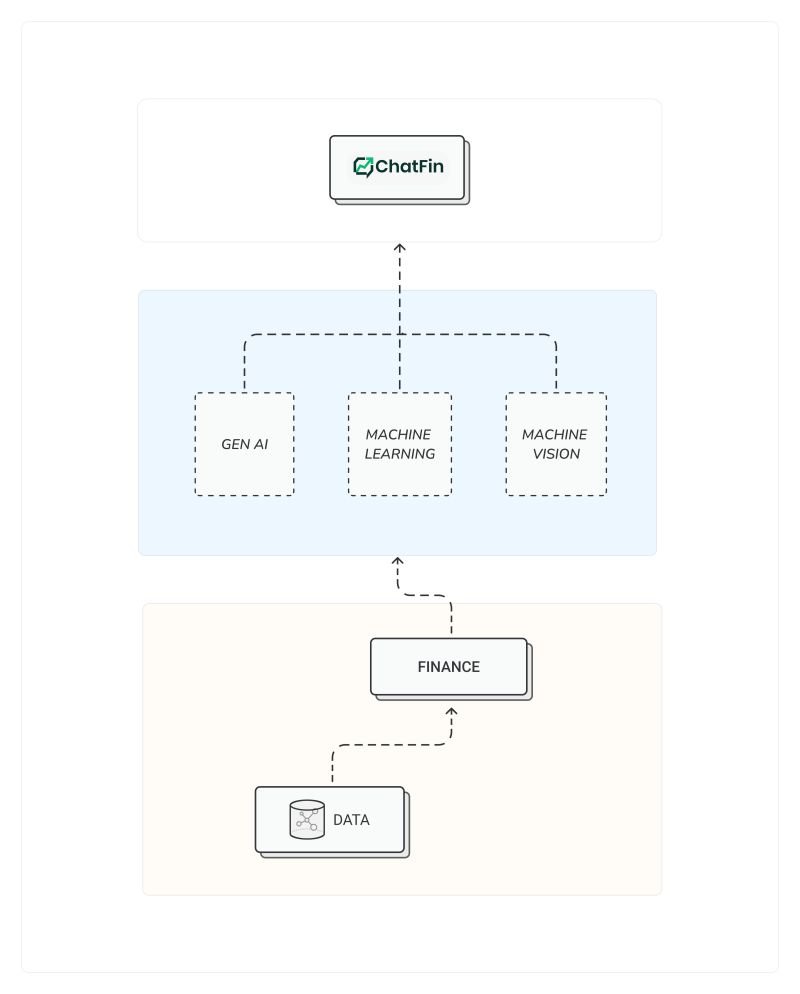
ChatFin reads the live chart of accounts and balances directly from your ERP each period and compares that population against the ownership matrix, producing the list nobody currently has: every account carrying a balance with no assigned owner, no frequency or no risk rating.
The autonomous reconciliation agent then supports the reconciliations themselves, assembling the supporting detail and ageing the reconciling items. The pattern recognition agent flags accounts whose balance has moved outside its normal range and accounts that received manual entries, which are the two conditions that should escalate a rating for the period. The conversational finance AI layer lets a controller ask which accounts have unexplained balances above a threshold.
| Reconciliation agent | Assembles supporting detail per account and ages reconciling items against your limits |
| Data query agent | Answers questions such as which accounts have a balance and no assigned owner |
| Pattern recognition | Flags balances outside normal range and accounts receiving manual entries, triggering escalation |
| Analytics agent | Explains the movement in each balance from the prior period in draft form for the preparer |
| Governed write back | Prepares clearing and correcting entries arising from reconciliations, for approval |
Certification remains a human act. What changes is that the certifier is signing against a balance whose composition, ageing and movement have already been assembled, which is what makes the signature evidence rather than administration.

Rebuilding the matrix without a project
The rebuild is smaller than it looks if you start from balances rather than from the account list.
Pull every account with a balance
From the live ERP, by entity. This is the true denominator and it is usually larger than the reconciliation list.
Identify the unowned population
Compare against the current matrix. The unowned accounts are the priority regardless of their size, because nobody has looked at them.
Rate and assign, starting with the unowned
Assign a named preparer and reviewer, and rate on judgement content and manual entry exposure rather than on balance size alone.
Set the drift check
Run the chart of accounts comparison every period. This is what stops the matrix decaying again from the day it is completed.
The fourth step is the one that determines whether this is worth doing. Without it, the matrix will be accurate for one period and will drift again exactly as it did before.
Coverage is measured against the reconciliation list. The accounts that matter are the ones that were never on it.
ChatFin
Frequently Asked Questions
What is a balance sheet account ownership matrix?
It is a record assigning every balance sheet account, in every entity, to a named preparer and a named reviewer, together with a risk rating, a required reconciliation frequency and a description of what the account should contain. Its purpose is to ensure no account can carry an unexplained balance without somebody being accountable for explaining it.
How should balance sheet accounts be risk rated?
On judgement content and manual entry exposure rather than on balance size alone. Accruals, reserves, provisions and suspense or clearing accounts are high risk because they involve estimation and receive manual postings. High volume subledger controlled accounts are typically medium. Static accounts with small balances are low. Ratings should also escalate temporarily when an account receives an unusual manual entry or moves outside its normal range.
Why do reconciliation coverage statistics look better than reality?
Because coverage is usually measured against the accounts configured in the reconciliation platform or on the reconciliation list, not against the live chart of accounts in the ERP. Accounts added since the list was built have no owner, no frequency and no rating, and they do not appear in the denominator, so they cannot reduce the reported percentage no matter how many of them exist.
Can ChatFin identify accounts with no assigned owner?
Yes. ChatFin reads the live chart of accounts and balances from your ERP each period and compares that population against your ownership matrix, reporting every account that carries a balance without an assigned owner, frequency or risk rating. It also flags accounts that moved outside their normal range or received manual entries, which are the conditions that should escalate review for the period.
See ChatFin compare your live chart of accounts to your ownership matrix.
ChatFin reads the live chart of accounts and balances from your ERP and reports every account carrying a balance with no assigned owner, frequency or risk rating.
Supporting detail and ageing are assembled per account, and any clearing or correcting entry is prepared for a person to approve before posting.
Book a DemoBring your chart of accounts and reconciliation list.
ChatFin will produce the unowned account population, rate exposure by manual entry activity, and show which balances sit outside their normal range.