

Volume Tiers Only Pay If Someone Claims Them
The agreement says the discount improves at volume. The volume was reached in October. Nobody assembled the claim, and the agreement year closed in December.
A volume tier is a supplier term under which the discount or rebate rate improves once purchase volume passes defined thresholds. Two things determine whether it is realised: measuring attainment accurately against the agreement definition, and submitting a claim within the window the agreement allows. Accounting treatment usually requires accruing the rebate as purchases occur where attainment is probable, which means the tracking has to be continuous rather than annual.
- Tiers are earned by purchasing and collected by claiming. Organisations lose money at the second step far more often than the first.
- The measurement basis is defined in the agreement and is rarely the figure your purchasing report produces by default.
- Accrue as purchases occur where attainment is probable. Waiting until the claim is paid pushes income into the wrong period.
- Near miss tiers are a commercial opportunity: knowing in November that you are close changes the buying decision while it can still be made.
- ChatFin extracts the tier structure from the agreement, tracks attainment continuously against the contracted basis, and drafts both the accrual and the claim.
Rebate agreements are negotiated by people who are measured on the terms they secure, and administered by people who have no visibility of what was agreed.
The agreement sets out thresholds, a measurement basis, a period and a claim process. Then it is filed. Purchasing continues without anyone tracking progress against the thresholds, finance accrues something based on last year, and at the end of the period somebody attempts to reconstruct attainment from a purchasing report that measures volume on a different basis than the agreement specifies.
This page covers how to define attainment correctly, why the measurement basis is the most common source of dispute, how the accrual should behave through the year, and how to know you are close to a tier while there is still time to reach it.
How tier structures actually work
Not all tiers behave the same way, and the difference changes both the arithmetic and the accrual materially. Getting this wrong at setup produces an error that repeats every period.
Retrospective tiers
Reaching the threshold improves the rate on all volume in the period, including what was already purchased. Creates a step change in entitlement at the moment of attainment.
Incremental tiers
The improved rate applies only to volume above the threshold. Entitlement builds smoothly, and the accrual is simpler as a result.
Growth based
The rebate depends on volume relative to a prior period baseline rather than an absolute figure. Requires the baseline definition to be agreed and retained.
Mixed and conditional
Tiers that also require a mix of product categories, a payment term, or a marketing commitment. Attainment on volume alone is not attainment.
Retrospective tiers are the ones that most affect accounting judgement, because entitlement changes discontinuously. Where attainment becomes probable mid period, the accrual has to reflect the improved rate on volume already purchased, which is a larger adjustment than most models anticipate.
The measurement basis is where disputes start
Almost every rebate dispute reduces to a disagreement about what counted. The agreement specifies a basis and the internal report produces a different one, usually because nobody compared them.
Agreeing the basis with the supplier in writing at the start, and configuring the internal measure to match it exactly, prevents nearly all of these. It also means the claim can be substantiated from your own records rather than negotiated from theirs.

Accruing through the year rather than at the end
Rebates earned on purchases generally reduce the cost of the goods they relate to, which means recognising them as the purchases occur where attainment is expected, rather than when the claim is paid.
That requires a probability judgement each period. It is not a difficult judgement when attainment is tracked continuously, and it is close to impossible when the position is only known annually, which is why many organisations default to recognising on receipt and accept the period distortion.
| Measurement | Expected rate applied to qualifying volume to date, with the basis matching the agreement exactly |
| Probability | Assessed each period against the run rate required to attain, documented rather than assumed |
| Retrospective effect | Where a tier improves the rate on prior volume, the catch up recognised when attainment becomes probable |
| Constraint | Where attainment is uncertain, accrue at the tier currently supported by run rate rather than the target one |
| True up | The difference between accrued and claimed, tracked per agreement so it does not accumulate silently |
The last row is worth a control of its own. A persistent gap between accrued and claimed amounts across several agreements usually indicates a measurement basis problem rather than a series of unrelated commercial outcomes.
The rebate software landscape
Dedicated rebate management is a real category and it has matured. Enable and Vividly focus specifically on trade agreements, tier tracking and claims across both buy side and sell side, and Flintfox handles complex pricing and rebate calculation inside the transaction flow. Source to pay platforms such as Coupa hold the agreement and the supplier relationship.
These tools work well once agreements are configured into them, and configuration is the constraint. Every tier structure, measurement basis, exclusion and condition has to be read out of a document and set up correctly, and organisations with a long tail of smaller agreements typically configure the top suppliers and leave the rest untracked.
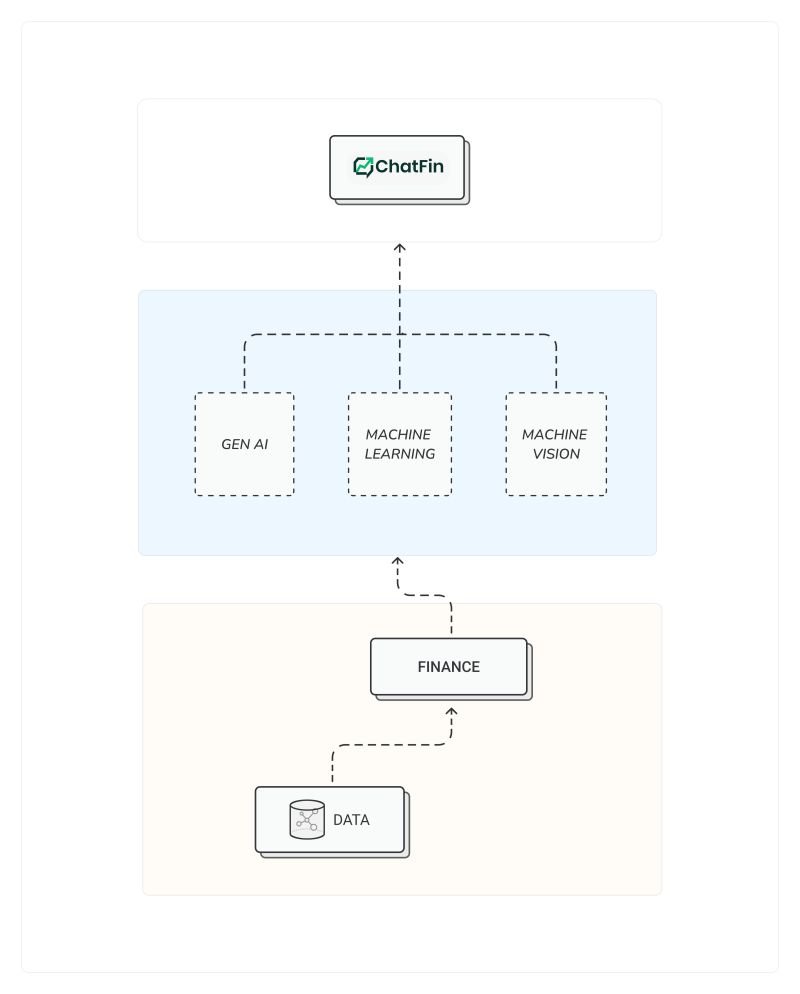
Extracting tier structures from agreement documents at scale is what makes the long tail tractable, and that extraction is what ChatFin provides through pre built finance AI agents.
Knowing you are close while it still matters
The most valuable output of tier tracking is not the accrual. It is the November conversation about a threshold within reach, because that is the point at which a purchasing decision can still change the outcome.
The analysis is straightforward once attainment is tracked: current qualifying volume, threshold, gap, run rate, and the incremental margin from reaching the next tier compared with the cost of the additional purchase. Presented with two months left, it is a commercial decision. Presented in January it is a note about what was missed.
Report attainment monthly by agreement
Current volume against each threshold, expressed as a percentage and as an absolute gap
Project to period end on run rate
Simple extrapolation is sufficient. The purpose is to identify agreements near a boundary, not to forecast precisely.
Quantify the incremental benefit
The value of reaching the tier, including any retrospective effect on volume already purchased, against the cost of the additional buy.
Escalate the near misses only
Send procurement a short list of agreements within reach, not a full report. A list of three gets acted on and a report of forty does not.
The retrospective element in step three is what often makes the case, because reaching a retrospective tier improves the rate on the whole period rather than just the incremental purchase.
How ChatFin tracks and claims
ChatFin reads the rebate agreements themselves and extracts the tier thresholds, rates, measurement basis, exclusions and claim windows into structured terms. That extraction is what makes the long tail of smaller agreements trackable rather than ignored.
The analytics agent then measures attainment against the contracted basis specifically, using the purchase data in your ERP, and reports the position per agreement each period. The pattern recognition agent flags agreements approaching a threshold and those where accrued and claimed amounts have diverged. The conversational finance AI layer answers questions such as which agreements are within ten percent of the next tier.
| Contract intelligence | Extracts thresholds, rates, measurement basis, exclusions and claim windows from agreements |
| Analytics agent | Measures qualifying volume on the contracted basis and reports attainment per agreement |
| Pattern recognition | Flags near miss tiers and persistent divergence between accrued and claimed amounts |
| Data query agent | Answers attainment questions in plain English without a report request |
| Governed write back | Prepares the rebate accrual entry and the claim pack for a person to approve |
Claims are drafted rather than submitted, with the supporting volume detail attached on the contracted basis, so the person approving is sending evidence rather than an assertion. The accrual entry follows the same governed pattern used across automated close management.

Getting the agreements tracked
Start with the agreements, not the data. Most organisations do not know how many rebate agreements they hold.
Assemble every agreement
Include the small ones and the ones held by category buyers rather than centrally. The long tail is where untracked entitlement sits.
Structure the terms
Thresholds, rates, structure type, measurement basis, exclusions, period and claim window for each. This is the foundation for everything else.
Reconcile last year
Measure attainment on the contracted basis for the prior period and compare it to what was actually claimed and received.
Set the monthly report
Attainment by agreement with near miss flags, sent to procurement and finance together rather than to one of them.
The third step frequently produces the business case on its own, because it quantifies entitlement that was earned and never claimed, which is a number that tends to attract attention quickly.
The tier was reached in October. The claim window closed in December. Nothing about that outcome was a commercial failure.
ChatFin
Frequently Asked Questions
What is a retrospective rebate tier?
One where reaching a volume threshold improves the rate on all volume purchased in the period, not just the volume above the threshold. Entitlement changes in a step at the moment of attainment, which makes the accounting judgement sharper: when attainment becomes probable, the accrual must reflect the improved rate applied to purchases already made, which is usually a larger adjustment than teams expect.
When should supplier rebates be accrued?
Rebates earned on purchases generally reduce the cost of the goods they relate to, so they are recognised as the purchases occur where attainment is expected, rather than when the claim is settled. That requires assessing each period whether attainment is probable based on the run rate. Where attainment is uncertain, accruing at the tier currently supported by actual volume is the more defensible position.
Why do rebate claims get disputed?
Almost always because of the measurement basis. The agreement specifies what counts and the internal purchasing report produces something different, on gross versus net of returns, invoice date versus receipt date, which legal entities are included, which products qualify, or which exchange rate applies. Agreeing the basis in writing at the outset and configuring the internal measure to match it removes most disputes before they arise.
Can ChatFin track rebate agreements automatically?
Yes. ChatFin extracts tier thresholds, rates, measurement basis, exclusions and claim windows from the agreement documents themselves, which makes the long tail of smaller agreements trackable rather than ignored. It then measures attainment against the contracted basis using purchase data from your ERP, flags near miss tiers, and prepares both the accrual entry and the claim pack for approval.
This article is general information for finance and accounting teams. It is not accounting, tax or legal advice. Confirm the treatment of your own facts with your auditors and advisers.
See ChatFin extract your rebate terms and measure attainment.
ChatFin reads your rebate agreements, structures the thresholds, rates and measurement basis, and tracks attainment continuously against the basis the agreement actually specifies.
Near miss tiers are flagged while there is time to act, and both the accrual entry and the claim pack are prepared for a person to approve.
Book a DemoBring a handful of rebate agreements and purchase data.
ChatFin will structure the tier terms, measure attainment on the contracted basis, and show which agreements are within reach of the next threshold.