

Uncertain Positions Need Reasoning, Not a Number
The reserve amount is the output. What gets examined is the reasoning behind it, and reasoning written twelve months after the decision is worth considerably less than reasoning written at the time.
An uncertain tax position is a tax position whose sustainability on technical merits is not certain, requiring an assessment of whether it is more likely than not to be sustained on examination and, if so, measurement of the benefit to recognise. The substance of the exercise is the technical analysis and its documentation. A reserve booked without a written technical basis is a number that cannot be defended, adjusted or released with confidence.
- The reserve is the output of an analysis. Where the analysis is not written down, the number cannot be defended or released.
- Recognition and measurement are separate steps, and collapsing them into a single percentage loses the reasoning behind both.
- The file has to be contemporaneous. Reconstructed reasoning is weaker evidence and is visibly reconstructed.
- Release requires the same rigour as recognition, and positions frequently remain reserved long after the reason has lapsed.
- ChatFin assembles the transaction evidence behind each position and maintains the position register with its history and status.
Uncertain tax positions attract a particular kind of avoidance. The analysis is technical, the conclusion is uncomfortable, and the deadline belongs to someone else, so the number gets booked and the reasoning gets postponed.
The problem surfaces later in two ways. When an examiner or an auditor asks why a position was taken, the answer has to be reconstructed by people who may not have been involved. And when the reason for the reserve lapses, because a statute expired, a ruling was obtained or an examination closed, nobody can confidently release it because nobody can state precisely what it was for.
This piece argues that the documentation is the deliverable rather than the number, sets out what a position file has to contain, and covers the release discipline that most organisations lack entirely.

Recognition and measurement are different questions
The framework separates two decisions, and collapsing them into a single reserve percentage discards most of the useful information.
| Recognition | Whether the position is more likely than not to be sustained on its technical merits, assuming examination with full knowledge of the facts |
| Measurement | If recognised, the largest amount of benefit that is more likely than not to be realised on settlement |
| Assumption of examination | The analysis assumes the position will be examined, so the probability of detection is not a factor |
| Technical merits | Based on legislation, rulings and case law rather than on the likelihood of a negotiated outcome |
| Unit of account | The level at which the position is assessed, which requires a judgement of its own and should be stated |
The third row is worth emphasising because it is the most commonly misunderstood. The assessment assumes examination with full knowledge, which means an argument based on the position being unlikely to be noticed has no place in the analysis at all.
What the position file has to contain
A defensible file is short and specific. Length is not the objective and neither is legal formality; what matters is that a reader can follow the reasoning to the conclusion.
The third item separates a real analysis from an advocacy document. A file that addresses only the arguments in favour is less persuasive than one that acknowledges the counterargument and explains why the conclusion holds anyway.

Why timing changes the value of the document
Contemporaneous documentation is materially stronger evidence, and the difference is visible to anyone reading it.
Reflects the decision
It records what was actually considered, including uncertainty that later resolved. It reads as a decision because it was one.
Reflects the outcome
It is shaped by what has happened since, tends to be tidier than the decision was, and omits considerations that turned out not to matter.
Reconstructed under pressure
Assembled during an examination by people who may not have been involved, which is both expensive and weak.
Cost of writing
A contemporaneous file takes a fraction of the time of a reconstructed one and is worth considerably more.
The last row is the argument that actually persuades busy tax teams. This is not additional work relative to doing it later, it is substantially less work, and it happens when the facts are known rather than when they have to be rediscovered.
The release discipline nobody has
Positions accumulate. Reserves are booked when a position is taken and reviewed when the reason for them is challenged, which means many organisations carry reserves for positions whose uncertainty has long since resolved.
| Statute expiry | Where the period for examination has closed, the position is no longer uncertain and the reserve should generally be released |
| Examination closure | Where an examination covering the position has concluded, the outcome determines the treatment |
| Ruling or authority change | Where subsequent guidance or case law resolves the technical question in either direction |
| Settlement | Where the position has been settled, the reserve is used rather than released and the difference is informative |
| Review cadence | Each position reviewed at least annually against these triggers, with the conclusion recorded |
Statute expiry is the most mechanical trigger and the most frequently missed. Tracking the relevant period per position turns release from a judgement call into a calendar event, which is the only way it happens reliably.
Where the software fits
Provision and reporting platforms hold the numbers well. Corptax, Thomson Reuters ONESOURCE and Longview Tax maintain reserve balances, movements and disclosure, and Workiva manages the documentation and review workflow around reporting.
What no platform does is establish the facts underlying a position. A technical analysis rests on what actually happened: which transactions, with which counterparties, on what terms, in which entities. Assembling that evidence is usually a manual exercise, and it is also the part that is hardest to reconstruct years later when an examiner asks.
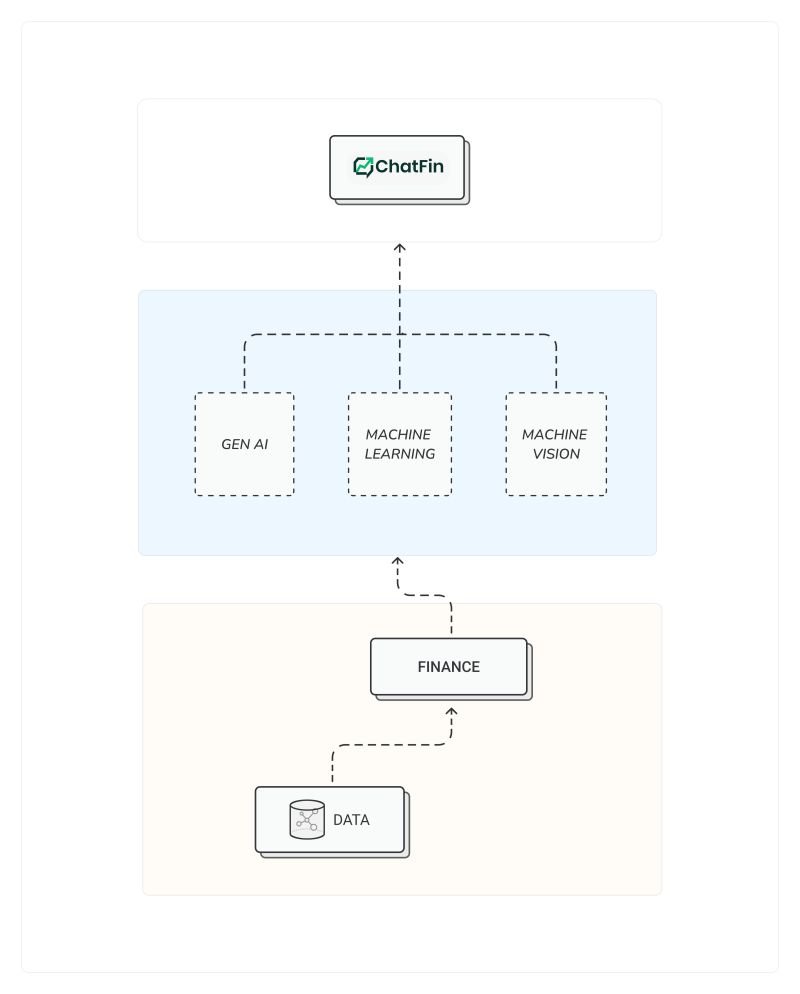
Assembling transaction evidence and maintaining a register with its history is what ChatFin contributes, alongside the provision work described in AI financial close software.
How ChatFin supports the position file
ChatFin assembles the factual foundation. For a given position, it extracts the underlying transactions, counterparties, entities, amounts and dates from the ERP, and reads the related agreements so the facts in the file are sourced rather than described from memory.
It then maintains the position register: each position with its facts, its recognised and unrecognised amounts, the jurisdiction, the periods affected and the release triggers including statute expiry dates. The pattern recognition agent flags positions whose triggers have been met, and the conversational finance AI layer answers questions such as which positions relate to periods now closed to examination.
| Reconciliation agent | Extracts the underlying transactions and amounts supporting each position from the ledger |
| Contract intelligence | Reads the agreements behind the position so the facts are sourced from documents |
| Analytics agent | Maintains recognised and unrecognised amounts by position, jurisdiction and period |
| Pattern recognition | Flags positions whose release triggers have been met, including statute expiry |
| Governed write back | Prepares recognition, measurement change and release entries with the file attached, for approval |
The technical conclusion is written by your tax team and their advisers. ChatFin ensures the facts are complete and sourced, the register is current, and the release triggers are monitored rather than discovered.

Getting the register current
Most organisations already have reserves. The first task is establishing what they are actually for.
List every position with a reserve
By jurisdiction, period and amount. Where a reserve cannot be attributed to a specific position, that itself is the finding.
Attach the facts to each one
The transactions and agreements underlying the position, sourced from the ledger rather than described.
Write the missing analyses
Prioritise by amount. A short, specific memorandum written now is far better than nothing and far cheaper than one written during an examination.
Set the release triggers
Statute expiry dates and examination status per position, monitored as calendar events rather than reviewed by recollection.
Step four frequently produces an immediate benefit, because organisations that have never tracked statute expiry per position usually find reserves that should have been released some time ago.
An analysis written after the outcome is known reads as tidier than the decision was, and everybody reading it can tell.
ChatFin
Frequently Asked Questions
What is an uncertain tax position?
It is a tax position whose sustainability on technical merits is not certain. The assessment has two steps: whether the position is more likely than not to be sustained on examination based on its technical merits, and if so, the largest amount of benefit that is more likely than not to be realised on settlement. The analysis assumes examination with full knowledge of the facts, so the likelihood of detection is not a factor.
Why does uncertain tax position documentation need to be contemporaneous?
Because documentation written at the time records what was actually considered, including uncertainty that later resolved, while documentation written afterwards is shaped by what has happened since and reads that way to anyone examining it. Contemporaneous files are also substantially cheaper to produce, because the facts are known rather than needing to be rediscovered by people who may not have been involved.
When should a tax reserve be released?
When the uncertainty ends. The main triggers are expiry of the period during which the position can be examined, closure of an examination covering the position, subsequent guidance or case law resolving the technical question, or settlement of the position itself. Statute expiry is the most mechanical trigger and the most frequently missed, which is why tracking the relevant period per position turns release into a calendar event.
Can ChatFin help document uncertain tax positions?
ChatFin assembles the factual foundation: the underlying transactions, counterparties, entities, amounts and dates from the ledger, and the related agreements, so the facts in the file are sourced rather than recalled. It maintains the position register with recognised and unrecognised amounts, jurisdictions, affected periods and release triggers, and flags positions whose triggers have been met. The technical conclusion is written by your tax team.
This article is general information for finance and accounting teams. It is not accounting, tax or legal advice. Confirm the treatment of your own facts with your auditors and advisers.
See ChatFin assemble the facts behind each position.
ChatFin extracts the transactions, agreements and amounts underlying each position from your systems, so the position file is built on sourced facts rather than recollection.
The register tracks recognised and unrecognised amounts with release triggers including statute expiry, and every recognition or release entry is prepared for approval.
Book a DemoBring your current reserves and one position file.
ChatFin will source the underlying facts from the ledger and agreements, and show which positions have release triggers already met.