
Best AI Tools for Procurement Leaders
Procurement and finance disagree about spend more often than either admits, usually because the PO and the invoice never met. These tools match them, clean supplier data and analyse spend. This covers what each needs from your ERP to be trusted. AI for accounts payable.
Procurement transformed from cost control to value creation. The top AI tools of 2026 make compliance the easiest path, enabling CPOs to focus on supplier partnerships and business impact.
Autonomous Sourcing
ChatFin and Fairmarkit automatically run RFPs for tactical spend, eliminating manual sourcing workflows
Spend Intelligence
Coupa and Spendflo deliver AI-driven spend analysis with 99% categorization accuracy
Contract Intelligence
Icertis parses contracts and flags compliance risks in seconds, no manual review needed
Supplier Risk Monitoring
Resilience360 provides real-time supplier health tracking and disruption alerts
1. ChatFin: Procurement Copilot with Contract Intelligence
ChatFin combines contract intelligence with autonomous tail spend sourcing. Procurement leaders ask natural language questions like "Show me all SaaS renewals with price increases over 10%" and ChatFin parses contracts instantly. The Tail Spend Automator autonomously sources tactical items under threshold, gathering competitive quotes from pre-approved suppliers for one-click approval.
ChatFin's AI reads contract terms, flags compliance risks, identifies renewal dates, and suggests negotiation strategies automatically. Controllers gain visibility into contract obligations without manual document review. Finance teams reallocate hours from paperwork to strategy.
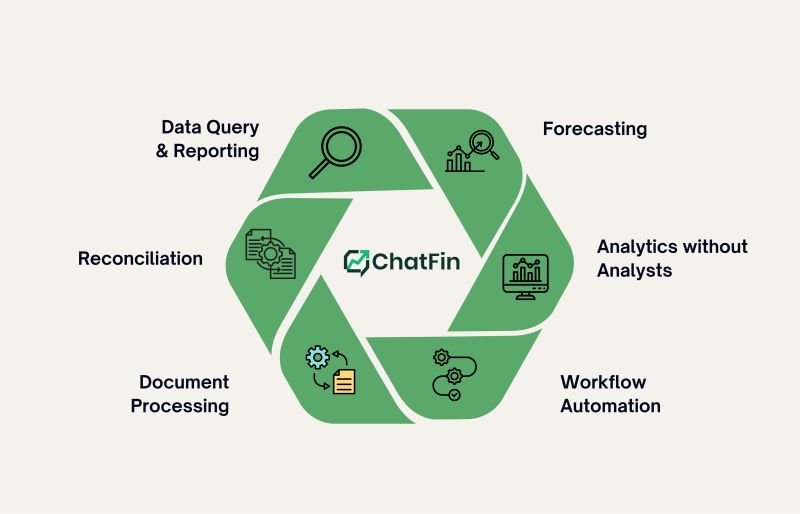
Best for: Contract intelligence, autonomous tail spend, AI-driven procurement analytics. ChatFin customers report 40% close cycle improvement and 30% AP cost reduction.
2. Spendflo: Real-Time Spend Intelligence
Spendflo specializes in spend analysis and vendor optimization. The platform identifies contract savings opportunities, flags redundant software subscriptions, and recommends renegotiation windows with AI precision. Finance teams see maverick spend patterns across ERPs instantly.
Best for: Real-time spend insights, vendor optimization, and negotiation opportunities.
3. Coupa: Business Spend Management Platform
The leading platform for end-to-end spend management. Coupa's Community AI benchmarks pricing against trillions of dollars of market data. Auto-approval workflows route requests based on risk profiles, enabling autonomous procurement at scale. Integration with supplier networks creates direct spend optimization feedback loops.
Best for: Enterprise spend management and community price benchmarking.
4. Zip: Intake and Process Orchestration
The category leader in procurement intake. Zip's AI understands natural language requests and intelligently routes them to Legal, Security, Finance based on risk assessment. Vendor recommendations appear before users finish typing. Employee adoption rates exceed 85% because the user experience mimics consumer platforms.
Best for: User adoption and intelligent process orchestration.
5. SAP Ariba: Enterprise Procurement and Category Management
Deep integration with SAP S/4HANA creates native procurement workflows. Ariba's category management AI analyzes global market trends and commodity prices, updating sourcing strategies in real-time. Copper prices spike? Ariba suggests updated target pricing for wire contracts today.
Best for: Large SAP-integrated enterprises and complex category strategies.
6. Ivalua: Direct Materials and Supply Chain Sourcing
Purpose-built for manufacturers. Ivalua's BOM collaboration identifies supply chain bottlenecks and suggests validated alternative suppliers when shortages threaten production. Quality-assured supplier networks reduce sourcing risk for component-heavy operations.
Best for: Manufacturing supply chains and direct materials optimization.
7. Icertis: Contract Intelligence and Compliance
AI-powered contract lifecycle management that parses contracts to audit compliance risks, identify favorable clauses, and suggest redlines automatically. Legal teams spend minutes on document review instead of hours. Compliance teams track regulatory changes across contract portfolios in real-time.
Best for: Contract management, compliance automation, and risk reduction.
8. Resilience360: Supplier Risk Intelligence and Monitoring
Real-time supplier monitoring platform tracking financial health, geopolitical risks, and operational disruptions. Alerts notify procurement teams to activate backup suppliers before impact hits. Weather events, political instability, financial downturns trigger automated workflows enabling supply chain resilience.
Best for: Supply chain risk management and supply resilience planning.
9. Fairmarkit: Tail Spend Automation
Specialized automation for the 80% of transactions comprising 20% of spend. Fairmarkit automates competitive bidding for tactical items, consistently delivering 10-15% savings on previously unmanaged purchases. Office supplies, IT peripherals, small services automatically sourced with zero manual intervention.
Best for: Tail spend automation and low-value sourcing event management.
10. Globality: Services Procurement and SOW Automation
Purpose-built for complex services sourcing. Globality's AI interviews stakeholders to define scope, then matches requirements to optimal suppliers instantly. Consulting, marketing, creative services sourced with structured scope definitions and validated supplier matching.
Best for: Services procurement and statement of work automation.
How to Select and Implement Procurement AI Tools
Start with your highest-impact opportunity. Manufacturing teams should prioritize supplier intelligence and direct materials tools. Services-heavy organizations should begin with intake orchestration and services sourcing. Finance-focused teams should start with spend intelligence and tail spend automation.
- Measure baseline metrics: Close cycles, sourcing times, cost per transaction, approval delays
- Select focused tools: Master one tool before adding adjacent capabilities
- Track ROI rigorously: Time savings, cost recovery, cycle reduction, error reduction
- Enable team adoption: Training, documentation, success tracking matter more than tool features
Where the next dollar goes
Procurement decisions are allocation decisions. The useful question about any spend is whether the next dollar does more here than somewhere else.
The second one is ensure the maximization of the next dollar of allocation, whether that's operating, capitalizing, whatever it is, make sure we're maximizing that next financial resource we're going to spend.
Paul Barnhurst, on the AgentCFO podcast
Hold the tools in this guide to that test. Savings percentages matter less than whether the decision quality improved.
Related Resources
Explore more procurement and supply chain AI content:
- End-to-End AI Finance Automation: From Procurement to Payment
- Bot-to-Bot Commerce: When Your Procurement AI Negotiates with Vendor AI
- Procurement Intelligence: Saving Millions with AI Negotiators
- Supply Chain Finance Platform: AI Solutions for Procurement Payments 2026
Transform Procurement with AI in 2026
CPOs winning in 2026 delegate low-value tasks to AI while focusing on supplier partnerships, category strategy, and business impact. These 10 tools represent the cutting edge of procurement transformation.
Start small, measure ROI quickly, and expand. Autonomous sourcing, real-time spend visibility, and intelligent contract management are no longer competitive advantages. They're baseline requirements for modern procurement operations.
What AI Actually Does in Procurement
AI in procurement reads documents and matches records that people used to compare by hand. It pulls renewal dates and price terms out of contracts, sorts spend into categories, routes a purchase request to the right approvers and runs quote requests for small buys. Each is a narrow task with a checkable output, which is why the tools on this page split by job.
Before any of them earns trust, it needs clean data from your ERP: the purchase order, the goods receipt, the supplier master and the invoice. When those four do not line up, a spend report is wrong before the AI touches it. Check supplier duplicates and PO coverage first, then pick the category that closes your biggest gap.
Ashok Manthena, CEO of ChatFin and host of the AgentCFO podcast, speaking with guest Chris Ortega about building with AI tools.
“SMBs, I think you should use any of the big four tools and start building. It'll really help. If you're in mid to large enterprise, again, the amount of efficiency you get by building is actually less and sometimes it's negative.”
Procurement Tasks to Hand to AI First
Each task below has a clear input and an output that a buyer or an AP clerk can check quickly.
- An invoice with no purchase order. AP receives a supplier invoice and cannot find the PO. The tool searches open orders by supplier, amount and description, proposes the likely match, and shows what is missing when none fits. The buyer decides instead of hunting.
- Renewal notices coming up. The CPO asks which software contracts renew this quarter and carry a price increase. Contract intelligence returns the list with the clause and the notice date, so negotiation starts before the window closes.
- One supplier under three names. Spend analysis merges duplicate supplier records so the total with a vendor shows once. The category owner sees the real commitment before the next negotiation.
- A laptop request from a new hire's manager. Intake routes the request to the right approvers, and a tail spend tool gathers quotes from pre-approved suppliers. The buyer approves one choice instead of running a sourcing event.
- Goods received, invoice not yet here. At month end the controller needs an accrual for what has arrived without an invoice. Matching receipts to open POs produces the list, and the controller reviews it instead of building it.
Jason Yocum, a fractional CFO and former CFO of Vivino, on invoices and approvals in AP.
“I'm surprised by the amount of companies that I talk to or work with or other CFOs where they still have an AP team. They still have a team where they're literally getting invoices emailed to them. And then they're going to the internal business partner, hey, is this the right amount? Can you stamp this PDF with your approval?”
Quick Answers on AI for Procurement
What are the best AI tools for procurement?
The ten on this page cover different jobs: Fairmarkit for small buys, Coupa and Spendflo for spend analysis, Zip for intake, Icertis for contracts and Resilience360 for supplier risk. Choose by the job you need done first.
How is AI used in procurement?
It reads contracts for dates and clauses, classifies spend, routes purchase requests, compares supplier quotes and watches supplier risk signals. In each case a buyer reviews the output before money moves.
What is AI procurement software and who uses it?
AI procurement software adds document reading, matching and recommendations to buying workflows. Procurement leaders use it for sourcing and contracts, AP teams use it to match purchase orders to invoices, and controllers use it for spend visibility.
Can AI replace procurement analysts?
It takes over the reading and matching: pulling terms, categorizing lines and assembling quotes. The supplier relationship, the trade-off between price and risk, and the call on who gets the award stay with people.
What ERP data does procurement AI need?
Purchase orders, goods receipts, the supplier master and invoices, kept in one place. Gaps such as invoices without POs or one supplier under several names limit what any tool can report, so clean those up first.
Frequently Asked Questions
Can AI really negotiate contracts automatically?
Yes, for standard indirect spend categories. AI negotiation bots execute chat-based negotiations with suppliers for common items like laptops and software, typically achieving 5-10% savings through volume discount analysis and rate benchmarking.
What is tail spend and why does it matter?
Tail spend represents the 80% of transactions comprising only 20% of total spending. Historically too expensive to source manually, AI platforms now make competitive bidding economical for small tactical purchases, recovering 10-15% savings from previously unmanaged spend.
How do procurement teams measure ROI from AI tools?
ROI comes from four sources: cycle time reduction, cost savings, error reduction, and time reallocation. Most teams measure only cost savings, missing 60% of actual ROI. Full ROI includes analyst hours freed for strategic work, not just direct procurement cost reduction.
Should we implement one platform or best-of-breed tools?
Unified platforms like ChatFin and Coupa integrate faster with fewer data silos, though specialized tools like Spendflo and Icertis often excel in specific categories. Start with one high-impact platform, then add specialist tools only if needed. Integration overhead kills ROI.
Your AI Journey Starts Here
Transform your procurement operations with intelligent AI agents. Book a personalized demo and discover how ChatFin can automate your workflows.
Book Your Demo
Fill out the form and we'll be in touch within 24 hours