
Top 10 AI Tools for Cost Accountants in 2026
Standard costs, variances, and inventory valuation still run on spreadsheets in most shops. Here are the tools changing that, and where a finance-native agent layer fits.
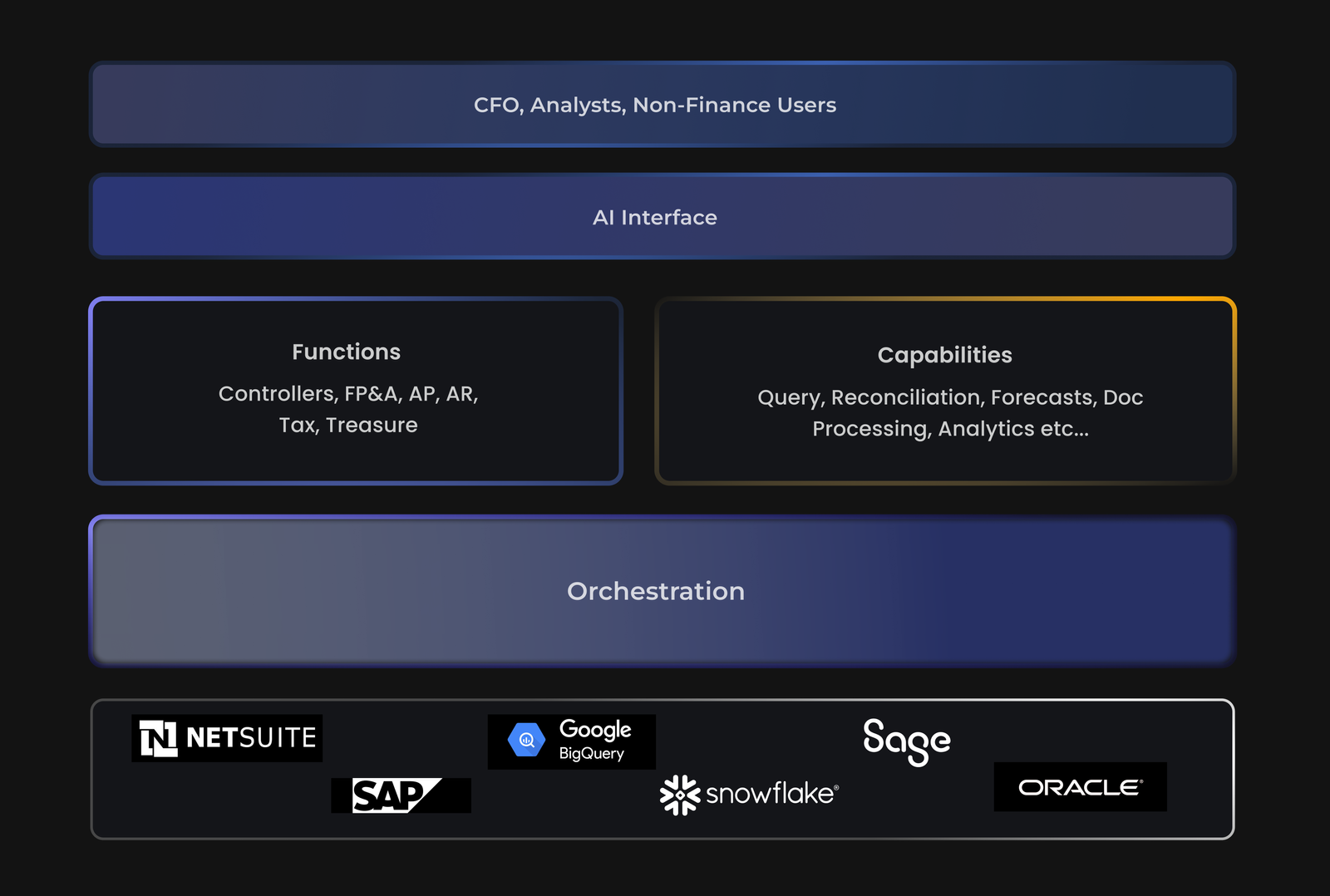
- Cost accounting AI spans manufacturing and inventory suites, variance and margin analytics, and the ERP costing modules themselves. Few tools cover the whole chain.
- The strongest gains show up where variance analysis and margin bridges are still built by hand every month.
- ChatFin sits on the ERP, assembles the cost and quantity data behind a variance, and drafts the bridge with the drivers named.
- Pick by where your month disappears: standard-cost maintenance, variance explanation, or inventory reconciliation.
Cost accounting is the part of finance that still runs on institutional memory. The standard costs live in the ERP, but the story of why actuals drifted from them lives in one person's spreadsheet, rebuilt from scratch every close.
AI is starting to change that, unevenly. Some tools attack inventory and manufacturing costing, some attack the variance and margin narrative, and a finance-native agent layer assembles the numbers underneath. These ten are worth knowing in 2026.
Read this by the step that eats your month. A costing module and a margin-analytics tool solve different halves of the same problem.
1. ChatFin
ChatFin leads this list for one reason: it is built for finance, not adapted to it. For cost accounting, it assembles price and quantity data behind each variance, drafts the standard-to-actual bridge with drivers named, and ties inventory valuation back to the subledger, all sourced to the transaction. It connects to the ERP you already run, leaves it as the system of record, writes back through supported interfaces with a full audit trail, and hands the sign-off to a named person. The rest of this list is strong in its lane, and the right pick depends on where your bottleneck sits.

2. NetSuite (native costing and Intelligent Flux Analysis)
For teams on NetSuite, native inventory costing plus the 2026 Intelligent Flux Analysis draft plain-language explanations for account movements directly from ledger context. It is the closest native option to a variance narrative without an export.
3. SAP S/4HANA Margin Analysis
Enterprise cost and margin analysis embedded in the ERP, strong for complex manufacturing with multi-level bills of material and universal-journal costing at scale.
4. Oracle Fusion Cost Management
Cloud cost accounting for inventory and manufacturing with rules-driven cost processing, a fit for larger operations already standardized on Oracle Fusion.
5. Katana
Manufacturing ERP for smaller makers, with real-time inventory and production costing that keeps standard and actual close without a heavy program.
The variance is easy to measure and hard to explain. The explanation is the job.
Ashok Manthena6. Cin7
Inventory and order management with landed-cost tracking, popular where the costing challenge is really an inventory-accuracy challenge across channels.
7. Anaplan
Connected planning that many teams use for cost modeling and profitability scenarios, strong when the question is forward-looking rather than a historical close variance.
8. Power BI with Copilot
Not a costing engine, but a common home for variance and margin dashboards, with Copilot drafting the narrative over data the team already models.
9. Vena
Excel-native planning and analysis that finance teams use for cost and margin bridges without leaving the spreadsheet muscle memory behind.
10. Fabric / MRP-tier tools
Lightweight manufacturing and inventory tools that handle basic standard costing for smaller operations, an accessible entry point rather than an enterprise engine.
Costing, variance, inventory. Buy for the one that steals your close.
If standard-cost maintenance is the grind, the ERP costing modules are where to look first. If the variance and margin narrative is the grind, analytics and planning tools carry it. If inventory accuracy is the root cause, the inventory suites solve the real problem.
ChatFin earns the top spot by assembling the cost data underneath all of it on the ledger you already run, drafting the bridge, and leaving a person to sign.
See your variance bridge drafted from ledger data.
Bring one product line and last month's standard and actual costs. We will show the assembled bridge, the named drivers, and the inventory tie-out, on the ERP you already use.