

The Hidden Cost of Finance AI Is Integration, Not the Model
Everyone shops for the model. The cost lives in everything around it: the connection, the data, the process, the controls. The boring part is the part that actually decides whether it works.
- The model is the visible, comparable, and increasingly cheap part of finance AI. It is not where the cost or the difficulty lives.
- The real work is integration: connecting to your ERP, handling your data and conventions, fitting your process, and doing it all under controls.
- This is why impressive demos so often fail to become working systems. The demo skips the integration; production is almost entirely integration.
- Evaluating finance AI on the model alone is a category error. The right question is how well it connects, governs, and fits.
- ChatFin is built as the integration and governance layer, so the boring, decisive work is done rather than left as an exercise for the buyer.
When finance teams evaluate AI, attention gravitates to the model. Which one is it built on, how does it score, is it the latest. This is understandable, because the model is the visible, brandable, comparable part. It is also, increasingly, the cheap part and the wrong thing to obsess over, because it is not where the cost or the difficulty of finance AI actually lives.
The cost lives in integration, and integration is everything the model is not: unglamorous, company-specific, and hard to demo. Connecting to your ERP without handing over the keys. Handling your data, your chart of accounts, your conventions. Fitting your actual close process rather than a generic one. Doing all of it under controls that satisfy your auditors. None of that shows up in a benchmark, and all of it determines whether the AI works.
This page argues that the boring part is the whole game. The model is a component you can swap; the integration and governance around it are the system. Understanding that changes how you evaluate finance AI, and it explains why so many impressive demos never become working tools.

The model is the visible part
There are good reasons the model gets the attention. It has a name and a version. It has benchmarks you can compare. Vendors market it, and a new one arrives every few months with fresh capabilities. It is the part of finance AI you can see and talk about, so naturally it dominates the conversation and the evaluation.
But visibility is not the same as importance, and the model's prominence is out of proportion to its share of the actual work. As models get cheaper and more capable, and as most serious tools become model-agnostic, the choice of model matters less and less to whether your finance AI succeeds. The visible part is becoming a commodity, which should push your attention to where it is not.
Where the cost actually lives
Add up the real work of putting finance AI into production and almost all of it is integration.
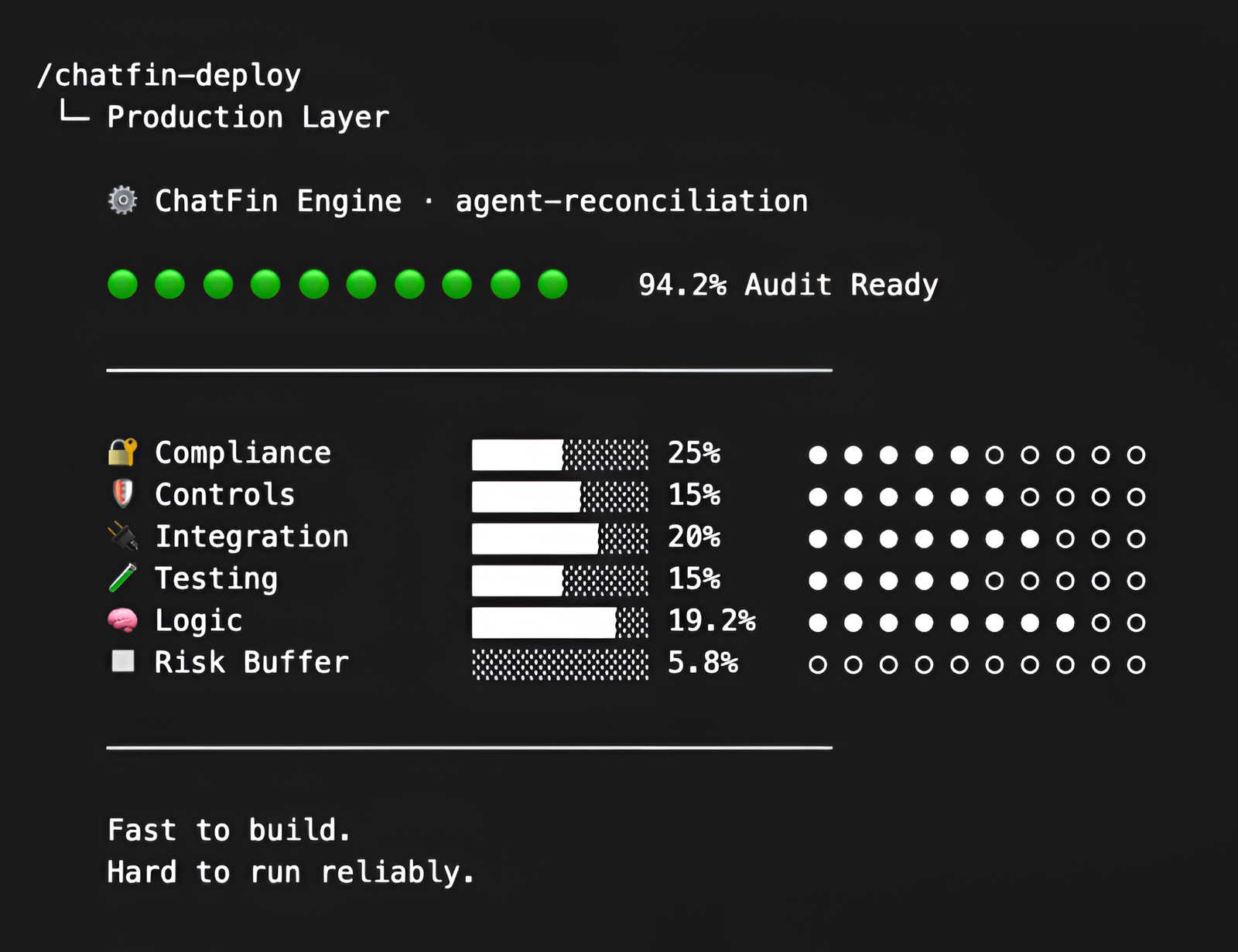
None of these are model problems, and none are solved by a better model. They are integration and governance problems, and they are where the time, the cost, and the risk of finance AI concentrate. The model is maybe the last ten percent; this is the other ninety.
Why demos fail to become systems
This framing explains one of the most common disappointments in finance AI: the dazzling demo that never becomes a working tool. The demo is impressive precisely because it skips the integration. It runs on clean sample data, in a generic process, with no real ERP connection and no controls. It shows the model doing something clever, which is the easy ten percent.
Production is the ninety percent the demo skipped. The moment you try to connect it to your real ERP, feed it your messy data, fit it to your process, and satisfy your controls, the work explodes, and the model's cleverness turns out to have been the least of it. A demo proves the model can do the task in principle. It says almost nothing about whether the system will work in your finance function.
A demo is the easy ten percent. Production is the ninety percent the demo skipped, and it is all integration.
Why impressive demos disappointHow to evaluate finance AI properly
If integration is the cost, your evaluation should be mostly about integration. Ask the questions that matter.
How does it connect
Does it reach your ERP through a governed interface, scoped and logged, or does it want broad access. The connection is the foundation.
Does it fit your process
Can it work with your chart of accounts, your conventions, and your actual close, or does it assume a generic setup you do not have.
Does it satisfy controls
Approval on every write, a full audit trail, documentation for your auditors. If governance is an afterthought, the integration is incomplete.
The model should be the swappable part
The healthiest way to think about this is to invert the usual hierarchy. The integration and governance layer is the durable investment, the thing you build once and rely on. The model is the swappable component underneath it, which you upgrade as the market moves without re-engineering anything. That is the opposite of choosing a tool for its model and inheriting whatever integration comes attached.
This inversion also protects you from the model treadmill. If your finance AI is really an integration and governance layer with a swappable model, then every new frontier model is upside you collect for free, and no model change disturbs your connection, your process fit, or your controls. You bought the part that lasts, and you rent the part that keeps improving.
Where ChatFin fits
ChatFin is built as the part that actually costs: the integration and governance layer. It connects to your ERP through governed interfaces, works with your chart of accounts and conventions, fits your close and approval process, and enforces approval and a full audit trail on everything that posts. The model underneath is swappable.
That means the ninety percent, the boring, decisive work, is done rather than left as an exercise for you. You are not buying a clever model and then discovering the integration is your problem. You are buying the integration and governance, with the model as a component you can upgrade whenever a better one appears.
The one-line version
The model is the visible, comparable, increasingly cheap part of finance AI, and it is not where the cost or the difficulty lives. The real work is integration: connecting to your ERP, handling your data, fitting your process, and meeting your controls.
Evaluate accordingly. Judge finance AI on how it connects, fits, and governs, not on which model it uses, and treat the model as the swappable component. The boring part is the whole game, and it is the part worth paying for.
Frequently Asked Questions
Why is the model not the main cost of finance AI?
Because the model is the visible, comparable, and increasingly cheap component. The real work, connecting to your ERP, handling your data and conventions, fitting your process, and meeting your controls, is integration, and that is where the cost and difficulty live.
Why do impressive demos often fail to become systems?
Because a demo skips the integration: it runs on clean sample data in a generic process with no real ERP connection or controls. Production is almost entirely the integration the demo left out.
How should I evaluate finance AI then?
Mostly on integration: how it connects to your ERP, whether it fits your chart of accounts, conventions, and actual process, and whether it satisfies your controls with approval and a full audit trail.
Should the model matter at all?
It should be the swappable part. Build the integration and governance layer once, and upgrade the model underneath as better ones appear, so model changes never disturb your connection, process fit, or controls.
How does ChatFin address this?
It is built as the integration and governance layer, connecting through governed interfaces, working with your accounts and process, and enforcing approval and a trail, with a swappable model underneath. The costly part is done for you.
Invest in integration and governance, keep the model swappable
ChatFin is the integration and governance layer that decides whether finance AI works, with the model as a swappable component. See the integration on your own ERP.
Book a DemoSee the integration, not just the model
Bring your ERP and a real process. We will show the governed connection, the process fit, and the controls, which is where the work actually is.