

The Benefits Invoice Nobody Reconciles
The carrier invoice arrives monthly, gets approved because it looks like last month, and quietly bills for people who left in March. The recovery window is shorter than most teams assume.
A benefits invoice reconciliation compares the carrier's monthly bill line by line against the employer's own employee census and payroll deduction records. Three things must agree for every person: that they are eligible and enrolled, that the coverage tier billed matches what they elected, and that the employee share deducted through payroll matches the share billed. Discrepancies are common because the carrier bills from its own enrolment file, which updates on its own schedule.
- Carriers bill from their records, not yours. Any lag in a termination or a tier change becomes a real overpayment.
- Reconcile three things per person: eligibility, coverage tier, and the employee versus employer share. A total to total comparison finds none of them.
- Terminations are the largest recurring source of overbilling, and retroactive credit windows are often limited by the carrier agreement.
- The employee share also matters. A deduction that does not match the tier billed means the company is absorbing cost it never agreed to.
- ChatFin reads the carrier invoice as a document, matches it to the census and payroll deductions, and produces the exception list with the credit request drafted.
Benefits invoices are approved on pattern recognition. The amount is close to last month, the carrier is a known vendor, the approval is a formality.
Underneath that, the carrier is billing from an enrolment file it maintains, updated when it receives and processes your changes. A termination filed at the end of one month may not take effect on their file until the middle of the next, and a coverage tier change requested by an employee may sit unprocessed for a cycle. Each lag is a real cost, and because the total moves only slightly it never triggers a question.
This page sets out what to compare, why terminations dominate the exception list, how the employee share fits in, and how to turn a monthly approval into an actual reconciliation without adding a headcount to do it.
Why the invoice stops matching reality
The carrier's enrolment file and your employee census are two records of the same population, maintained by two organisations, updated through a feed with its own timing. They will drift, and the drift is structural rather than anyone's fault.
Retroactive adjustments deserve special attention. They are how the carrier corrects its own errors, and they are also how a genuine credit you are owed can be quietly netted against a back charge you never agreed to.
The three comparisons per person
Reconciling the total against the prior month is not a reconciliation. Three separate comparisons per employee are, and each finds a different class of error.
Eligibility
Is this person currently employed and eligible? This finds terminations still being billed and, occasionally, people who were never eligible in the first place.
Coverage tier
Does the tier billed match the tier elected in your own records? This finds unprocessed life event changes running in both directions.
Employee share
Does the deduction taken through payroll match the employee portion of what was billed? A mismatch means the employer is absorbing the difference silently.
Rate applied
Does the per person rate match the current plan year rate schedule? Rate changes applied from the wrong effective date affect the entire population at once.
The third tie is the one most often skipped and it is where the cumulative amounts can be largest, because a deduction error affects every pay period rather than a single month.

Recovering the overpayment
Finding the exception is only half of it. Carrier agreements frequently limit how far back retroactive credits will be granted, and that window can be measured in a small number of months rather than years.
This is why reconciliation cadence matters more here than in most controls. A quarterly reconciliation that finds a termination billed four months ago may find the credit is no longer available, which converts a recoverable error into an absorbed cost.
| Credit window | Check the carrier agreement for the retroactive adjustment limit, which is often shorter than teams expect |
| Evidence required | Termination date from the HR record, the enrolment change request and its submission date |
| Netting risk | Confirm credits are applied gross rather than netted against back charges you have not agreed |
| Reference tracking | Each credit request needs a reference that can be traced onto a later invoice, or it will be lost |
| Follow up | A credit requested and never received is the most common ending, so the open list needs an owner |
The last row is worth stating plainly. Most benefits reconciliation effort is wasted at the follow up stage rather than at the analysis stage, because nobody owns the open credit list once the exception has been reported.
What the benefits systems cover
Benefits administration platforms have improved substantially. Workday, bswift and Sequoia manage enrolment, life events and carrier feeds, and reduce the drift by shortening the lag between an event and the carrier being told about it. Payroll platforms handle the deduction side accurately once configured.
What these platforms generally do not do is read the carrier's invoice. They know what they sent, not what was billed, and the reconciliation only exists in the comparison of those two. Where the invoice is a PDF or a spreadsheet in the carrier's own format, and it usually is, nothing in the benefits stack is looking at it at all.
Reading an unstructured carrier invoice and matching it line by line to an internal population is a document and matching problem, which is exactly what pre built finance AI agents are built for.
Turning it into a monthly control
Done manually, a line by line reconciliation of a few hundred employees takes a day or more, which is why it becomes quarterly, then annual, then a project. Automating the comparison changes the economics enough to make monthly realistic.
| Cadence | Monthly, before the invoice is approved rather than after it is paid |
| Owner | A named person in finance rather than in benefits, so the reconciliation is independent of the enrolment process |
| Exception list | Every person who fails any of the three ties, with the reason, rather than a total variance |
| Open credits | A tracked list with the request date, reference and expected invoice, reviewed each month |
| Trend | Exception counts by type over time, which shows whether the underlying feed problem is improving |
The trend line is the part that produces lasting improvement. A stable number of termination exceptions every month is a feed timing problem to fix at source, not a recovery exercise to repeat forever.
How ChatFin runs the line by line match
ChatFin reads the carrier invoice in whatever format it arrives, including PDF and carrier specific spreadsheet layouts, and turns it into a structured list of billed individuals with tier, rate and period. That extraction is the step that normally makes this reconciliation impractical.
The autonomous reconciliation agent then matches that list against the employee census and the payroll deduction records, testing eligibility, tier, employee share and rate for each person. The output is an exception list with the reason attached, not a variance figure. The pattern recognition agent tracks exception types across months so a persistent feed problem becomes visible.
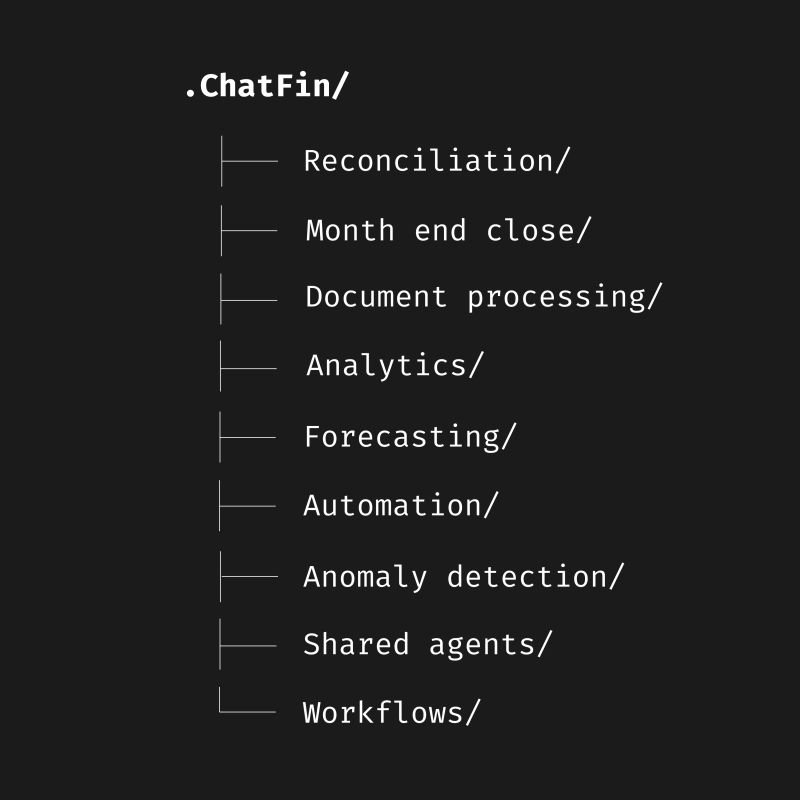
| Document processing | Reads carrier invoices in any format and structures them by individual, tier, rate and period |
| Reconciliation agent | Tests eligibility, coverage tier, employee share and rate for every billed person |
| Pattern recognition | Tracks exception types month over month to expose recurring feed timing problems |
| Data query agent | Answers questions such as which terminated employees are still being billed and since when |
| Governed write back | Prepares the accrual or correcting entry and the credit request, for a person to approve |
Credit requests and ledger entries are drafted, not sent or posted. A person reviews the exception, approves the credit request to the carrier and releases any correcting entry through your normal approval chain.

Reconciling one month to see the scale
The fastest way to size this is to reconcile a single recent month completely rather than sampling several.
Get the invoice at individual level
Ask the carrier for the billing detail by person if the invoice you receive is summarised. Most will provide it.
Pull the census as at the billing date
Employment status, coverage tier and effective dates, taken as at the date the carrier billed rather than today.
Run the three ties
Eligibility, tier and employee share for every person. Expect terminations to dominate the first list.
Extrapolate and check the window
Multiply the monthly exception value across the year, then check the carrier agreement for how far back credits can be claimed.
The fourth step usually decides how urgent this becomes. A recoverable annual amount and a short credit window together make a strong case for monthly reconciliation starting immediately.
The carrier bills from its own enrolment file. Every day of lag between your termination and their update is a real cost that nobody is looking for.
ChatFin
Frequently Asked Questions
How do you reconcile a benefits invoice to the employee census?
Obtain the carrier invoice at individual level rather than in summary, then test three things for every person billed: that they were employed and eligible on the billing date, that the coverage tier billed matches the tier elected in your own records, and that the employee share deducted through payroll matches the employee portion billed. Comparing totals month over month will not find any of these, because the total moves only slightly when individual errors offset.
What causes benefits overbilling?
Timing lag between your records and the carrier's enrolment file. Terminations processed after the billing cut are the largest recurring cause, followed by coverage tier changes from life events that reach the carrier a cycle late, dependents ageing out of eligibility, and rate changes applied from an incorrect effective date. Retroactive adjustments on later invoices can also net genuine credits against back charges that were never agreed.
How far back can you claim a benefits credit?
It depends on the carrier agreement, and the retroactive adjustment window is often shorter than teams assume, sometimes only a few months. That is the main argument for reconciling monthly rather than quarterly. An error found four months after it occurred may no longer be recoverable, which converts what should have been a credit into an absorbed cost.
Can ChatFin read carrier invoices in different formats?
Yes. ChatFin reads the invoice as a document, including PDF and carrier specific spreadsheet layouts, and structures it by individual, coverage tier, rate and period. It then matches that against your employee census and payroll deduction records and produces an exception list with the reason attached for each person, rather than a single variance figure.
See ChatFin reconcile one month of carrier billing to your census.
ChatFin reads the carrier invoice at individual level, matches every billed person against your employee census and payroll deductions, and tests eligibility, coverage tier, employee share and rate.
The output is an exception list with reasons and a drafted credit request, prepared for a person to review and approve before anything is sent or posted.
Book a DemoBring one carrier invoice and a census extract.
ChatFin will match every billed individual against your records and show the eligibility, tier and employee share exceptions, with the recoverable amount quantified.