

The Autonomous Finance Maturity Model for CFOs
Nobody goes from manual to autonomous in one step. Maturity is a ladder of earned trust, and knowing which rung you are on is more useful than any label.
- Autonomous finance is a progression, not a switch. You move through levels of trust, and each level is earned with evidence.
- The levels run from assisted work, to prepared-and-approved, to supervised autonomy on proven workflows, to governed autonomy on the routine cases.
- You do not advance a workflow until its accuracy and its controls have proven themselves at the current level.
- Different workflows sit at different levels at the same time, and that is healthy, not a sign of being behind.
- ChatFin is built to move up this ladder safely, so autonomy is granted where it is earned and controls never drop.
Autonomous finance gets talked about as a destination, a state you either have reached or have not. That framing sets CFOs up to feel perpetually behind, because full autonomy is never quite here and the marketing implies everyone else is closer. The framing is wrong. Autonomy in finance is not a place you arrive. It is a ladder you climb, one workflow at a time, and each rung is earned.
Thinking in levels is more useful than thinking in destinations, for a practical reason. It tells you what to do next. Instead of asking whether you are autonomous, you ask which level a given workflow is at, what evidence would justify moving it up a rung, and whether the controls are ready for that. Those are answerable questions, and answering them is how progress actually happens.
This page lays out a plain maturity model for autonomous finance, from assisted tasks to governed autonomy, and how to tell which level you are genuinely at. The goal is not to rush to the top. It is to advance each workflow exactly as fast as the evidence allows, and no faster.

Autonomy is a ladder, not a switch
The instinct to treat autonomy as binary comes from software, where a feature is usually on or off. Finance does not work that way, because trust in a workflow is built from evidence over time, and evidence accumulates gradually. You do not decide one morning to let an agent run your close unattended. You watch it prepare, you check its accuracy, you narrow your review as it proves itself, and only then do you loosen your grip on the parts that have earned it.
So the honest model is a ladder. Each rung represents more trust granted to the agent on a specific workflow, and you climb only when the current rung has held. This is not caution for its own sake. It is how you end up with autonomy you can actually rely on, rather than autonomy you granted on hope and have to claw back after an incident.
The levels, plainly
Here is the ladder in four rungs. Most finance functions have workflows spread across several of them at once.
Assisted
The agent helps a person do the work faster, drafting and gathering, but the person does the task. Every output is human-driven.
Prepared and approved
The agent prepares complete work, entries, matches, reconciliations, and a person reviews and approves each one before it posts.
Supervised autonomy
On a proven workflow, the agent handles the routine cases with lighter, sampled review, and escalates the exceptions to a person.
Governed autonomy
The agent runs the routine, well-understood cases end to end within tight limits, with a full trail and a person owning the exceptions and the controls.
Each rung is earned with evidence
The rule that makes the model safe is simple: you do not advance a workflow to the next level until it has proven itself at the current one. Moving from prepared-and-approved to supervised autonomy is justified by a track record of accurate preparations, not by a calendar or a vendor roadmap. The evidence is the accuracy rate, the approval rate, and the absence of surprises over enough cycles to trust.
This is where many autonomy efforts go wrong. They grant a level of trust the evidence has not justified, usually because the demo was impressive or the pressure to show progress was high. That is how you get an incident that sets the whole program back. Earned advancement is slower to feel, but it is the only kind that holds.
You climb a rung when the current one has held, not when the roadmap says so. Evidence, not calendar.
The rule of the maturity ladderDifferent workflows, different levels, at the same time
A healthy finance function is not at one level. It is at several at once, because different workflows have earned different amounts of trust. Bank reconciliation might be at supervised autonomy while a judgmental accrual is still firmly at prepared-and-approved, and a brand-new workflow starts at assisted. That spread is not a sign of being behind. It is the model working as intended.
This matters because it frees you from the false pressure to move everything together. You advance each workflow on its own evidence. The routine, high-volume, pattern-heavy tasks will climb faster, because they generate evidence quickly and their cases are well understood. The judgmental, high-variability tasks will stay lower longer, which is exactly right.
What never changes as you climb
One thing has to stay constant at every rung, or the whole ladder becomes unsafe: the controls do not weaken as autonomy grows. Higher levels change how much a person reviews, not whether the actions are governed. Even at governed autonomy, the agent operates within tight limits, every action leaves a trail, and a person owns the exceptions and the policy. Autonomy is a change in review intensity, not a removal of governance.
This is the safeguard that lets you climb at all. Because the controls and the audit trail persist at every level, advancing a workflow is a calculated loosening of review on proven cases, not a leap into the dark. If moving up a rung ever means dropping a control, you are not climbing the ladder, you are stepping off it.
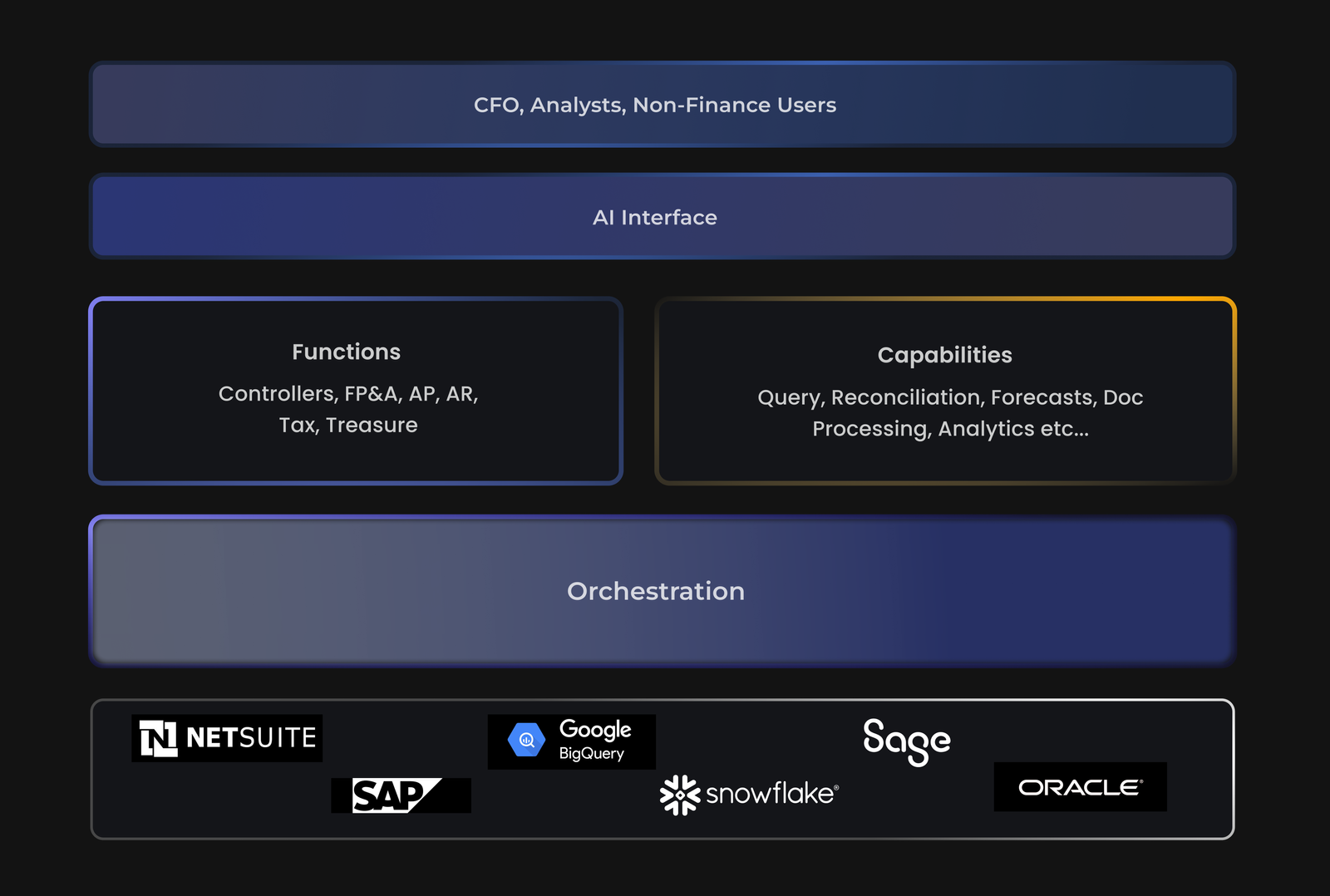
Where ChatFin fits
ChatFin is built to move workflows up this ladder safely. It starts at prepared-and-approved, where every entry and match is reviewed before it posts, and it produces the evidence, accuracy and approval rates over time, that justifies granting more trust on a proven workflow. As you climb, review lightens on the routine cases while the controls, the limits, and the trail stay in place.
That means you advance on evidence rather than hope, workflow by workflow, and you never trade governance for autonomy. You end up with real autonomous finance on the tasks that have earned it, and full human control retained on the tasks that have not. Which is what a maturity model is supposed to deliver.
Frequently Asked Questions
Is autonomous finance a single destination?
No. It is a progression through levels of trust, climbed one workflow at a time, with each level earned by evidence. Treating it as a switch sets you up to feel perpetually behind and to grant trust you have not verified.
What are the levels?
Assisted, where the agent helps a person; prepared-and-approved, where the agent prepares and a person approves each item; supervised autonomy, where it handles routine cases with sampled review; and governed autonomy, where it runs well-understood cases within tight limits and a trail.
How do I know when to advance a workflow?
When it has proven itself at the current level: a track record of accuracy, a high approval rate, and no surprises over enough cycles. Advance on evidence, not on a calendar or a vendor roadmap.
Is it a problem that my workflows are at different levels?
No, that is healthy. Different workflows earn different trust, so routine tasks climb faster and judgmental ones stay lower. The model is meant to run at mixed levels at once.
Does autonomy mean fewer controls?
No. Higher levels change how much a person reviews, not whether actions are governed. The limits, the trail, and human ownership of exceptions persist at every rung. Dropping a control is stepping off the ladder, not climbing it.
Advance each workflow up the ladder as fast as the evidence allows
ChatFin starts at prepared-and-approved and produces the accuracy evidence to earn more autonomy, without ever dropping the controls. See where your workflows sit today.
Book a DemoSee which level your workflows are at
Bring a workflow. We will show what it takes to move it from prepared-and-approved toward supervised autonomy, on evidence.