

The AI Buildout and Your Finance Budget: How to Read Hyperscaler Capex
A 700 billion dollar buildout is a headline, not a budget input. Your question is narrower and more useful: does AI pay back on your close and your receivables, at a cost that keeps falling.
- The four largest hyperscalers guided to roughly 700 billion dollars of combined capital spending in 2026, the large majority of it AI infrastructure, up sharply from the prior year.
- That spend is not your budget input. It matters to you mainly through one effect: sustained competition and scale tend to push the running cost of models down over time.
- The only ROI question that touches your budget is whether AI pays back on your own workflows, measured per task, not whether the industry's build pays off.
- Falling model costs improve the economics of analysis-heavy finance work like close and receivables, which is where a governed layer already delivers.
- ChatFin turns that macro trend into something concrete: cheaper, stronger models arrive as upgrades under your existing controls, with no change to your process.
Every quarter now brings a bigger number. The largest cloud providers report their capital plans, the totals climb, and the coverage debates whether the spending is visionary or reckless. For a finance leader watching this, it is easy to feel like you are supposed to have an opinion, or worse, a line item.
You do not. The hyperscaler buildout is one of the largest capital stories in the market, and it is almost entirely irrelevant to how you should budget for AI in your own function. The two questions are different, and conflating them leads to bad decisions in both directions, either over-investing on hype or waiting on the sidelines for a verdict that will never arrive as a single number.
This page separates the two. What the capex numbers actually are, why they should not drive your finance budget, and the one effect of the buildout that genuinely does reach your desk.

The numbers, briefly
The scale is real. Across the four largest hyperscalers, 2026 capital spending guidance landed in the neighborhood of 700 billion dollars combined, a large jump over the prior year, with the overwhelming majority directed at AI data centers, chips, and power. Individual guidance ran from roughly 120 billion at the low end to around 200 billion at the high end per company, and analysts were already projecting the total to cross a trillion in the following year.
Those are extraordinary figures, and the market has reacted to them with a mix of enthusiasm and unease. But notice what they describe: the cost of building the infrastructure that serves models. That is a supplier's cost structure, not a buyer's price list.
Why this is not your budget input
It is tempting to treat a giant industry number as a signal for your own spending, in either direction. Neither read holds up. The hyperscaler capex does not tell you whether AI will pay back on your close, and it does not tell you how much to spend on a receivables agent. It answers a question you are not asking.
Your budget question is specific and local. For a given finance workflow, does automating it save enough time or catch enough errors to justify what it costs to run. That calculation depends on your volumes, your error rates, and your team, none of which appear anywhere in a data-center capital plan.
A supplier's capital plan is not a buyer's business case. Your ROI lives in your own workflows.
Reading the buildout as a finance leaderBudget for a price that keeps moving
Model prices have fallen repeatedly, so a plan built on today's rate card is already out of date.
The AgentCFO podcast described most teams as still in an experimentation phase, gathering the numbers they need before committing real budget.
Set your AI budget on the work you want done rather than on a fixed price per token, and revisit the rate each quarter.
The one effect that reaches your desk
There is a single way the buildout genuinely matters to you, and it is worth understanding because it is good news. Sustained competition and enormous scale tend, over time, to push the running cost of models down. Frontier releases keep arriving faster and cheaper than the ones before them, and the price of a unit of model work has fallen repeatedly.
For finance, cheaper model work changes the economics of the analysis-heavy tasks. Reading documents, drafting commentary, matching exceptions, and preparing entries all become cheaper to run at volume. Work that was borderline on cost last year clears the bar this year. That is the real signal in the capex story, and it favors adoption of the workflows that were already close to worthwhile.
How to actually budget for finance AI
Ignore the macro number and budget the way you would for any other tool. These are the inputs that matter.
Time reclaimed
How many hours does the workflow consume today, and how much of that is genuinely repetitive reading and matching an agent can prepare.
Errors caught
What does a missed duplicate, a mis-coded invoice, or a late catch actually cost you. Prevention has a dollar value.
Running cost
What does it cost to run the workflow per period, given today's model prices, which are lower than last year's and likely lower next year.
Why falling costs favor a governed layer
There is a second-order point worth making. As model costs fall, the constraint on finance AI stops being the model and becomes everything around it: the connection to your ERP, the controls, the audit trail, and the review step. The cheap part gets cheaper, and the valuable part is the governance.
That is the opposite of a reason to wait. It means the sensible move is to invest in the durable layer now, the one that holds your controls and integrations, so that every future drop in model cost lands as a straight improvement in your economics. The teams positioned to benefit from the buildout are the ones who built the governed layer before the cheap models arrived.
Where ChatFin fits
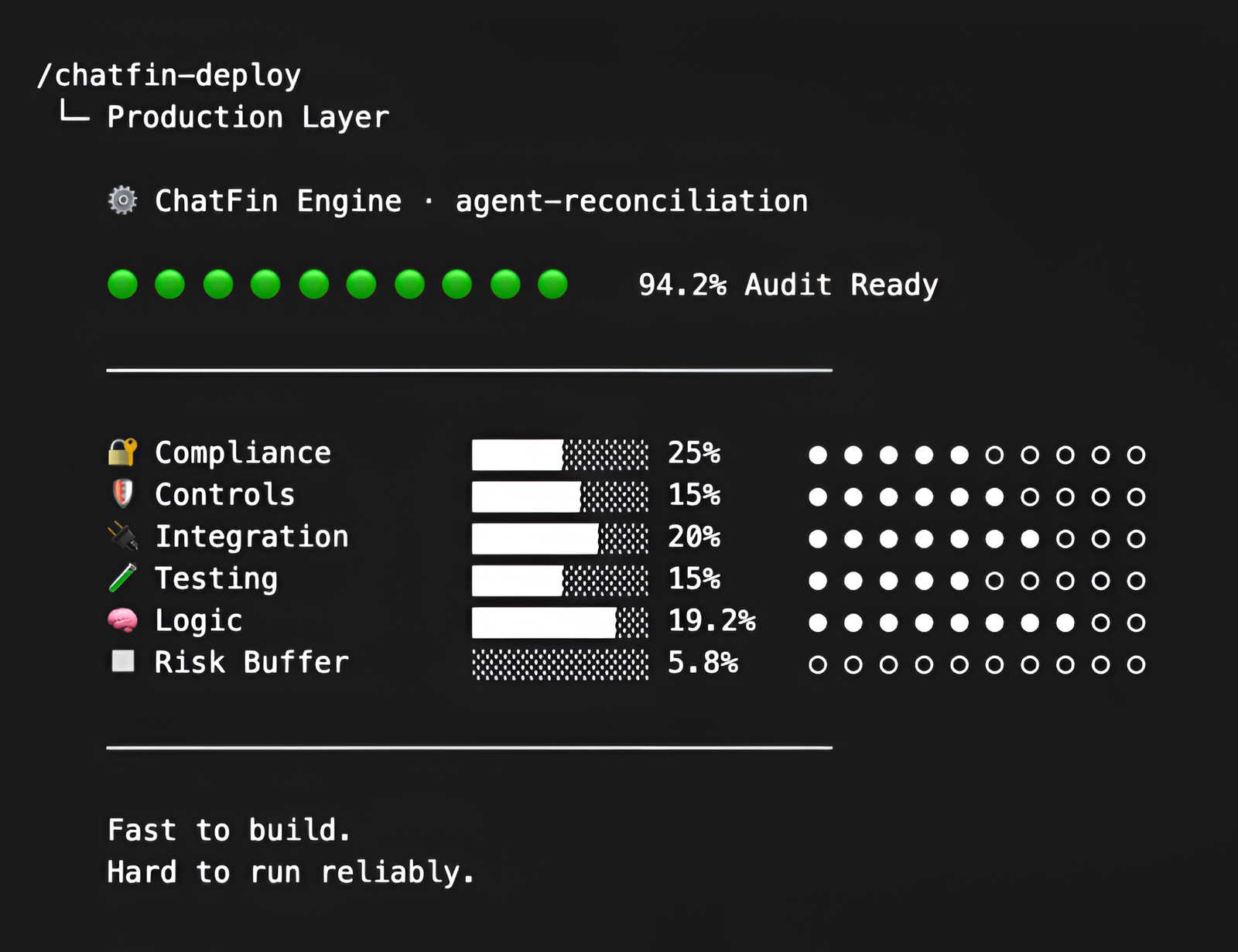
ChatFin is the governed layer that turns falling model costs into finance results. Your close, reconciliations, coding, and matching run under fixed controls and a full audit trail. The model underneath is swappable, so each cheaper or stronger release lands as an upgrade rather than a project.
That is how the macro trend becomes concrete for your budget. You are not betting on the hyperscaler buildout paying off. You are measuring payback on your own workflows, and quietly collecting the benefit each time the cost of a unit of model work drops.
The one-line version
The 700 billion dollar buildout is a genuine story, and it is not your story. Do not let a supplier's capital plan stand in for your own business case, in either direction.
Budget finance AI on your own numbers: hours reclaimed, errors caught, and running cost. Then let the buildout do the one useful thing it does for you, which is make the model work cheaper year after year, and make sure your governed layer is in place to catch that benefit.
Frequently Asked Questions
Should the hyperscaler capex change how much I spend on finance AI?
No. It describes suppliers' infrastructure costs, not your business case. Budget on your own volumes, error rates, and running costs instead.
What is the real effect of the buildout on my team?
Over time, competition and scale tend to push the running cost of models down, which improves the economics of analysis-heavy finance work like close and receivables.
Is it better to wait until the AI spending settles?
Waiting for a single verdict is a mistake, because it will not arrive as one number. The measurable question is whether a specific workflow pays back for you now, and cheaper models make more of them worthwhile.
Why does a governed layer matter as model costs fall?
Because the value shifts from the model to the controls, integration, and review around it. Investing in the durable layer means every future cost drop lands as an improvement in your economics.
How does ChatFin turn cheaper models into savings?
It keeps the model swappable beneath a governed layer, so each cheaper or stronger release is adopted as an upgrade under your existing controls, with no change to your process.
Put the governed layer in place, then collect every cost drop
ChatFin measures payback on your own close and receivables, and keeps the model swappable so falling costs land as upgrades. See it on your own ERP and your own numbers.
Book a DemoSee payback measured on your own workflows
Bring one workflow. We will show the time reclaimed and errors caught, at today's running cost, under your controls.