
The Agent-to-Agent Economy: How Machines Will Move Money in Finance
Payment rails now exist for machines to pay machines, metered, fractional, autonomous. When agents transact with other agents, the finance record and controls are what keep it accountable.
- New payment protocols now let AI agents pay other agents, machine-to-machine, with metered and even fractional pricing, designed to run without a human in the loop for each transaction.
- The vision is agents as economic actors, buying services from other agents and moving value autonomously, and industry projections put the potential transaction volume in the trillions by the end of the decade.
- When machines transact with machines, the requirement everyone building it agrees on is that it be secure, auditable, and policy-controlled.
- That is a finance problem: the record and the controls are what keep an agent-to-agent economy accountable rather than a black box.
The next step past agents paying invoices is agents paying each other. Payment protocols now exist for machine-to-machine commerce: an agent buys a service from another agent, metered, sometimes priced in fractions of a cent, and settled without a human approving each transaction. The framing from the companies building it is blunt: agents are becoming economic actors that move value without a human in the loop.
That sounds like a payments story, and it is, but it is also a finance story. When machines move money among themselves at speed and scale, the question is how any of it stays accountable. The answer everyone building these rails keeps returning to is that machine payments have to be secure, auditable, and policy-controlled, which is finance's job.
What machine-to-machine payments enable
Machines transacting
The new machine-payment protocols let one agent pay another for a service, an API call, a unit of compute, a piece of data, with pricing metered to usage and settlement handled programmatically. Because the amounts can be tiny and the volume enormous, the model assumes no human approves each payment; the point is autonomous, machine-speed commerce.
The projections attached to this are large, with industry estimates putting agent-driven transaction volume in the trillions within a few years. Whether or not those numbers land, the direction is clear: a layer of the economy where machines transact with machines is being built.
Why this is a finance problem
Autonomous machine-to-machine payments raise the accountability question in its sharpest form. If agents move value among themselves without a human in the loop, how does anyone know what happened, whether it was authorized, and whether it can be trusted? Speed and volume make the question harder, not easier.
The people building these rails answer it consistently: machine payments only work if they are secure, auditable, and policy-controlled. That is not a payments feature; it is a finance requirement. The record of what moved, the controls on what is allowed, and the ability to audit it are what separate an accountable agent economy from an ungovernable one.
Autonomous machine payments make accountability harder, and the builders agree the answer is that they be secure, auditable, and policy-controlled, which is a finance requirement.
The record and controls that keep it accountable
For an agent-to-agent economy to be trustworthy, three finance things have to hold, even without a human approving each transaction.
When agents move value among themselves without a human in the loop, the record of what moved, the controls on what is allowed, and the audit trail are what keep it accountable.
Ashok ManthenaWhere a governed reasoning layer fits
Keeping it accountable
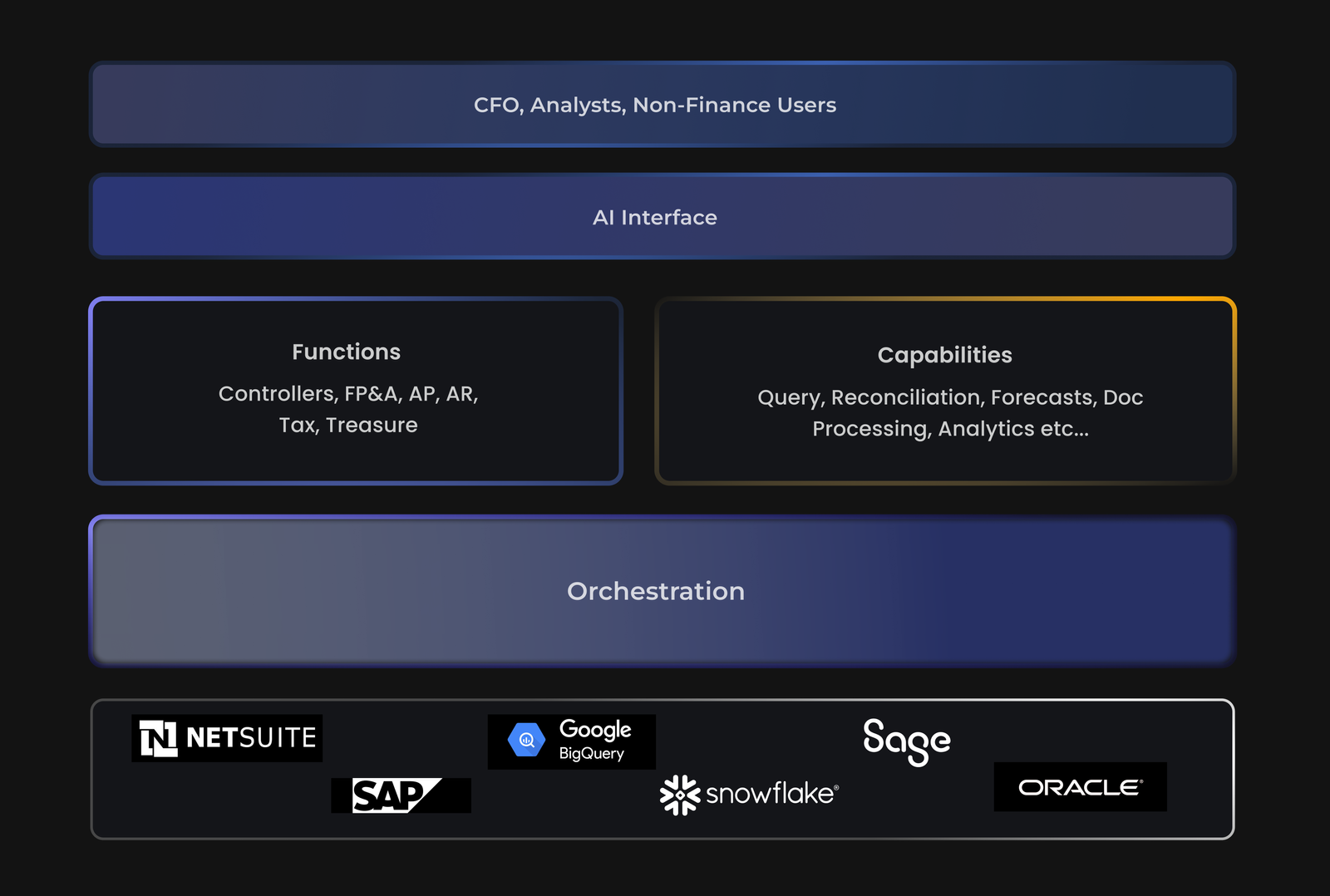
A governed reasoning layer is built for exactly the accountability an agent-to-agent economy needs. It can keep the finance record of what agents transacted, reconcile that activity back to the books, enforce the policy limits on what is allowed, and maintain the audit trail that makes machine payments reviewable.
So as machines start moving money among themselves, the finance layer does not disappear; it becomes more important. Someone has to keep the record, enforce the controls, and make the whole thing auditable, and that is precisely the finance-side job a governed reasoning layer is designed to do.

The takeaway for finance leaders
The agent-to-agent economy is early, and much of it is still being built, so this is a watch-and-prepare moment rather than a deploy-now one. But the direction is set, and the accountability requirement is already clear: machine payments have to be recorded, controlled, and auditable.
That is a finance responsibility, not a payments afterthought. As agents become economic actors, the finance record and the controls are what keep the economy accountable. Plan for the finance layer that machine-to-machine commerce will require, because someone has to keep the machines honest.
Machines will move money. Finance keeps it accountable.
Rails now let machines pay machines, metered and autonomous. The builders agree machine payments must be secure, auditable, and policy-controlled, which is a finance requirement, not a payments afterthought.
A governed reasoning layer keeps the record, enforces the controls, and maintains the audit trail that keeps an agent-to-agent economy accountable.
See machine payments kept accountable.
If you are exploring agent-to-agent flows, bring the model. We will show a reasoning layer keeping the record, enforcing policy limits, and making the activity auditable and reconciled.