
Technical Guides: Finance AI Resources
The hands-on hub. Building agents, connecting AI to an ERP, deploying open models, and the architecture decisions underneath. Every link is a step-by-step guide, not a think piece.
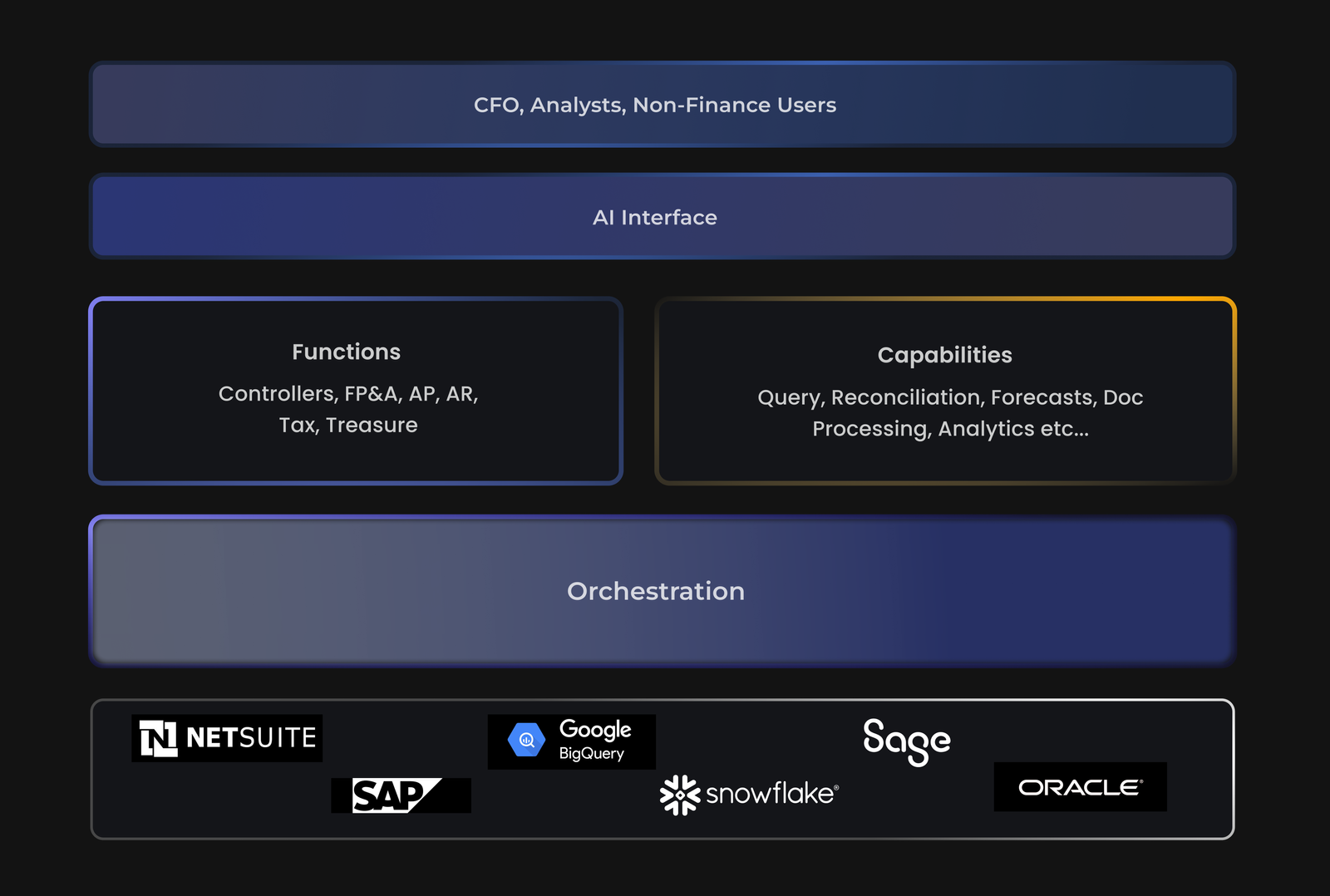
- The technical work of finance AI splits into three: building the agents, connecting them to the ERP, and running the models underneath.
- Reconciliation and document processing are the two agent patterns worth learning first, because they carry the most volume and the least risk.
- Connecting AI to an ERP is where most projects actually stall. The guides here cover the specific systems.
- Open-model deployment is a real option when data cannot leave the network, and the guides cover the honest operating cost.
Most finance AI content is strategic, which is a polite way of saying it does not tell you how to do anything. This hub is the opposite. It collects the step-by-step material for the people who actually have to build, connect, and deploy.
Building the agents

Build only what you would not buy
These guides exist for the parts of the stack that are specific to your business. The rest is usually cheaper to buy.
It's rare that companies, even at the largest scale, that are not in the business of creating business software, are creating their own business software for all aspects of their business.
Craig Sullivan, on the AgentCFO podcast
Use the build guides for your own logic and integrations, and buy the pieces every finance team needs the same way.
Connecting AI to your ERP
Deploying open models for finance
"Strategy tells you where to go. These guides tell you how to get there. Both matter, but only one compiles."
Or Skip the Build and Deploy the Platform.
Every guide here describes work ChatFin has already done: the reconciliation agents, the ERP integrations across NetSuite, SAP, Oracle, JD Edwards, Acumatica, Sage Intacct, and Dynamics 365, and the model layer underneath. Build it yourself with these guides, or deploy it as a product.
The guides are honest about how much work this is. ChatFin is the version where the work is already finished.