
SAP BUSINESS ONE EXECUTIVE
Should a Small or Midsize Company Use a Packaged AI Solution or Create Its Own SAP Business One Integration?
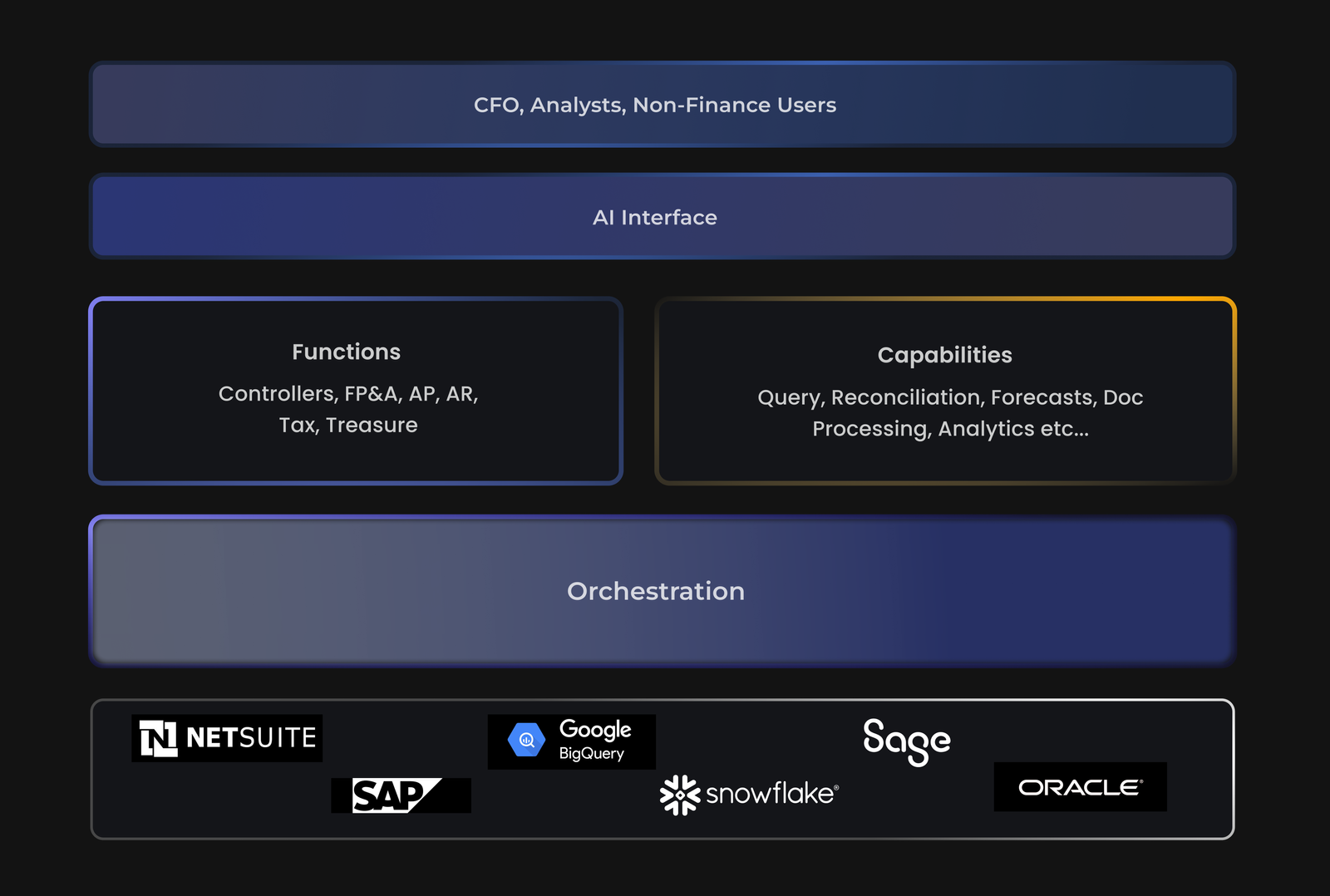
For most small and midsize companies the answer is packaged, and the reason is not that building is hard. It is that building produces parity on a solved problem, slowly, and then commits a small team to owning it forever, which is precisely the commitment a smaller company can least sustain.
- Connecting to SAP Business One is easy. Everything after the connection is the project, and that is what a smaller company underestimates.
- A packaged product arrives with the finance logic, approvals and audit trail built. You configure rather than construct.
- Building makes sense only for a genuinely unusual requirement with durable engineering capacity, which most SMBs do not have.
- The key person risk of a build is acute in a smaller company, where the person who built it is often the only one who understands it.
- ChatFin ships the layer a build spends months producing, running on your instance through the Service Layer.
This decision often gets made on the wrong evidence. Someone builds a demonstration in a week, it works, and the conclusion is that the full system is a month of work. The demonstration was the easy part, and it was easy because the hard parts were absent.
For a smaller company the stakes are higher, because the ongoing ownership a build demands falls on a team that has no slack.
What a Build Gets Right Quickly
Credit where due. SAP Business One is a good platform to build against, and a capable person will make visible progress fast, which is why so many companies start down this road.
What Builds Underestimate
Each of these is invisible in a prototype and unavoidable in production. Together they are the gap between a working demonstration and something a finance owner will rely on.
For a smaller company with no engineering slack, each is a larger obstacle than it would be in an enterprise.
The Honest Case for Building
There are real situations where a build is correct, and pretending otherwise would be dishonest. All three conditions should hold, not just one, and most smaller companies meet none of them.

The Honest Case for Packaged
The conditions where packaged is obviously right are common, and most SAP Business One companies meet them.
The core question is whether the thing you want to exist is a differentiator. Invoice matching and reconciliation are not competitive advantages. They are costs, and building your own version of a solved problem is an expensive way to reach parity.
The Key Person Risk Is Acute in an SMB
This is the argument that should weigh most heavily for a smaller company, and it is the one most often ignored during the enthusiasm of a successful prototype.
A build concentrates knowledge in whoever built it. In an enterprise that is a risk to manage. In a company of thirty people it is often a single individual whose departure would leave the system unmaintainable, and that person will eventually move on.
The Cost Nobody Models
Build discussions usually compare development cost against licence cost, which omits the two largest terms.
The first is ongoing ownership. The second, usually larger, is the value of the months between starting and having something that works, during which the manual process continues at full cost.
"Building your own invoice matching gets you to parity, slowly, and then asks a small team to own it forever."

The Middle Path
The choice is not binary. A sensible pattern is to adopt a product for the standard work where a solved answer exists, and build the genuinely specific things on the same Service Layer if you truly have something unusual.
Because both use the same interface, they coexist. For most smaller companies the specific things are few or none, so the practical answer is usually adopt, but nothing has to be decided permanently up front.

Buy the Solved Problem, Keep the Team
ChatFin provides the finance logic, approval workflow, audit trail and SAP Business One conventions that a build spends months producing, configured in days and running on your existing instance through the Service Layer.
For a smaller company the deciding factor is continuity. A build concentrates the knowledge in one person you cannot afford to lose.
How to Decide Between Build and Buy
Treat the decision as a question about each task rather than about the whole project. A weekly cash summary read from the Service Layer is a small build with one owner. Three-way matching, approval thresholds and an audit trail are different: each has an exception list that only grows, and each needs someone to maintain it after the first version works.
Ask who answers when it breaks at month end. If the answer is one developer working part time, price that person's absence into the decision. If the tool is a product with a vendor, the same question has a support arrangement behind it. A company of thirty people often has the first answer.
Craig Sullivan, Group VP of Product Management at NetSuite, on the opportunity cost of building software.
“I think in my mind it comes down to what's the opportunity cost of worrying about perfecting and optimizing the software that you could choose to build for yourself as opposed to using those cycles, whether they be AI cycles or human brain thought cycles on actually thinking about how to optimize your business for success.”
Build or Buy, Task by Task
Five tasks from an SAP Business One finance team, each sorted by who has to keep it running.
- A weekly cash and receivables summary. Read only, a handful of Service Layer queries, nothing posted. A capable person can build this quickly and it is safe to keep in house.
- Three-way match on purchase invoices. Each new supplier adds an exception pattern, such as short deliveries or partial receipts. A product has met most of them already. A build meets them one at a time, in production.
- Routing with delegation. Managers go on leave and limits change. A build needs screens to maintain those rules, which makes it a small application of its own.
- A rule only your company has. Say a project code held in a user defined field decides who sees an invoice. That is a reason to build, on the same Service Layer the product uses, alongside it.
- A prototype that already exists. Someone built a demo and the question is whether to extend it. Compare what the demo does with the list above first, because the part it skips is usually the larger one.
Teddy Collins, EVP of Finance at SeatGeek, on an internal build at his company.
“It got piped into an artifact in our internal database, built permissions and all this stuff, and that was a quick build just over a couple of weeks. And then one of our vendor partners also happened to be building something very similar and we were able to let our internal software go by the wayside and helped us understand what we wanted.”
Quick Answers on Building AI for SAP B1
Can I build my own ai agent for sap business one?
Yes. The Service Layer is a documented REST interface, and a capable developer can read data and answer questions quickly. The hard part comes after: exception handling, approval routing, an audit trail and keeping it working as models and B1 versions change.
How long does it take to build an ai integration for sap b1?
A read-only demo comes together fast. A tool finance will rely on takes longer, because the work sits in edge cases that only appear on real invoices. Measure progress by when the first real exception is handled correctly, not by the demo.
Who maintains a custom sap business one ai integration?
Whoever built it, unless the knowledge is shared. Models change, B1 updates ship and thresholds move. In a small company that is often one person, so ask what happens to the integration if they leave.
When does a packaged ai for sap business one make sense?
For standard work such as payables, reconciliation and reporting, where the logic is already encoded and you want results this quarter. Keep the build option open for rules unique to your company.
Can I use a packaged product and my own build on sap b1 together?
Yes, because both talk to the Service Layer. A common pattern is a product for the standard processes and a small custom tool for the one rule no product covers.
Frequently Asked Questions
Should a smaller company build its own SAP Business One AI or buy a packaged one?
For most, buy. The connection through the Service Layer is easy, but everything after it, the finance logic, exception handling, approval workflow, audit design and permanent maintenance, is the project, and it falls on a team with no slack. Building your own invoice matching reaches parity on a solved problem slowly, then commits you to owning it forever.
When is building genuinely right?
When three conditions hold together: a genuinely unusual requirement no product addresses, engineering capacity that will still exist in two years, and a deliberate decision to own AI systems. Most smaller companies meet none of these. If your requirement is payables and reporting, it is not unusual, and a packaged product already encodes the answer.
Why does key person risk matter so much for an SMB?
Because a build concentrates knowledge in whoever created it, and in a smaller company that is often a single individual whose departure would leave the system unmaintainable. That person will eventually move on, and there is no second person to hold the knowledge. Most abandoned builds fail on this continuity problem rather than on capability.