
JD EDWARDS AI
Prebuilt Finance AI Agents That Integrate With JD Edwards AIS Server and Orchestrator
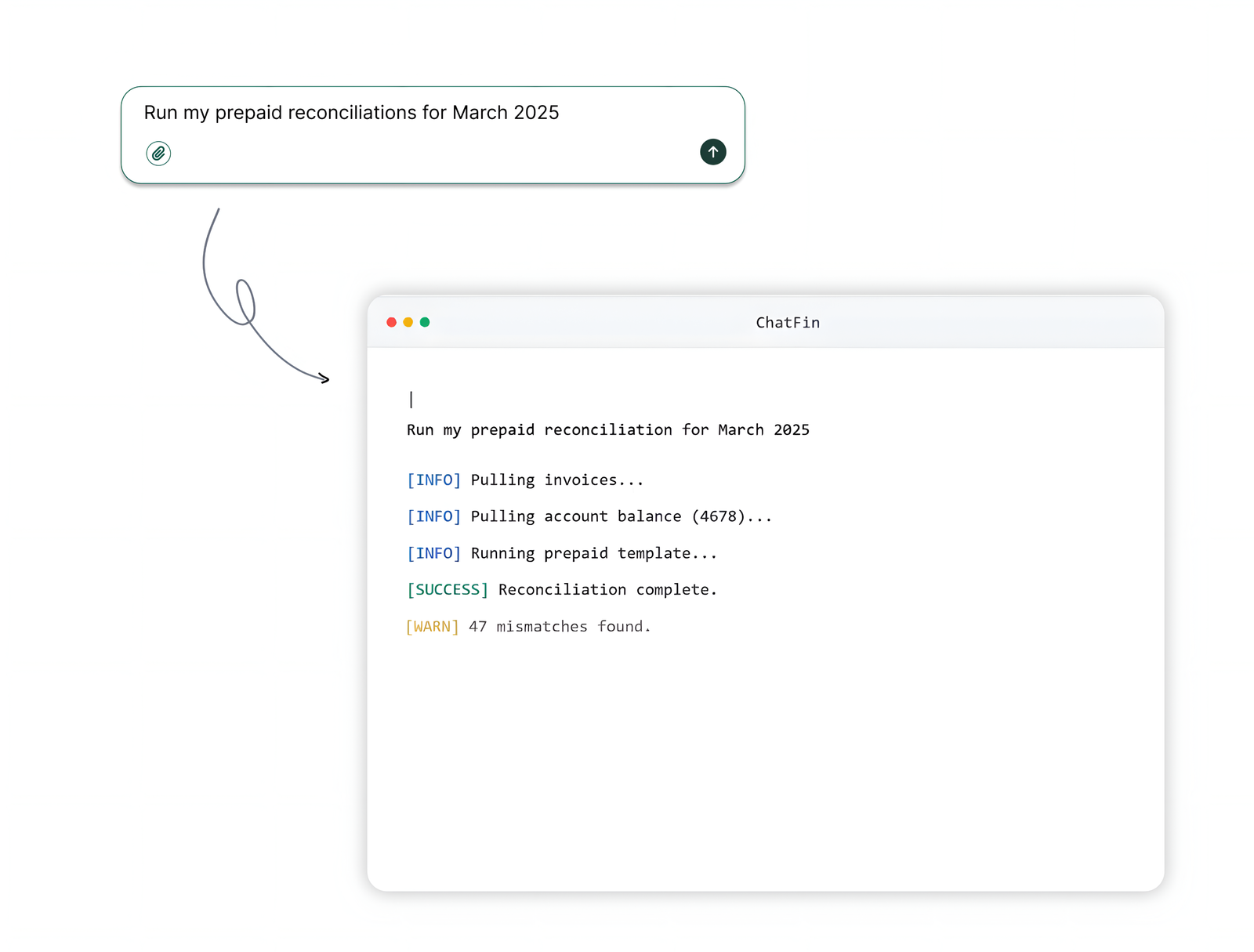
A prebuilt agent arrives knowing the tables, the orchestration patterns and the finance workflow, so your team configures it.
- Prebuilt should mean the vendor ships the orchestrations, the data model knowledge and the finance logic. If you are asked to design the orchestration, it is a services project.
- Orchestrator is Oracle's supported automation surface. It wraps form service requests, data requests, connectors and rules, and it is what a real integration should call.
- The Oracle stack itself is a component, not a finance product. OCI services handle document understanding and language, and Orchestrator has authenticated to OCI services since Tools Release 9.2.8.2, but the accounting logic is still yours to supply.
- Ask for the module list and the exception behaviour. Prebuilt agents for payables, reconciliation and close look very different from a generic connector with a prompt box.
- ChatFin ships prebuilt finance agents that run through published orchestrations, with supplier and coding memory, approval routing and an audit record on every action.
Every JD Edwards site that has looked at AI has had the same experience. A vendor demonstrates something impressive, procurement asks how long implementation takes, and the answer turns out to be a discovery phase followed by a build. That is not prebuilt. It is a project with a demonstration attached.
The test is simple. On day one, does the agent already know what an F0411 voucher is, how a batch relates to a general ledger posting, and what a voucher match exception looks like? Or does it need you to explain your ERP to it first?
What Orchestrator Gives a Vendor to Build On
Orchestrator is the reason JD Edwards is a good AI target rather than a hard one. It is Oracle's automation and integration layer, running on the AIS Server, and it turns EnterpriseOne applications and data into callable services without any change to the underlying application.

Prebuilt beats a blank prompt
Given a general-purpose AI tool, most users type a question and accept whatever comes back. Prebuilt agents encode the checks a careful accountant would run.
In certain cases with AI, people are lazy enough that they're just typing a prompt and letting that be the answer.
Paul Barnhurst, on the AgentCFO podcast
That is the practical argument for building on Orchestrator below. The discipline lives in the agent instead of depending on each user.
The Vendor Landscape, Honestly Described
There is no large field of vendors shipping finance agents that transact in JD Edwards. There is a large field of adjacent products that get positioned that way. Knowing which is which saves a quarter.
What Prebuilt Looks Like in Payables
Take the most common request. A supplier invoice arrives, it needs coding, it needs matching to a purchase order and receipt, and exceptions need to reach the right approver. A prebuilt agent handles the whole path, not just the extraction step.

What Prebuilt Looks Like in Reconciliation and Close
Reconciliation is where prebuilt knowledge pays for itself, because the matching rules are similar across companies while the data shapes are not. An agent that already understands ledger and subledger relationships starts producing usable matches immediately instead of after a rules workshop.
The Configuration Question
Even a genuinely prebuilt agent needs to learn your environment. The distinction is between configuration, which is describing what already exists, and construction, which is designing behaviour that did not exist before. Configuration is measured in days. Construction is measured in quarters.
For a JD Edwards deployment the configuration surface is usually your environment and role setup, the companies and business units in scope, the approval thresholds, and which orchestrations are permitted. That is a workshop, not a build.
Signals That You Are Buying a Project
A few phrases reliably indicate that prebuilt means something other than what you assumed. None of them are disqualifying on their own, but together they tell you the shape of the engagement and the timeline you should plan for.
How ChatFin Ships
ChatFin arrives with the finance agents already built. It connects to your instance through AIS and Orchestrator, uses published orchestrations for controlled reads and for posting, and builds a memory of your suppliers, coding behaviour and account structure as it runs. Nothing inside JD Edwards is modified.
The practical effect is that the first useful output arrives in the first week rather than the second quarter, and the agent gets more accurate each period as the memory layer fills in. Approval sits in front of every posting, and every action is recorded with its source data and approver.
"Prebuilt means the vendor already did the thinking. If your team is designing the orchestration, you bought a project."
Prebuilt Finance Agents, Running on Your JD Edwards Instance
ChatFin ships finance agents for payables, receivables, reconciliation, close and reporting that run on your existing JD Edwards environment through AIS and Orchestrator, with approval routing and a complete audit record.
Ask any vendor to point their agent at a test environment in week one. The ones who can are the ones who built something.
Frequently Asked Questions
Which vendors offer prebuilt finance AI agents for JD Edwards?
The field is smaller than the marketing suggests. Oracle provides OCI AI services that integrate with Orchestrator as components, automation suites provide document extraction and robotic connectors, systems integrators build custom orchestrations, and a small number of finance agent platforms including ChatFin ship the finance workflow already built and connect to your instance.
Does a prebuilt agent require changes inside JD Edwards?
It should not. A correctly designed agent calls published orchestrations and AIS endpoints and needs no custom application code, no modified business functions and no new tables. If a vendor requires custom objects inside EnterpriseOne, that becomes something you carry through every future upgrade.
How long does deployment take?
For a scoped process such as voucher match exceptions or bank reconciliation, a prebuilt agent should be producing output against a test environment within days and running against production within a few weeks, subject to your own change control. Timelines measured in quarters usually indicate custom construction rather than configuration.