

Over-Billing Gets a Call. Under-Billing Gets Nothing
When revenue depends on metered usage, the invoice is only as good as a rating engine nobody outside engineering has ever tested.
- Usage based revenue depends on a chain from meter to rating to invoice, and each step can lose or distort volume.
- Errors run in both directions, and under billing is the one nobody reports, which is why it persists.
- Minimum commitments and overage tiers are frequently misapplied, particularly after a contract amendment.
- Customers verify their own usage, so a billing error found by the customer costs credibility as well as money.
- ChatFin recalculates invoices from raw usage and the contract, and groups differences by cause.
Consumption pricing has spread well beyond telecoms into software, logistics, cloud infrastructure, payments and equipment as a service. It aligns price with value and it makes billing a technical process.
Between the meter and the invoice sits aggregation, deduplication, rounding, tier application, commitment drawdown and proration. Each is a place where volume can be lost, double counted or priced at the wrong rate.
This page covers where usage revenue leaks, why customers find errors before finance does, and how a governed agent can verify billing against the raw records.
Where the chain breaks
Volume can be lost at collection when a meter fails or a record arrives late and misses the billing window. It can be distorted at aggregation through rounding or deduplication rules.
It can be priced wrongly at rating when a contract amendment reached the sales system but not the rate configuration.
Errors run both ways, and only one gets reported
Customers check invoices against their own view of usage and raise over billing quickly. Under billing produces no complaint from anybody.
That asymmetry means the errors you hear about are a biased sample, and the balance of unreported errors is almost always in the customer's favour.
Independent recalculation is the only way to see both directions, and it is the reason this work is worth doing before a customer does it for you.

Metered upstream, invoiced downstream
Usage is measured by product systems built for operations, aggregated by a rating process, and invoiced from the billing platform. Finance sees the last step only, and the transformations between meter and invoice are where revenue quietly disappears.
What the agent needs to see
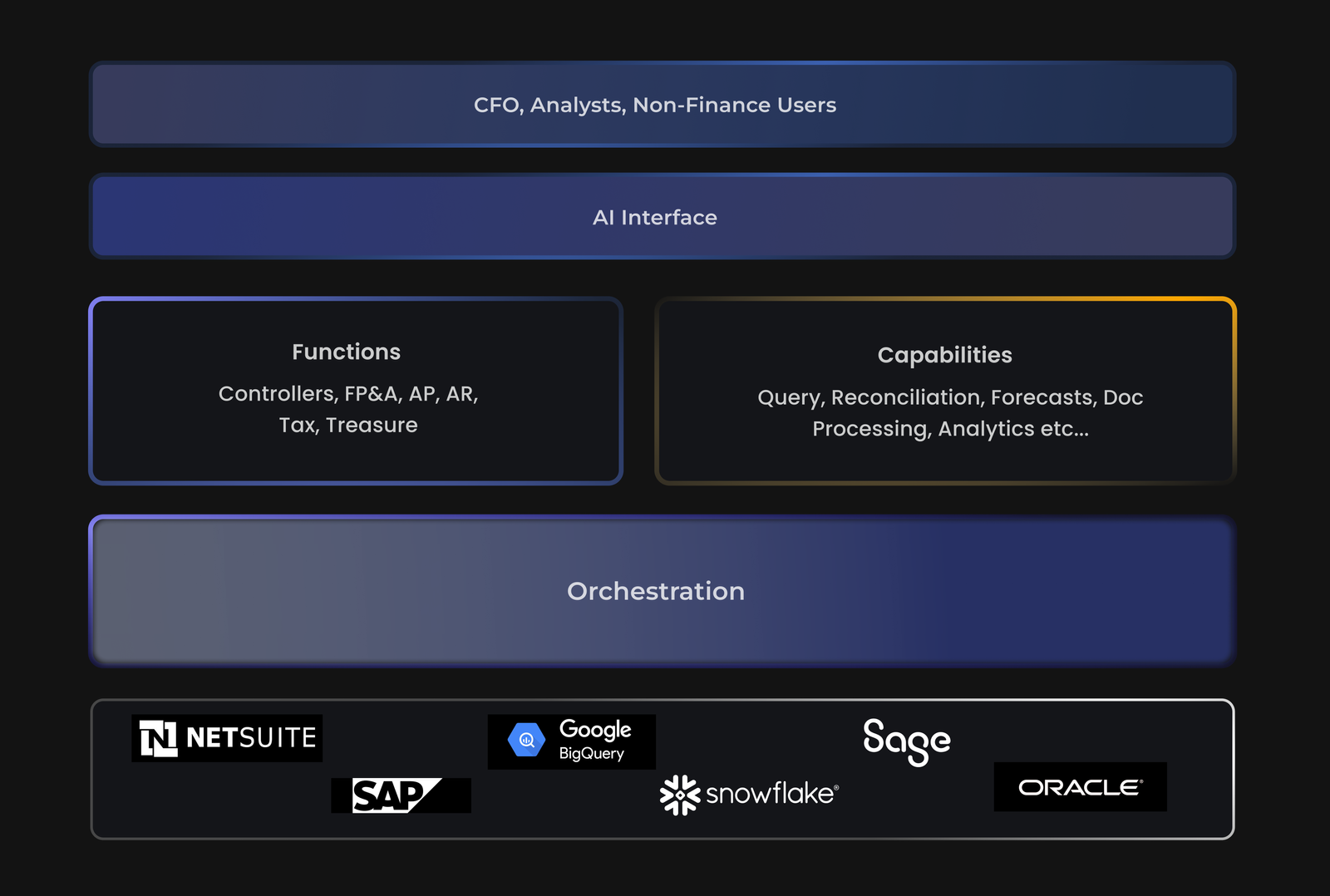
Ledger detail from the billing system, plus contracted rate cards and commitments taken from the source they arrive in, read through the API surface your ERP already exposes rather than the database.
What it should be allowed to do
Prepare a billing correction and a leakage analysis and leave it for the revenue manager to approve. Reading widely and writing narrowly is the line that keeps this safe.
That division matters more than which model sits underneath. An agent that can read contracted rate cards and commitments, raw usage records and issued invoices while posting only through the validated path a person uses gives you the coverage without handing over the ledger, and ChatFin works that way on every ERP it connects to.
Commitments and tiers are the complex part
Contracts with minimum commitments, prepaid drawdown, tiered rates and overage terms require the calculation to be stateful across periods rather than computed month by month.
Mid term amendments make it harder still, because the terms that applied to earlier usage may differ from those applying now.
Independent recalculation
Invoices rebuilt from raw usage and contract terms, with commitment and tier state tracked across periods.
The customer decision
Whether to bill a correction, credit it or absorb it, and how to raise it with the account.

The credibility cost
For usage priced products, billing accuracy is part of the product experience. A customer who finds an error starts checking every invoice, and that scrutiny does not stop.
Verifying before invoices go out changes the failure mode from a customer complaint to an internal correction, which is a much cheaper form of the same problem.
It also gives the commercial team something useful: confidence that the numbers in a renewal conversation match what the customer will see.
Corrections face the customer
An under billing found six months later means an invoice a customer did not expect, so how it is raised matters commercially. Findings are drafted with the usage evidence and the contract clause, and the decision to bill, credit or absorb stays with the revenue manager.
The record kept against usage billing is deliberately plain: the contracted rate cards and commitments the agent read, the reasoning it applied, the draft it produced, what the revenue manager changed, and the moment it posted. That is the trail an auditor asks for, and it is assembled while the work happens rather than reconstructed afterwards.
The wider argument for that design sits in why finance AI should read widely but write narrowly and connecting without database credentials.
A is prepared, reviewed and approved before it posts, and every step is logged from the source document to the entry. billing correction and a leakage analysis
How ChatFin verifies the billing
Invoices are recalculated independently from raw usage records and the contracted rate card, then compared line by line. Differences are grouped by cause, which usually points at a small number of rating or configuration problems rather than at many individual errors.
It connects to the billing system, the usage metering platform and the ERP through the interfaces those systems already expose, which keeps the security review short and the setup measured in days rather than quarters.
Recalculate from raw usage
Invoices rebuilt independently from metering records and the contracted rate card.
Compare and group
Differences per customer and per product grouped by cause rather than listed individually.
Test commitments and tiers
Minimum commitments, tier thresholds and overage terms applied as the contract states.
Draft corrections
Billing adjustments prepared with the usage evidence and clause for the customer conversation.
A first run is usually read only against a period you have already closed, so you can compare what the agent found against what your team found before anything is trusted with a billing correction and a leakage analysis.
The connection is built once. Whether you run NetSuite, SAP Business One, Acumatica or another supported system, the next agent reuses it and the same approval step.
Over billing gets a phone call. Under billing gets nothing at all.
ChatFin
Frequently Asked Questions
Does this replace our rating engine?
No. It recalculates independently from the raw usage and the contract so the rating output can be tested. A rating engine cannot verify itself, which is why errors in configuration can run for months undetected.
Can it verify before invoices are issued?
That is the preferable position. Running the check against the draft billing run turns a customer facing error into an internal correction, and the same comparison works retrospectively for periods already billed.
How does it handle prepaid commitments and drawdown?
Commitment balances are tracked across periods rather than recalculated monthly, because drawdown, rollover and overage all depend on prior period state. Amendments are applied from their effective date rather than retrospectively.
Rebuild the invoice from the meter, not from the billing system.
ChatFin recalculates usage invoices independently from raw records and the contracted rate card, tracks commitment and tier state across periods, and groups differences by cause.
Corrections arrive with the usage evidence and the clause attached, ready for the commercial decision about how to raise them.
Book a DemoSee a billing run rebuilt from raw usage.
Bring a month of usage records, your rate cards and the invoices issued. We will show the independent recalculation and the differences grouped by cause.