
OpenAI Acquires Hiro Finance: What Big Tech's Move Into Finance Means for CFOs
OpenAI's acquisition of Hiro Finance is not just news-it is a strategic announcement. Big Tech is moving from building general-purpose AI to specializing in high-stakes financial services. Goldman Sachs is building AI agents for trade accounting. Lloyds is deploying enterprise-wide agentic AI for £100 million in value. This is the inflection point. Here is what it means for your CFO strategy.
- Big Tech Goes Vertical OpenAI's Hiro Finance acquisition signals Big Tech is moving from horizontal AI platforms to specialized vertical solutions for high-stakes domains like finance.
- Wall Street Arms Race Goldman Sachs, JPMorgan, Morgan Stanley, and Lloyds are all racing to deploy autonomous agents for core financial operations, not just analytics.
- The $1 Trillion Capital Bet Big Tech capex is now $800-900B annually, with Meta alone spending $125-145B in 2026. This scale is being channeled into specialized financial AI.
- Margin Compression for Banks Lloyds projects £100 million in value from enterprise-wide AI deployment. Imagine this at scale across 1000+ banks globally. Profit pools are shifting.
- CFO Urgency The firms deploying agentic AI this year will have 2-3 year competitive advantage. Waiting until 2027 means catching up to firms already extracting value.
OpenAI's acquisition of Hiro Finance marks a turning point. For the last 18 months, Big Tech treated AI as a horizontal platform: build a powerful general model, sell API access, let customers figure out use cases. That is changing. OpenAI, Google, Anthropic, and Meta are now building specialized AI systems for high-stakes domains. Finance is the first and most lucrative vertical. Hiro Finance-a startup focused on autonomous personal financial advisory-gives OpenAI a foothold in financial services at exactly the moment when banks are racing to deploy autonomous agents for mission-critical functions.
From General AI to Financial Specialization
OpenAI's Hiro Finance acquisition is a strategic statement: Big Tech is moving from "build a general model and let enterprises figure it out" to "build specialized AI systems that work natively in high-stakes domains like finance." This matters because financial decision-making requires not just intelligence, but regulatory compliance, audit trails, explainability, and governance-things general AI models do not inherently provide.
Hiro Finance was built specifically for financial advisory: helping individuals make investment decisions, manage portfolios, and plan retirement with AI-driven recommendations. By acquiring Hiro, OpenAI is:
Specialization is the point
Finance is not one domain. Each industry carries its own accounting treatment, which is why general tools hit a ceiling.
So they're both similar, but each industry has its specific accounting guidance that goes with it.
Jason Yocum, on the AgentCFO podcast
When you evaluate a specialized tool, check whether it knows your industry's treatment or only the general rules.
Wall Street Is Moving Faster Than Enterprise Finance
While venture-backed fintechs and startups are still piloting AI, Wall Street banks are deploying. Goldman Sachs is building autonomous agents for trade accounting and client onboarding. Morgan Stanley is using agents to accelerate due diligence. Lloyds Banking Group announced enterprise-wide deployment of agentic AI across financial services, projecting £100 million in value creation from fraud investigation automation, complaint handling, and operational efficiency.
The difference between a pilot and a deployment matters. A pilot proves the technology works. A deployment generates value. Wall Street is moving to deployments while most enterprise finance teams are still evaluating whether AI pilots are worth the investment.
"Lloyds expects to add £100 million in value in 2026 by deploying agentic AI enterprise-wide for fraud investigations, complaint resolution, and operational efficiency. This is not a cost savings story-this is a competitive advantage story." - Lloyds Banking Group, 2026
The Capital Expenditure Signal: Big Tech Is Building Financial AI Infrastructure
Wall Street analysts now estimate Big Tech capital expenditure will exceed $1 trillion in 2027. For 2026, we are looking at $800-900 billion. Meta alone raised its 2026 capex guidance to $125-145 billion. Where is this money going? AI infrastructure. Compute. And increasingly, specialized vertical solutions.
This capital is not going into general-purpose models anymore. It is going into:
What This Means for Enterprise Finance Teams
If you are a CFO evaluating AI strategy in 2026, the competitive landscape just shifted. The question is no longer "Should we pilot AI?" The question is "Are we deploying autonomous agents into mission-critical finance processes this year, or are we ceding competitive advantage to peers who are?"
Wall Street is teaching us the playbook:
Start with high-volume, rule-based work: Fraud detection, invoice matching, reconciliation. These are areas where agents can operate autonomously with high confidence.
Build governance and audit trails into the system: Financial agents need to be explainable. Every decision needs a lineage. Not as an afterthought-as part of the architecture from day one.
Expand into judgment-based work: Once you have agents handling execution and detecting anomalies, you can expand into approval workflows, exception management, and strategic analysis.
Plan for a 2-3 year competitive window: Firms deploying agentic AI in 2026 will extract value for 24-36 months before the market compresses and everyone is using autonomous agents. Early movers get permanent competitive advantage.
The Employment Question: What Happens to Finance Teams?
Wall Street cut 5,000 jobs in 2025 even as banks posted record profits, and that was with AI still in pilot phase. What happens when autonomous agents are doing the work of 50 analysts? The narrative is not "all finance jobs disappear." The narrative is "routine finance work disappears, but judgment-based work expands."
Finance teams deploying agentic AI see two trends: headcount reduction in junior analyst roles, and new hiring in AI oversight, governance, and strategic finance roles. The finance function is not shrinking-it is transforming. Agents handle execution. Humans focus on judgment, strategy, and business partnership.
But this transformation only works if finance teams start now. Waiting until 2027 means you are catching up to firms that have already redesigned their operating model around agentic AI.
The AI Finance Takeover Is Accelerating
OpenAI's Hiro Finance acquisition is a signal. Goldman Sachs' agent deployments are a proof point. Lloyds' £100 million value creation is validation. Big Tech is moving specialized. Wall Street is moving fast. Enterprise finance teams need to move faster.
The competitive advantage in 2026 goes to CFOs who view agentic AI not as an efficiency play, but as a fundamental transformation of how finance operates. The firms that move this year will have a 2-3 year head start over those waiting for 2027.
ChatFin: Building Financial AI for Enterprise Finance Teams
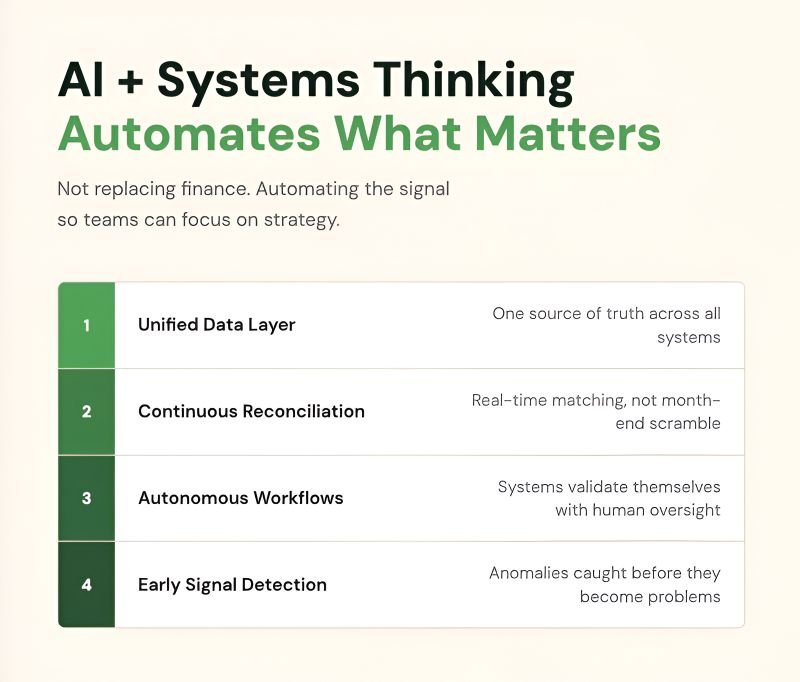
ChatFin is building the specialized financial AI infrastructure that enterprises need right now. Not general-purpose AI. Not APIs. Autonomous agentic systems built specifically for finance operations, with governance, compliance, and explainability embedded in the architecture. ChatFin agents run inside your NetSuite, SAP, Oracle, or Acumatica ERP, handling invoice matching, account reconciliation, variance analysis, and forecasting with the regulatory rigor that Wall Street banks are demanding and the operational efficiency that CFOs need to compete in 2026.
Finance teams deploying ChatFin are not waiting for 2027. They are deploying autonomous agents this year. They are compressing close cycles from 5-7 days to 24 hours. They are freeing finance professionals from routine work to focus on strategy. They are extracting the £100 million in value that Lloyds identified-not in 2027, but in 2026.
Learn more: Wall Street's Financial AI Playbook: How to Deploy Agentic AI for Enterprise Finance
Additional resource: The OpenAI Acquisition That Changes Everything: What CFOs Need to Know About Big Tech in Finance