
Only 53% of Companies Close in Six Days. Here Is What the Best-in-Class Do Differently.
Gartner's 2025 close benchmarking data shows best-in-class finance teams close in 3-4 days. The 53% that do it in 6 are losing competitive advantage. Here is what separates them.

- Business Impact Organizations deploying these solutions are seeing measurable improvements in speed, accuracy, and cost efficiency.
- Data Foundation Success requires clean data and disciplined governance as the foundation for automation and AI.
- Change Management Technology is only half the equation. Process redesign and organizational alignment determine success.
- Competitive Advantage Finance teams that move now are building capabilities that competitors will spend years trying to replicate.
- Speed of Execution The organizations winning are not using better tools. They are executing faster and learning quicker.
Month-end close has always been chaos week. Finance teams vanish into spreadsheets and reconciliations for 5-10 days. Best-in-class organizations have rewritten that completely. They are closing in 3-4 days. The risk is what they are doing differently, and whether your team can catch up.
The 3-4 Day Close Is No Longer an Outlier
Gartner's 2025 financial close benchmark study found that best-in-class organizations close in 3-4 days. That puts them at the 90th percentile. 53% of companies close in 6 or more days. That is where the gap is. The difference is not heroic effort. It is process design and automation applied to the right bottlenecks.
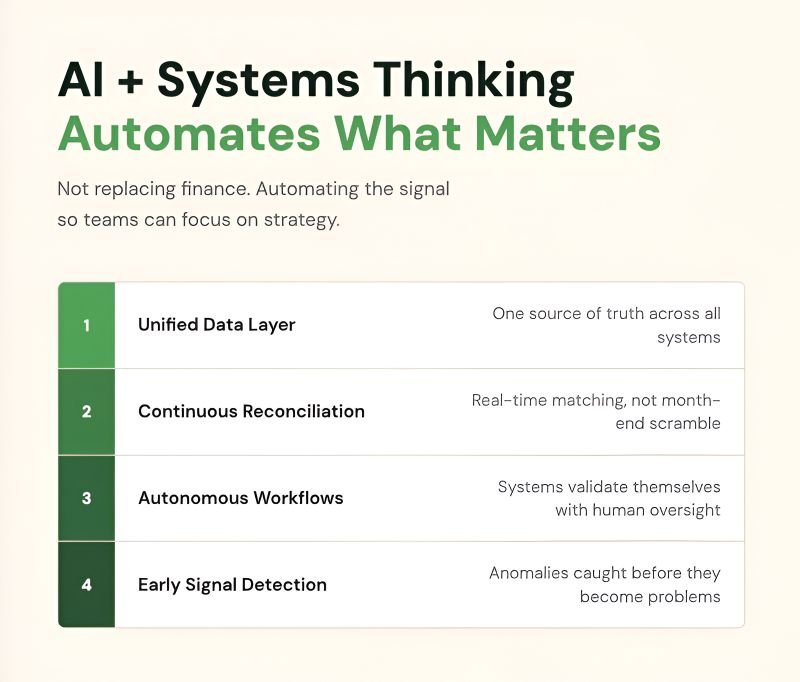
The organizations closing in 3-4 days are not spending more on tools. They are spending more on process discipline and less on exceptions. They eliminated manual reconciliations for low-risk accounts, automated exceptions, and built predictability into the close so there are no surprises on day 28.
The Close Is Frontloaded, Not Back-Loaded
Most organizations do most of their close work in the last 3 days of the month. That is when every issue compounds. Best-in-class organizations spread close work evenly across the month. They reconcile daily, not monthly. They identify issues when they happen, not in a backlog at month-end.
Technology Is Not the Constraint. Process Is.
Organizations upgrading to modern cloud ERPs are sometimes shocked to discover that their close only gets 1-2 days faster. They expected more. The reason: the software was not the constraint. The process was. Cloud ERPs are tools. Fast close requires process discipline first.
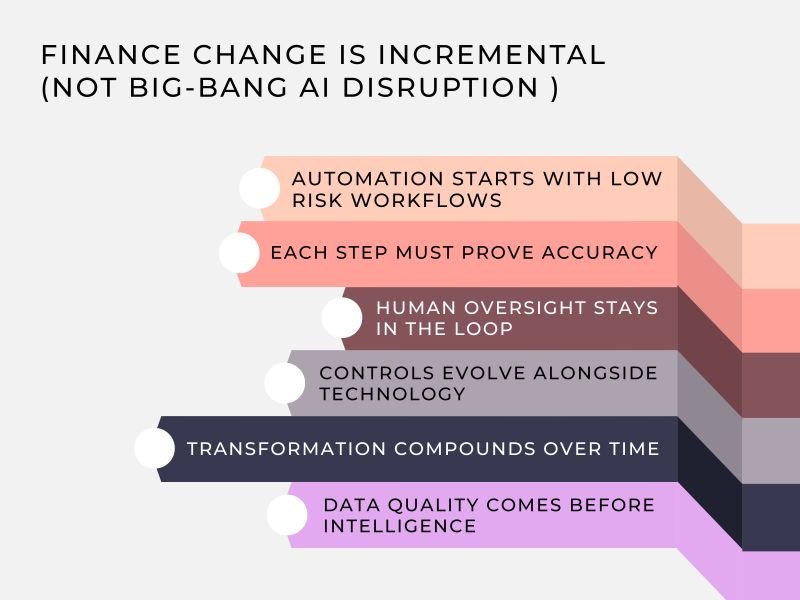
The organizations that have moved to 3-4 day closes did three things before upgrading software: they redefined roles, they eliminated unnecessary controls, and they automated judgment-free work. Only after fixing those did they deploy new technology. The technology accelerated what was already optimized.
"The fastest closers are not using more tools. They are using less software and more discipline." - Gartner Financial Close Benchmarking, 2025
Measure the change, not the tooling
Close speed follows from how the work is arranged. The software helps once the sequence has been fixed.
I'm looking for the value of change, which means my focus is on the actual change, not on the technology. But it's because we're focused on the eye, doing a calculation of what can that technology deliver for me in terms of a process improvement.
Vin Messina, on the AgentCFO podcast
Map your close by day and find the tasks waiting on someone else. Those dependencies set your floor.
What a 3-Day Close Actually Enables
Closing in 3 days instead of 8 is not just about ease. It is about business timing. A 3-day close means results are available for decision-making in time to adjust actions. An 8-day close means you are already 10 days into the next month before you know what happened in the previous one. That lag costs decisions.
Finance leaders deploying fast close are using the extra visibility to drive faster business decisions: pricing adjustments, hiring decisions, marketing spend optimization. The finance team stops being a month-end reporting function and starts being an active business partner.
The Close Is a Competitive Metric Now
Organizations that close in 3-4 days have faster financial visibility, less month-end stress, and finance teams that can actually do strategic work instead of reconciliation theater. Gartner predicts embedded AI in cloud ERP will push best-in-class closes to 2 days by 2028.
Finance teams still closing in 8 days are competing with one hand tied. The technology exists. The process templates exist. What is required is the decision to rebuild instead of patch.
The ChatFin Advantage: Enterprise Finance Automation Platform
ChatFin is a finance AI super-agent platform that runs directly inside your ERP - NetSuite, SAP, Oracle, or Acumatica. Unlike disconnected point solutions that create more integration work, ChatFin connects AP, AR, reconciliation, forecasting, and compliance in a single autonomous system. With 100+ pre-built finance agents, ChatFin teams deploy agentic automation in weeks, not months. The platform learns your workflows, handles exceptions intelligently, and surfaces only true anomalies for human review.
Organizations deploying ChatFin report measurable results: 40-60% reduction in close cycle time, 80%+ automation rates on exception handling, and finance teams freed from tactical work to focus on strategic priorities. ChatFin does not replace finance judgment. It eliminates the mechanical work that masks it.
Learn more: Financial Close Automation: Transform Your Month-End Process in 2026
Additional resource: The Finance AI Stack 2026: Every Tool CFOs Are Using Across Close, AP, AR, FP&A and Reporting