
NetSuite Consolidation: Automated Multi-Entity Finance
Manual AP processing costs $12 to $18 per invoice. AI automation brings that to $2 to $4. At 1,000 invoices per month, that is $8,000 to $16,000 in direct monthly savings - before you count early payment discounts, duplicate prevention, and vendor relationship gains. Here is the full 2026 breakdown.
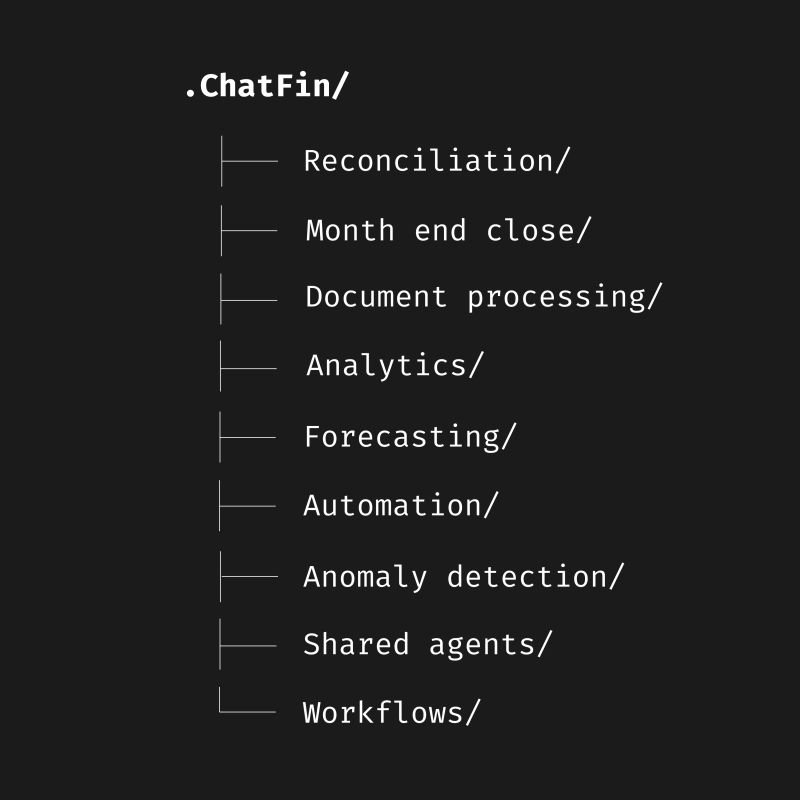
- Consolidation Architecture: NetSuite consolidation module automates elimination entries, currency translation, and consolidation adjustments. Organizations eliminate manual consolidation spreadsheets and ETL processes.
- Close Time Reduction: NetSuite consolidation reduces month-end close time by 70 percent compared to spreadsheet-based consolidation. Multi-entity organizations close consolidated statements in days instead of weeks.
- Multi-Dimensional Reporting: Consolidation dashboards show consolidation progress and consolidated results across dimensions like entity, geography, and business segment. Finance teams analyze consolidated performance from multiple perspectives.
- Intercompany Transaction Elimination: NetSuite identifies intercompany transactions and eliminates them automatically from consolidated results. Intercompany profit elimination happens systematically without manual entry.
- Currency Translation Automation: Foreign subsidiaries translate from functional currency to reporting currency automatically. Translation adjustments flow to accumulated other comprehensive income appropriately.
- Scalable Architecture: NetSuite consolidation scales from 10 to 1000 entities efficiently. Organizations managing multiple subsidiaries trust NetSuite for reliable consolidated reporting.
NetSuite Financial Consolidation: Multi-Subsidiary Excellence
NetSuite consolidation module solves the complexity of multi-entity financial consolidation. Organizations managing dozens or hundreds of subsidiary companies use NetSuite to automate elimination entries, currency translation, and consolidation adjustments. Finance teams report 70% faster month-end close with NetSuite consolidation compared to spreadsheet-based approaches.
Consolidation Architecture and Data Structure
NetSuite consolidation accommodates complex organizational hierarchies. Define parent-subsidiary relationships, ownership percentages, and consolidation methods. The system supports full consolidation, proportionate consolidation, and equity method accounting for different subsidiary relationships.
NetSuite manages intercompany transactions and elimination entries. The system identifies intercompany sales, receivables, and payables automatically. Elimination entry calculation and posting happens systematically rather than through manual adjustment.
Currency Translation and Foreign Exchange
NetSuite consolidation handles currency translation for foreign subsidiaries. Apply different translation methods for functional currencies and reporting currencies. Translation differences flow to accumulated other comprehensive income appropriately. Finance teams using NetSuite report elimination of translation adjustment errors.
Consolidation software manages historical exchange rates and ensures consistent translation methodology. Finance controllers need not maintain complex spreadsheets tracking exchange rates and translation calculations.
Elimination Entries and Consolidation Adjustments
NetSuite automates calculation of elimination entries for consolidated reporting. The system eliminates intercompany profits, receivables, and payables. Consolidation adjustments such as purchase price allocation amortization and goodwill impairment testing post systematically.
The consolidation module enables proportionate consolidation for joint ventures. Finance teams managing complex ownership structures use NetSuite consolidation to handle multiple subsidiary structures efficiently.
NetSuite Reporting and Disclosure Management
NetSuite consolidation generates financial statements across consolidation dimensions. Finance teams extract consolidated balance sheets, income statements, and cash flow statements. Variance analysis between consolidated and subsidiary results identifies unexpected variances.
XBRL reporting integration in NetSuite enables automated regulatory filing preparation. Public companies use NetSuite consolidation with XBRL rendering to streamline SEC filing processes. Filing time reduction typically exceeds 50% compared to manual processes.
Multi-Dimensional Reporting and Analysis
NetSuite consolidation supports reporting by entity, geography, business segment, and other dimensions. Finance teams analyze consolidated results by all relevant reporting dimensions. Segment reporting for external disclosure becomes more efficient when built systematically.
Consolidation dashboards show consolidation progress and identify entities lagging in submission. Finance controllers monitor consolidation status and manage collection processes more effectively.
Shared Services and Consolidation Centers
Multi-subsidiary organizations establish consolidation centers of excellence. These shared services leverage NetSuite consolidation efficiency to support consolidated reporting for global organizations. Consolidation teams using NetSuite deliver consolidated results faster and more accurately.
Implementation Considerations for Consolidation
NetSuite consolidation implementation requires careful data structure design. Map all entities, currencies, and consolidation hierarchies before building the consolidation model. Experienced implementation partners ensure consolidation model handles all entity relationships and consolidation scenarios.
Data quality in subsidiary systems drives consolidation quality. Organizations need strong subsidiary data governance to ensure clean consolidation data. NetSuite consolidation exposes subsidiary data issues that may be hidden in spreadsheet-based consolidation processes.
Consolidation day from the controller's chair
Consolidation rarely fails on arithmetic. It slows when an entity closes late, a mapping changes mid year or an intercompany balance disagrees by an amount nobody can explain. The module can eliminate what matches, and a person still chases what does not.
A useful process starts before the day itself: confirm each entity's close status, check that both sides of intercompany balances agree and review currency rates, then run eliminations on data that already ties. The controller then reviews results, not repairs.
Where a multi entity close gets stuck
Five snags that delay consolidated results, and what clears each one.
- An entity that closes late. Keep one list of close status by entity, so the group knows on day one which results are firm and which are still moving.
- Intercompany balances that disagree. Compare the two sides before eliminations run, because the module only removes pairs that match.
- A subsidiary in another currency. Check the rates and the translation adjustment before reading the results, since a wrong rate shows up as a strange movement elsewhere.
- A mapping change mid year. When an account moves in the consolidation structure, compare the period before and after so the change is not mistaken for a business movement.
- Reading the consolidated results. Look past the totals to the entity or mapping behind a large movement, and ask why it happened.
Samantha Singer-Guindi, a CFO, controller and director of finance in hospitality, on variances.
“I was always wanting to know the why and the how of the variances that we were seeing, which is kind of what led me into the operation side of things. But what I pay more attention to now is not what happened, but why it happened and is it the best operational decision that could have been made in that moment.”
Quick Answers on NetSuite Consolidation Problems
Why does my NetSuite consolidation not eliminate cleanly?
Usually because the two sides of an intercompany transaction were recorded differently, in amount, period or entity. Find the pairs that differ before running eliminations, since the module can only eliminate what matches.
How do I speed up a multi entity close in NetSuite?
Track each entity's status on one list, agree cutoffs for intercompany, and reconcile those accounts continuously instead of at the end. Late entities then stand out early, while there is still time to chase them.
What does currency translation change in consolidated results?
Foreign subsidiaries translate from their functional currency to the reporting currency, and the translation adjustment goes to accumulated other comprehensive income, as described above. Check the rates before eliminations.
What should a reviewer check on consolidated results?
That each entity is closed, that eliminations net to zero where they should and that large movements have an explanation tied to transactions. Odd results usually trace back to one entity or one mapping.
When should intercompany be reconciled?
Before the close, not during consolidation. Running the comparison through the month turns most differences into small corrections, and leaves only the real disputes for the controller.
Frequently Asked Questions
How much consolidation close time does NetSuite save?
How does NetSuite eliminate intercompany transactions?
Does NetSuite handle multiple currencies and translation?
How does NetSuite report consolidated results to auditors and stakeholders?
ERP Insight
"NetSuite consolidation modules reduce month-end close time by 60% for multi-entity organizations through automation and shared services."
This perspective from ChatFin's research reflects current best practices in ERP implementations and finance operations for 2026.
Key Takeaways
- ERP Solutions requires careful planning and finance-first governance
- Cloud-based systems offer more flexibility and faster time-to-value
- Data integration and analytics amplify ERP value significantly
- Success requires alignment of technology, process, and people
The ERP Solutions ROI Case Writes Itself - If You Use the Right Numbers
The savings from AI AP automation are large, predictable, and rapid. At 1,000 invoices per month, the direct savings alone are $144,000 annually. At 5,000 invoices per month, they are $720,000 annually. Add early payment discounts, duplicate prevention, and vendor relationship value, and the total ROI figure increases by 20 to 40% above those baselines.
The business cases that get approved are the ones that use all of the categories - not just labor replacement math - and that are grounded in documented benchmarks rather than vendor projections. The six-component framework above gives you the structure to build that case accurately, and the confidence to defend it at board level.
For teams processing 500 or more invoices per month, the question is not whether AP automation pays back. It pays back in under 90 days. The question is whether your organization is capturing that value in 2026 or continuing to pay $12 to $18 per invoice while your competitors pay $3.
ERP Insight
"NetSuite consolidation modules reduce month-end close time by 60% for multi-entity organizations through automation and shared services."
This perspective from ChatFin's research reflects current best practices in ERP implementations and finance operations for 2026.
Key Takeaways
- ERP Solutions requires careful planning and finance-first governance
- Cloud-based systems offer more flexibility and faster time-to-value
- Data integration and analytics amplify ERP value significantly
- Success requires alignment of technology, process, and people