
Natural Language Queries on SAP Business One Financial Data

Someone exports, pivots, reconciles the pivot back to the ledger, and emails a file that is stale on arrival. That loop is what this removes.
- Natural language querying lets anyone ask SAP Business One (SAP B1) questions directly, without SQL, Crystal Reports, dashboards or an export into Excel.
- It only works with a semantic layer. Without one, a model guesses at table names and confidently returns the wrong rows, which is worse than no answer at all.
- Every answer should be sourced to the underlying SAP B1 documents. An unsourced number in finance is an opinion, not an answer.
- Read only querying is the safest starting point for any SAP B1 AI project. It delivers value in week one and requires no write permissions.
- It works across finance and operations: ledger, receivables, payables, sales, purchasing, inventory, production and service, all from the same SAP B1 connection.
The most common complaint in SAP Business One (SAP B1) shops is not about SAP B1. It is about the Excel layer that has grown on top of it. Data goes out, gets manipulated, and comes back as a file that nobody can tie to the ledger without redoing the work. The question is rarely hard. The retrieval is.
Conversational querying inverts that. The question is asked in plain language, the agent resolves it against live SAP B1 business objects, and the answer comes back with the documents behind it. No export, no ticket, no waiting for whoever knows how to build the report.
Why a Semantic Layer Decides Everything
A model pointed at an SAP B1 database with no mapping will produce fluent, confident, wrong answers. It does not know that your company posts freight to a specific account, that a document status means something particular in your configuration, or that half your business logic lives in user defined fields with cryptic names.
The semantic layer is the translation between business language and SAP B1 structure. It is the difference between a demo and a system a controller will actually rely on.
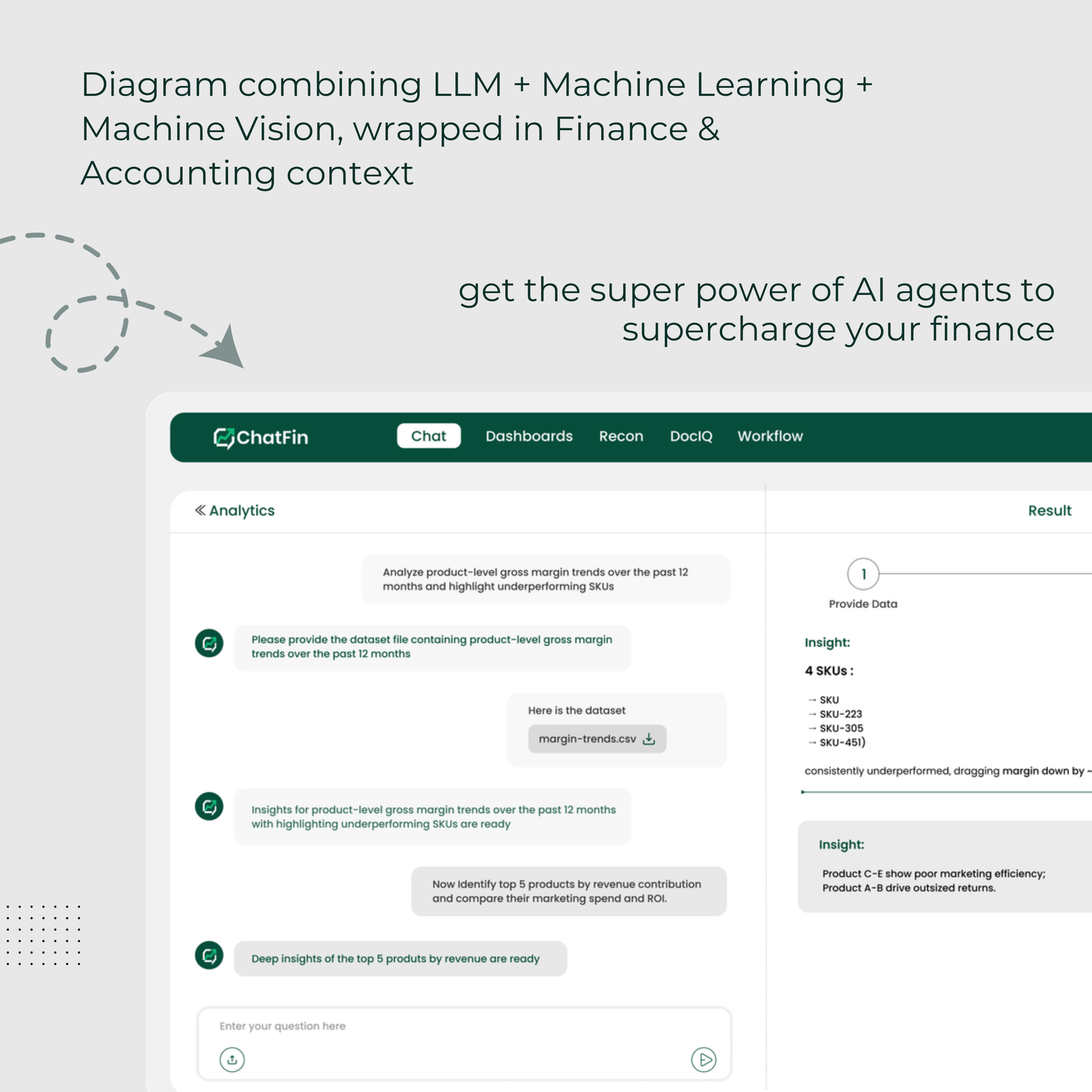
What People Actually Ask
The useful question shapes are consistent across SAP B1 customers. They are the questions people currently answer with an export, which is exactly why removing the export is worth so much.
The pattern to notice: each of these maps to a governed retrieval over specific SAP B1 objects, which is why they return sourced answers rather than plausible ones.

Sourced Answers or No Answer
A finance answer without its source is not usable. The non negotiable standard is that every figure the agent returns can be traced to the SAP B1 documents it came from, and that the user can open those documents to check.
This is also the practical test to apply during evaluation. Ask questions where you already know the answer, then follow the citation to the document. If a platform cannot show its work at document level, it is not ready for a general ledger.

Where It Lives and Who Uses It
Querying is most valuable when it reaches people who do not have an SAP Business One licence or the training to use one. The warehouse supervisor, the sales manager, the owner checking cash on a Sunday evening. Those people currently ask someone else, and that someone else does an export.
Because read only querying needs no write permissions, it is also the lowest risk way to start an SAP B1 AI programme. Deploy it, let people use it for a month, and the appetite for the automation work builds itself.

Ask SAP Business One a Question. Get a Sourced Answer.
ChatFin puts a semantic layer over your SAP Business One (SAP B1) business objects and user defined fields, so anyone can ask about finance, sales, purchasing, inventory or service in plain language and get an answer tied to the documents behind it.
The export into Excel was never the work. It was the tax on getting to the work. Remove it and the finance team gets its week back.
Where SAP Business One reporting runs out
SAP Business One handles transactions well. These five gaps are documented, and every one of them ends in a spreadsheet.
No native consolidation. Multi company consolidation means exporting each company's reports and combining them in Excel, which is why close week reruns the same pack repeatedly.
No transaction currency reporting. Native reports cannot produce statements in transaction currencies, which makes reconciliation harder and slows period end.
One accounting standard per company. B1 assumes a single reporting standard per managed company, so running US GAAP and IFRS in parallel means manual adjustment at consolidation.
Rigid report formats. A chart of accounts change forces manual restructuring of income statement rows rather than the report adapting.
Weak statutory mapping. You can hold an external code per GL account, but there is no mapping to multiple alternate charts and no way to run statements on them.
An agent connected over the Service Layer reads across companies and answers the consolidated question directly, which is the step that currently happens in Excel.
How a Plain Language Question Becomes a B1 Query
A natural language query on SAP Business One starts as a sentence and ends as a read against business documents. The agent works out which objects the sentence names, such as A/R invoices or items, applies the period and company in scope, retrieves the rows through the Service Layer and writes the answer with a link to each source document.
It replaces a different set of tools in a B1 shop: saved SQL queries, Crystal Reports layouts and the Excel file someone rebuilds every month. Those answer the question their author expected. A sentence can ask for a new cut, such as margin by item group for one customer, without waiting for a new report to be built.
Jason Yocum, a fractional CFO and former CFO of Vivino, on talking to an ERP.
“I'm really excited for the day ... I can almost chat with my ERP system. ... I can chat with my balance sheet and understand what is causing this flux?”
Questions Asked in the Middle of Real Work
Four moments where the question arrives before anyone has time to build a report.
- A flux question at month end. The controller sees a balance sheet line move and asks what changed in the account since last period. The answer lists the journal entries and documents behind the change, so the question ends at the source instead of in a spreadsheet.
- A question raised in a meeting. A sales manager wants to know whether a customer is over its credit limit while the call is still going. Someone types the question and has the answer with the open invoices attached before the topic moves on.
- An auditor's sample request. The auditor asks for every manually posted journal entry above a set amount last quarter. The agent returns the list with document numbers, for the period and company the request named.
- One word with two meanings. Revenue may or may not include credit memos. The agent asks which one is meant instead of picking, and the person's answer sets the filter for the figure.
- A field with a cryptic name. A warehouse keeps delivery region in a user defined field nobody remembers. Once the field is mapped, questions can use the word region the way people say it.
Chris Ortega, a fractional CFO and CEO of Fresh FP&A, on working with the business side as a finance partner.
“I would hear those conversations and my mindset being a financial partner and advisor would always think about how can I financially model exactly what the business person just said. ... My mindset is now no longer, how do I think about opening up Excel and modeling that? How do I build my prompt around what they just said?”
Quick Answers on SAP B1 Natural Language Queries
Can you query sap business one in plain english?
Yes, with an agent that maps your question to B1 business objects and reads live data through the Service Layer. It needs a semantic layer so terms like revenue or region match how your company records them.
Do natural language queries on sap b1 need write access?
No. Read only is enough, and it is the lowest risk way to start. The agent can answer questions without being able to change any document.
How do I check ai answers from sap business one data?
Ask questions where you already know the answer and follow each figure to its source document. An answer that cannot show the documents behind it should not be trusted for finance work.
Does natural language querying replace crystal reports in sap b1?
For one-off and changing questions, largely yes, since nobody has to build a layout first. Fixed statutory or formatted outputs can stay in the tools that already produce them.
Who can use natural language queries on sap business one?
People without a B1 seat, such as a warehouse supervisor or an owner, through chat tools like Teams or Slack, with access scoped by roles that follow SAP B1 permissions.