
Natural Language Queries for JD Edwards Financial and Operational Data

Ask in plain English and get a sourced answer from live EnterpriseOne data, in Teams or a portal.
- Natural language querying lets finance and operations users ask JD Edwards questions in plain English instead of running reports or SQL.
- A useful layer understands the EnterpriseOne data model, including F0911, F0411, F4311 and F4211, and the business functions around them.
- It reasons over business concepts mapped to the real tables, so it answers correctly.
- Answers can be delivered in Microsoft Teams, a web portal or embedded chat, permission aware and always current.
- Ground every answer in live data, show the source, respect permissions, and start with read access.
Ask most JD Edwards users how they get a number and the answer involves a report, a query, or an export to Excel. It works, but it is slow and it keeps people at arm's length from their own data.
This guide explains how natural language querying changes that for JD Edwards, why an agent has to understand the EnterpriseOne data model to answer correctly, where people can ask the questions, and how to do it accurately and safely.
Beyond Reports, SQL and Excel Exports
Getting an answer out of JD Edwards has traditionally meant running a report, writing a query, or exporting to Excel and pivoting. That works, but it is slow, and it puts a technical barrier between a finance or operations person and their own data. Natural language querying removes the barrier: a user asks a question in plain English, and an AI agent translates it into the right EnterpriseOne data access, returns the answer, and shows where it came from.
Understanding the JD Edwards Data Model
A useful natural language layer has to understand how JD Edwards stores data. That means the general ledger in F0911, accounts payable in F0411, purchase order detail in F4311, sales order detail in F4211, and the many business functions, document types and application structures around them. An agent that understands this model can answer a question about open vouchers or overdue orders correctly, rather than guessing at fields, because it reasons over business concepts mapped to the real tables.
"The value is not a chatbot bolted onto JD Edwards. It is an agent that understands the EnterpriseOne data model well enough to answer correctly and show its work."
Where People Ask the Questions
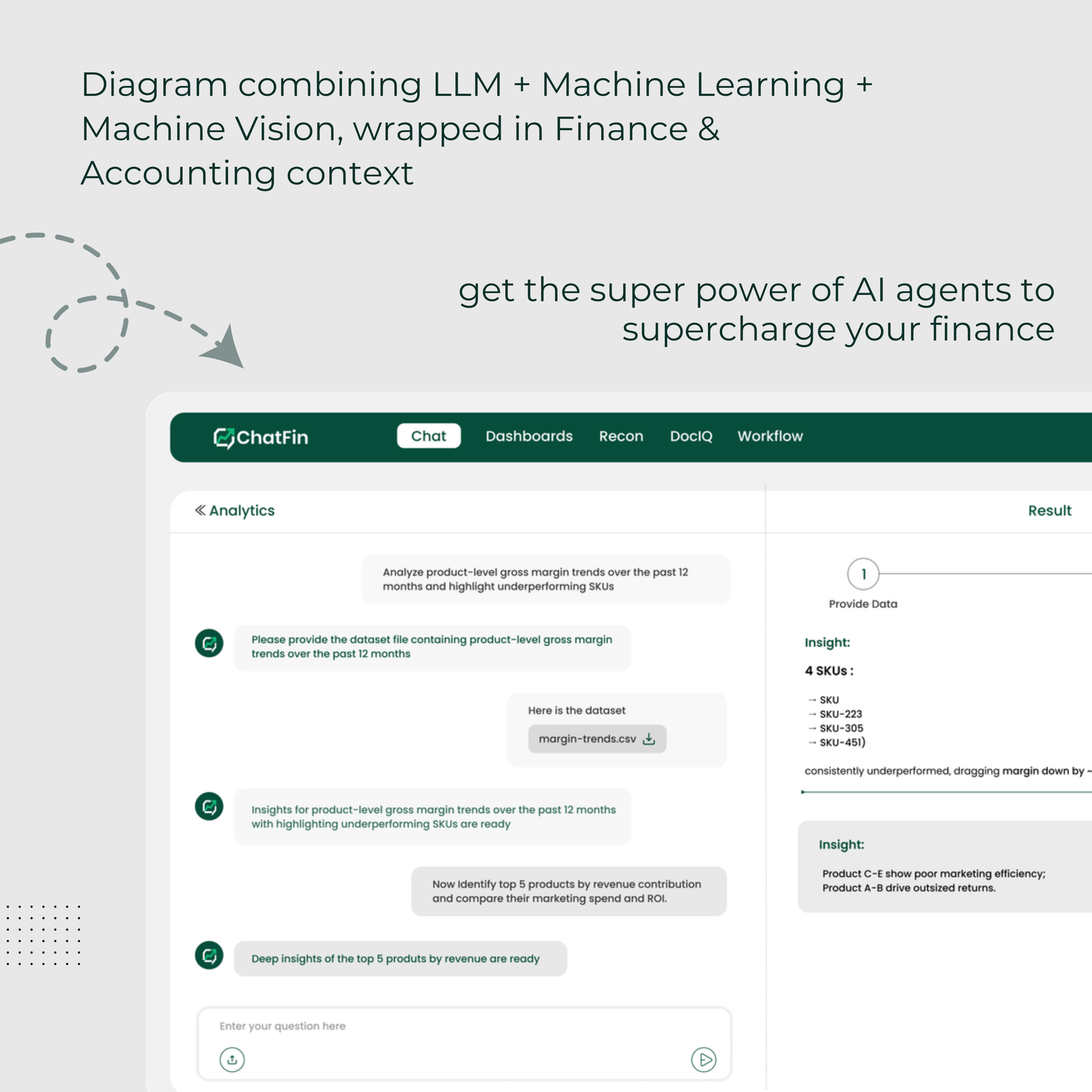
Natural language access is most useful where people already work. Agents can answer JD Edwards questions inside Microsoft Teams, a web portal or an embedded chat experience, so a controller, a buyer or an analyst gets an answer without opening EnterpriseOne or waiting on IT. The same governed connection underneath means the answers are current, sourced and permission aware.

Doing It Accurately and Safely
Because these answers inform real decisions, accuracy and grounding matter. A natural language layer for JD Edwards should ground every answer in the live data, show the source, respect the user's permissions, and never invent a number. Read access is the safe place to start, with any write back gated by deterministic rules and human approval.
Ask JD Edwards in Plain Language. ChatFin Answers, Sourced.
ChatFin understands the JD Edwards data model and answers finance and operations questions in plain language, grounded in live EnterpriseOne data, in Teams or a portal, permission aware and sourced.
Not a chatbot bolted on, but an agent that understands EnterpriseOne well enough to answer correctly and show its work. That is what ChatFin provides.