
Meta LLaMA 3: Running 100B Parameter AI Models for Finance Intelligence
Open source does not mean runs on a laptop. A hundred-billion-parameter model is a hardware commitment with a memory budget, a serving stack, and a set of failure modes that only appear under production load. This is the arithmetic nobody puts in the launch blog post.
- Llama 4 Scout carries roughly 109B total parameters but activates only about 17B per token via mixture-of-experts, which is why a model at this scale is now practical on a single high-end GPU.
- Rough memory rule: a dense model in FP16 needs about 2GB per billion parameters, so a 70B model needs roughly 140GB before you allocate anything for the KV cache.
- Quantization is the difference between a model that fits and one that does not, and it has a measurable accuracy cost that must be tested against your own data rather than assumed from a benchmark.
- Use vLLM or NVIDIA NIM in production. Ollama and llama.cpp are development tools, and a close is not a development environment.
- Llama 4 Maverick, at 400B total across 128 experts, requires a multi-GPU rack. The open label says nothing about the hardware bill.
The most common mistake in self-hosted deployments is treating the parameter count as a capability number when it is primarily a memory number. Before a model is good or bad at your chart of accounts, it either fits in the accelerator memory you have or it does not, and everything else follows from that.
Mixture-of-experts changed this arithmetic significantly and made models at the hundred-billion scale genuinely deployable by teams that are not hyperscalers. It did not make them free, and it introduced its own set of production surprises.
The memory arithmetic
Start here, because everything downstream is determined by it.
Quantization is not free, and it is not optional
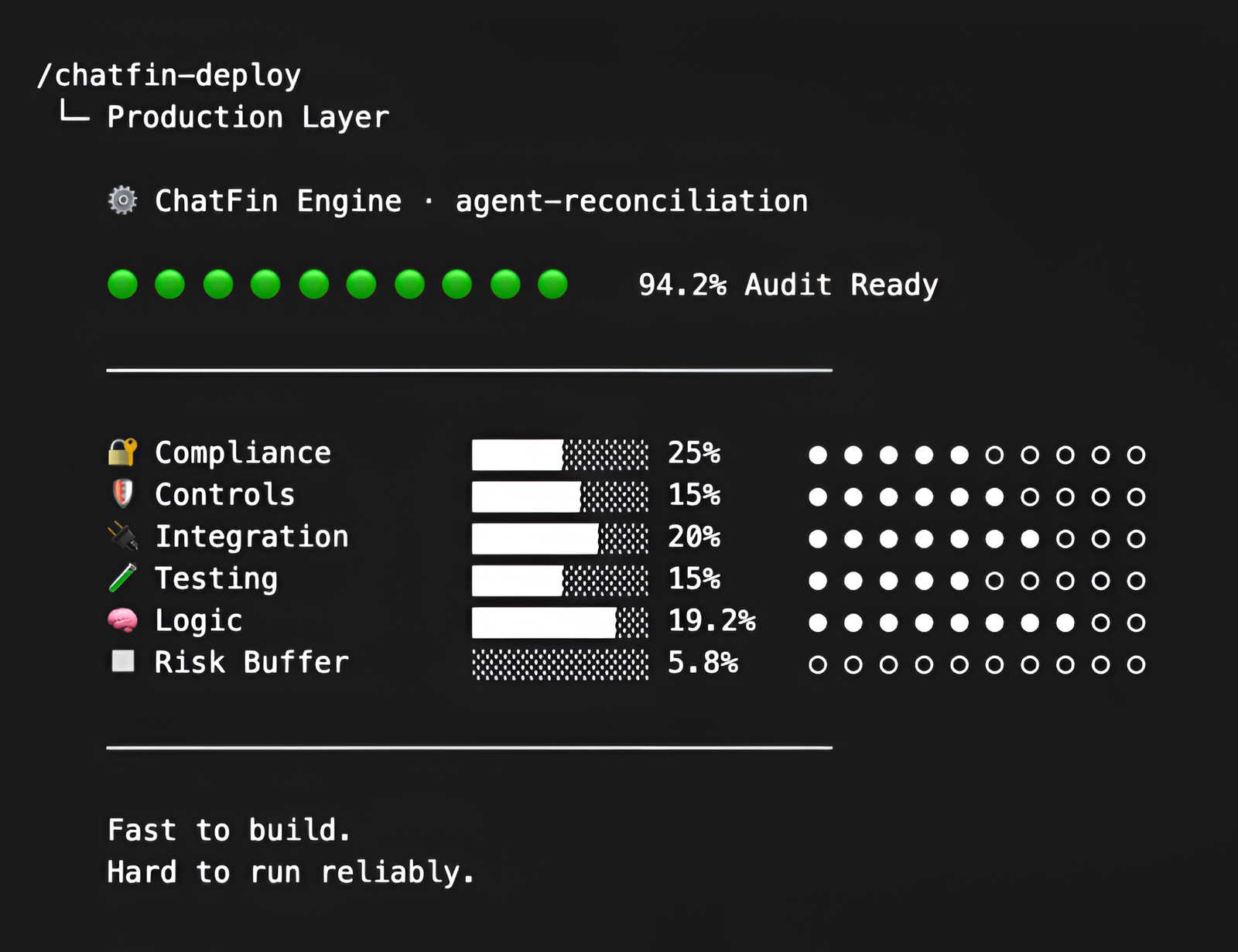
Quantization is what makes large models fit on hardware you can actually buy. It is also the step where teams quietly lose accuracy and do not notice for a quarter. INT8 is usually safe for extraction and classification. Lower precision starts to bite on numerical reasoning, which is, inconveniently, exactly what a finance workload consists of. The rule is simple and rarely followed: evaluate the quantized model against your own labelled finance data, not against a public benchmark. A model that lost two points on MMLU may have lost far more on your vendor master.
"Teams size the GPU for the weights and then get destroyed by the KV cache the first time ten people ask a long question at once."
The serving stack
What breaks in production
The Parameter Count Is a Memory Budget, Not a Capability Claim.
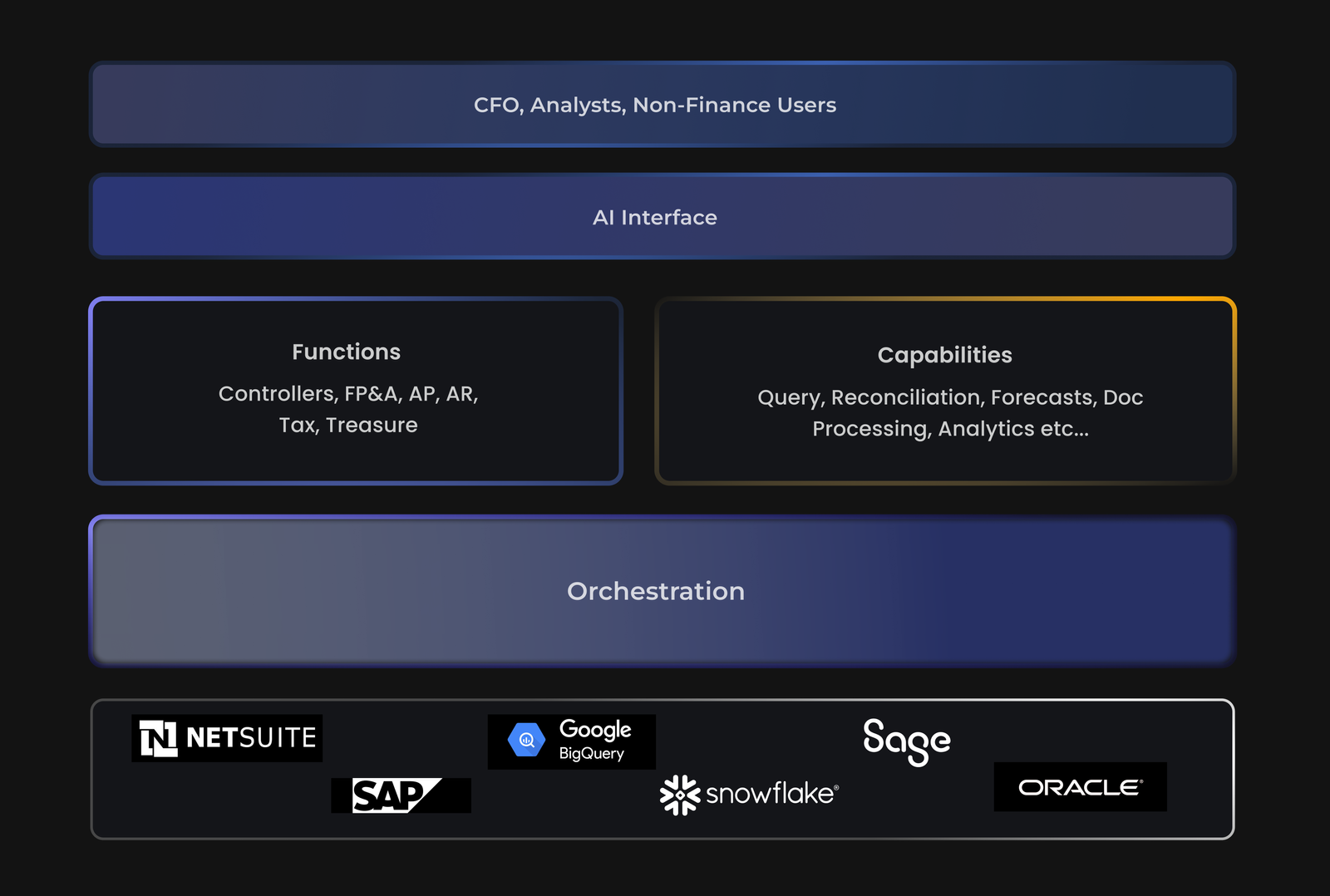
ChatFin handles the serving, batching, quantization, and evaluation layer so a finance team does not have to become a platform team. Deploy against self-hosted open weights inside your network or against a hosted endpoint, with the same ERP integration and the same audit trail either way.
Open weights are free. GPU memory, batching strategy, and the engineer who owns the pager are not.