
Invoice-to-Cash Transformation: The Complete End-to-End AR Automation Guide 2026
End-to-end invoice-to-cash transformation eliminates manual work at every stage: generation, delivery, collections, cash application, reconciliation. Companies automating the full cycle reduce operational costs by 40-50% while improving DSO by 20-25%.
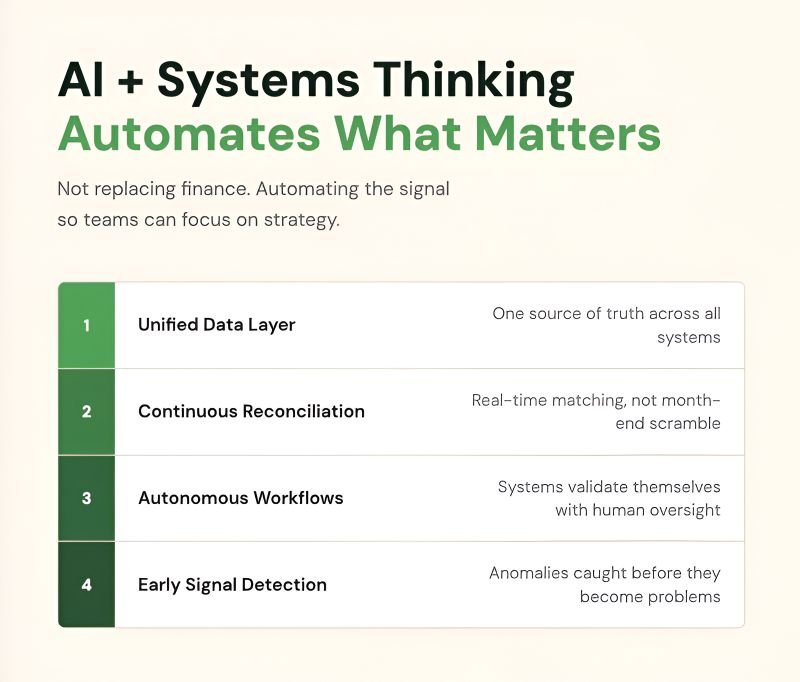
- Full Automation Scope Modern I2C automation spans invoice generation, delivery, collections, cash application, and reconciliation—not just one piece.
- Operational Impact 40-50% reduction in manual AR work, 20-25% DSO improvement, 80%+ automation rates on routine tasks.
- Cash Application AI-powered matching achieves 95%+ auto-match rates on payments, eliminating manual application work.
- Time-to-Value Full transformation achievable in 12-16 weeks, with DSO improvements visible by week 6-8.
- No Integration Burden Running inside ERP eliminates the integration work that makes traditional point solutions slow.
Invoice-to-cash automation isn't about plugging in disconnected point solutions. It's about reimagining the entire receivables cycle as an integrated system where each stage feeds into the next, with minimal human intervention. Organizations that achieve true end-to-end automation operate at a structural advantage that competitors can't easily replicate.
The Five Stages of Invoice-to-Cash Automation
From invoice generation to final cash reconciliation, each stage of the I2C cycle has automation opportunities. The difference between partial and full automation is 15-20 days of DSO improvement and 30-40% operational cost savings. Companies leaving any stage manual are leaving significant value on the table.
Stage 1: Intelligent Invoice Generation
The cycle starts here. Automating invoice generation eliminates delays and errors that ripple through the entire process.
- Real-time Invoice Creation: Invoices generated immediately upon transaction (not at period close). Saves 3-5 days.
- AI Validation: Automated checks catch errors (incorrect amounts, missing details, duplicate invoices) before sending. Reduces dispute rate by 50%+.
- Auto-Population: Customer data, contract terms, payment instructions auto-filled from ERP and customer master data.
- Compliance Built-In: Tax calculations, regulatory requirements, and reporting metadata embedded automatically.
Stage 2: Multi-Channel Delivery & Tracking
Not all customers receive invoices the same way. Modern I2C systems deliver via the customer's preferred channel and confirm delivery.
- Email, EDI, Portal, PDF: Deliver via customer's preferred channel. Some prefer email, others need EDI integration.
- Delivery Confirmation: Know when invoice reached customer. Eliminates "I never got it" delays.
- Self-Service Portal: Customers access invoices, payment history, and can pay online. Reduces support burden.
- Payment Reminders: Automated follow-up for unpaid invoices. Intelligent scheduling avoids over-contacting.
Stage 3: Intelligent Collections
Collections is where most AR teams still do manual work. Automation here delivers the biggest DSO impact.
- Predictive Dunning: AI predicts which invoices need attention and when. Don't contact customers about payments they're about to make.
- Automated Escalation: Route to human collectors only when AI-driven approach is insufficient. Saves 80%+ of manual effort.
- Personalized Communication: Different messaging for strategic accounts vs. transactional customers. Maintain relationships.
- Multi-Touch Workflows: Coordinated email, SMS, and portal reminders. Not excessive, but effective.
"When we automated our invoice generation and delivery, we saved 4 days right there. Then intelligent collections got another 8 days. That's 50% DSO reduction without changing customer behavior." - CFO, Mid-Market Tech
Stage 4: Intelligent Cash Application
Cash application is often a hidden bottleneck. Manual matching is slow and error-prone. AI-powered matching changes the game.
- 95%+ Auto-Match: AI matches payments to invoices automatically. Eliminates manual application work entirely.
- Exception Handling: When AI can't match automatically, flag for human review rather than leaving payments in limbo.
- Partial & Overpayment Handling: Intelligent logic handles complex payment scenarios without manual intervention.
- Real-Time AR Update: Payment received and applied immediately. AR aging reflects current reality.
Stage 5: Automated Reconciliation & Reporting
The final stage closes the loop: ensure all payments are accounted for and AR is reconciled.
- Bank Reconciliation: Automated matching of bank deposits to receivables. Eliminates manual reconciliation.
- AR Reconciliation: Continuous verification that all payments are applied correctly. Catch discrepancies immediately.
- Real-Time Reporting: AR aging, DSO, collection rates updated continuously (not monthly). Decision makers see true position.
- Audit Trail: Complete audit trail of every transaction. Built-in compliance for SOX, GAAP, and regulations.
The people change is the project
Order to cash work touches sales, service and finance, so the process change lands on all of them.
My favorite is an individual that was running a transformation project at a fairly sizable organization. And he was struggling because They weren't really appreciating the fact that they were asking essentially upwards of 70 divisional CFOs to do their work differently.
Vin Messina, on the AgentCFO podcast
Name an owner in each team before the automation goes live, and agree what each one approves.
The Transformation Roadmap: 12-16 Weeks to Full Automation
Week 1-2: Assessment
- Map current I2C process end-to-end
- Identify manual bottlenecks and inefficiencies
- Set DSO reduction targets and KPIs
Week 3-4: Invoice Generation & Delivery
- Deploy automated invoice generation (real-time, not monthly)
- Enable multi-channel delivery (email, portal, EDI)
- First quick win: 3-5 day DSO reduction
Week 5-8: Collections Automation
- Deploy intelligent dunning sequences
- Launch payment prediction models
- Begin automated collections workflows
- Expected: Additional 5-8 day DSO reduction
Week 9-12: Cash Application & Reconciliation
- Deploy AI-powered cash matching (95%+ auto-match)
- Enable bank and AR reconciliation automation
- Implement real-time reporting dashboards
Week 13-16: Optimization & Scale
- Refine workflows based on 90+ days of data
- Scale to 100% of customer base
- Measure final DSO, cost, and efficiency improvements
End-to-End Transformation Delivers Structural Advantage
Companies that achieve true end-to-end I2C automation operate with a permanent competitive advantage. They have 20-25 days better DSO, 40-50% lower AR operating costs, and cash conversion that's 2-3x faster. That advantage only widens over time.
Point solutions that automate only collections or only cash application leave half the value on the table. Full transformation means automating every stage from invoice generation through final reconciliation. That's where the 20-25 day DSO improvement comes from.
The ChatFin Advantage: Complete I2C Automation Platform
ChatFin automates the complete invoice-to-cash cycle inside your ERP. No integrations, no disconnected systems. One platform for invoice generation, multi-channel delivery, intelligent collections, AI cash matching, and automated reconciliation. Deploy in weeks, not quarters. See full I2C transformation in 12-16 weeks.
Learn more: Order-to-Cash Automation for Enterprise
Additional resource: AR Automation: AI-Powered Collections at Scale