
Investment Banking AI Technology: Top Tools for IB Professionals in 2026
Investment banking is a volume game, and AI has moved the bottleneck off human capacity. The modern IB tech stack is best understood by deal workflow, from sourcing to diligence to pitchbooks. Here are the leading tools in each stage in 2026, what they do well, and where each one stops.
- Organize the IB AI stack by deal workflow: sourcing, due diligence, financial analysis, pitchbook creation, and data rooms. Each stage has different leaders.
- Deal sourcing runs on data platforms like PitchBook and Capital IQ, increasingly with predictive features that flag targets before they market themselves.
- Due diligence is where extraction tools like Kira, V7 Go, and Hebbia compress days of document review into hours, with citations back to source.
- Pitchbooks still get built in PowerPoint. think-cell, Macabacus, and UpSlide lead, while generic assistants that fabricate financial data are a known hazard.
- Bankers report saving 20-plus hours per deal cycle and running 2 to 3 times more live deals, which redirects time from grunt work to relationships and structuring.
For most of its history, investment banking was capacity-bound. There were only so many pitch decks an analyst could build, so many CIMs an associate could read, so many comp sets a team could assemble before a deadline. AI has moved that bottleneck. The grunt work of screening, extraction, and formatting is increasingly automated, which changes what a banker's day is spent on.
The clearest way to understand the tools is by the deal workflow they serve, because a sourcing platform and a pitchbook tool are not competitors any more than a hammer and a saw are. This guide walks the stack stage by stage, names the leaders as of 2026, and is honest about where each category ends.
Deal sourcing
Sourcing runs on data. PitchBook remains the private-market standard and has added predictive features that flag companies likely to raise or exit before they officially market themselves. S&P Capital IQ provides the fundamental data and AI-enhanced search bankers use to build peer groups and support valuation arguments. Relationship-intelligence tools like Affinity mine email and calendar data to surface warm intro paths. The category's job is to find and prioritize opportunities faster; it stops short of analyzing them deeply.
Due diligence
This is where AI has changed the work most. Extraction platforms like Kira Systems, V7 Go, and Hebbia read batches of CIMs, contracts, and filings and return structured data with citations back to the exact page, turning days of manual review into hours. The important discipline is verification: the best of these tools cite their sources so an analyst can click any figure and see where it came from, which is what makes the speed trustworthy rather than reckless.

Financial analysis and modeling
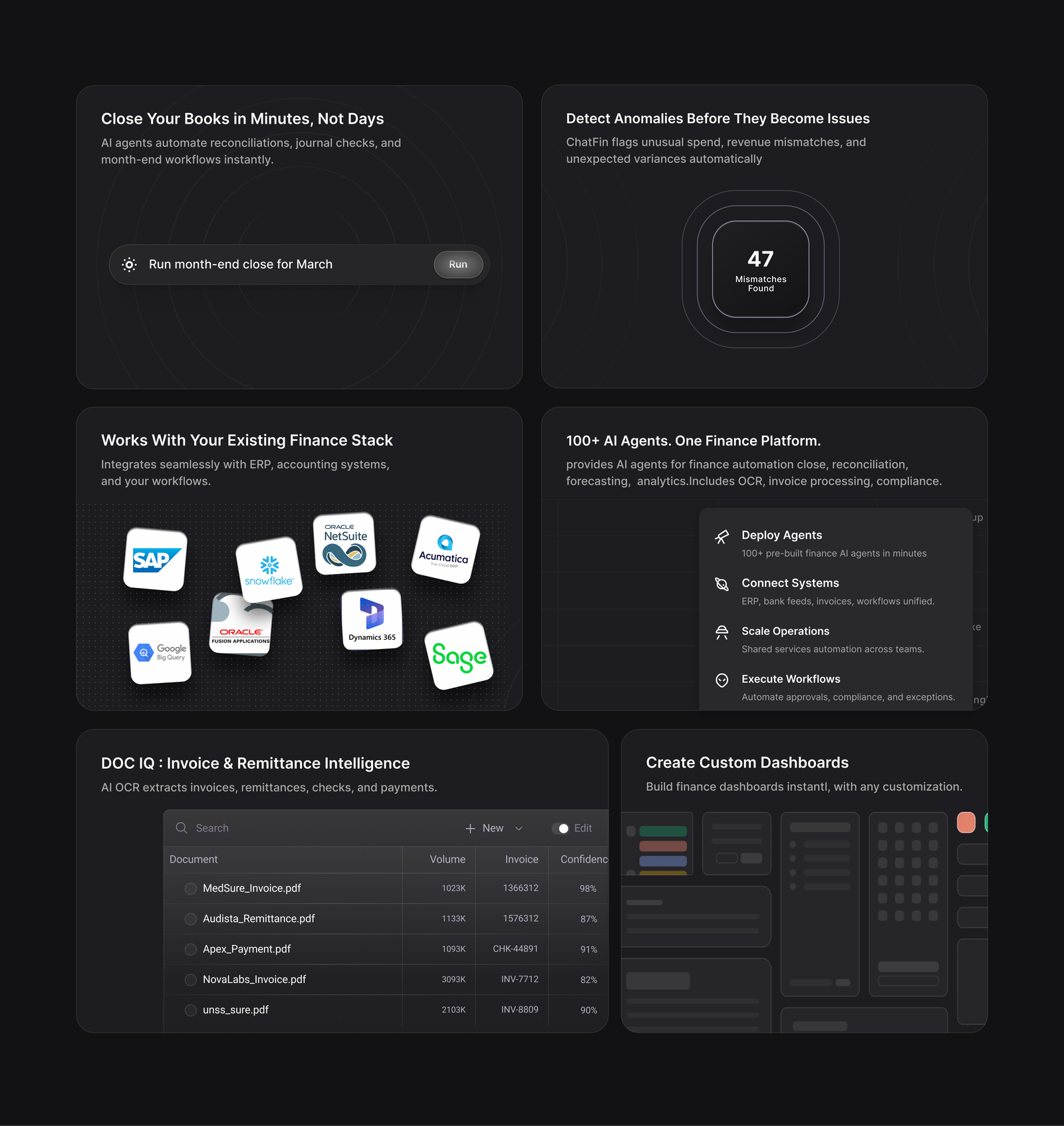
Between sourcing and the deck sits the analytical work: normalizing financials, building comps, and running the numbers. Tools that convert messy PDFs into clean, normalized Excel line items save analysts days during quality-of-earnings reviews. This is the stage where ChatFin's financial-analysis and data-extraction automation fits, taking the mechanical work of assembling and normalizing financial data off the analyst so the human time goes to valuation strategy and judgment rather than data entry.
Pitchbooks and data rooms
Pitchbooks still get built in PowerPoint, and the tools that lead are the ones that work inside it. think-cell is the charting standard across bulge-bracket banks, and Macabacus and UpSlide lead Excel-to-PowerPoint automation. A known hazard is leaning on a generic assistant that drafts slides but fabricates financial figures and cannot produce IB-standard charts, so the reliable tools connect real data to formatted output. On the data-room side, Datasite and Intralinks use machine learning to organize documents and surface red flags.
"AI did not replace the banker. It moved the bottleneck off capacity, so the scarce resource is judgment and relationships again, which is what bankers wanted to spend their time on all along."
What the stack adds up to
The reported returns are consistent across the market: bankers save on the order of 20-plus hours per deal cycle, and boutique teams report running 2 to 3 times more live deals simultaneously because the mechanical work no longer caps throughput. The strategic point is not the hours saved but where they go: from screening, extracting, and formatting back to structuring deals and building client relationships, which is the work that actually differentiates a bank.
Win one workflow before buying the stack
A full AI stack for a deal team looks efficient on paper. In practice, analysts adopt one tool at a time, when it fixes something they hate doing.
A practical piece of advice from the AgentCFO podcast was to fix small, visible problems with AI first, because that is what persuades a team to adopt it for bigger work.
Start with the task analysts complain about most, often comps refreshes or data room indexing, and expand the stack once that tool sticks.
Frequently asked questions
Can one platform cover the whole deal workflow?
Not well. Sourcing, diligence, modeling, and pitchbook creation are genuinely different jobs with different leaders, and a tool that claims to do all of them usually does none of them at a professional standard. Expect a stack of specialists that share data, and prioritize how cleanly they hand off to each other over any single tool's breadth.
Is it safe to use general AI assistants for deal work?
With care. General assistants are useful for drafting and summarizing, but they can fabricate financial figures and cannot produce IB-standard charts, which is dangerous in a document a client relies on. Use tools that cite sources for extraction and tools that connect real data to formatted output for slides, and keep material nonpublic information inside platforms built for bank-grade security.
Where does a finance-automation platform like ChatFin fit in IB?
In the financial-analysis and data-extraction layer: normalizing financials, assembling comparables, and automating the mechanical data work that sits between raw documents and the model. It complements the sourcing and pitchbook specialists rather than replacing them, freeing analyst hours for valuation and advisory.
Automate the Mechanical Analysis. Spend the Hours on the Deal.
ChatFin automates the data-heavy financial analysis that sits between raw documents and the model, so analysts and associates spend their time on valuation strategy and client advisory instead of data entry.
Move the bottleneck off capacity and your best people go back to structuring deals and building relationships.