
Integration and Unified Data Architecture Remain the Biggest Challenge in Finance AI
The hardest problem in finance AI is not the AI. It is getting clean, unified, real-time data into the model. Disconnected ERPs, spreadsheet silos, and manual data pipelines make AI outputs unreliable. 68% of finance teams cite data integration as the top AI barrier.
- AI Failure Root Cause 85% of AI projects fail due to poor data quality and integration gaps, not AI model limitations. The model is only as good as its inputs.
- Top AI Barrier 68% of finance teams cite data integration as their biggest AI implementation challenge. It outranks model complexity and cost.
- Deployment Speed Impact Organizations with unified data architecture deploy finance AI 4x faster than those with disconnected systems. Integration work is the timeline bottleneck.
- Data Silos Break AI Multiple ERPs, legacy systems, and spreadsheet masters create conflicting data. AI cannot reason reliably from contradictory inputs.
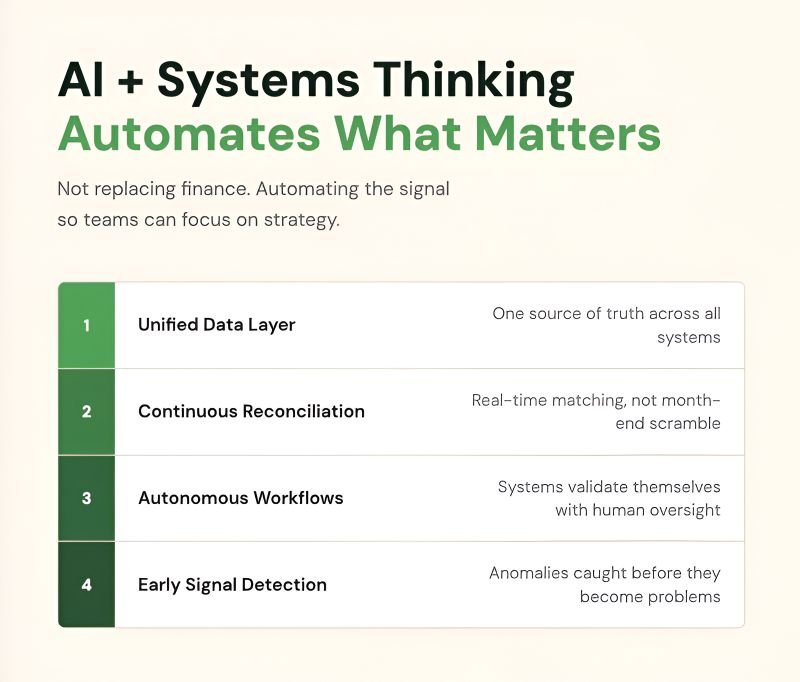
- Unified Model Advantage One source of truth for GL, AR, AP, and customer data eliminates reconciliation and makes AI outputs reliable. Real-time data flows beat batch feeds.
Finance organizations spend millions on AI platforms that promise faster close, better forecasting, and autonomous reconciliation. Then the data arrives dirty. Multiple systems conflict. Spreadsheets contradict the GL. The AI outputs are unreliable and adoption stalls.
The AI is not the problem. The data architecture is the problem. 85% of AI projects fail due to poor data quality and integration gaps. Finance teams discovering this lesson the hard way should not blame the vendor. They should rebuild their data foundation first.
Why Integration Is the Real AI Problem
Data integration is unglamorous work. No one buys an AI platform to integrate legacy systems. But 68% of finance teams cite data integration as their top AI implementation challenge. It outranks AI model complexity. It dominates cost. It determines timeline.
Organizations with disconnected financial systems have GL in one database, AR in another, AP in a third, and reconciliation spreadsheets that trust none of them. Deploy an AI agent into that environment, and it reads contradictory data. Output quality degrades immediately.
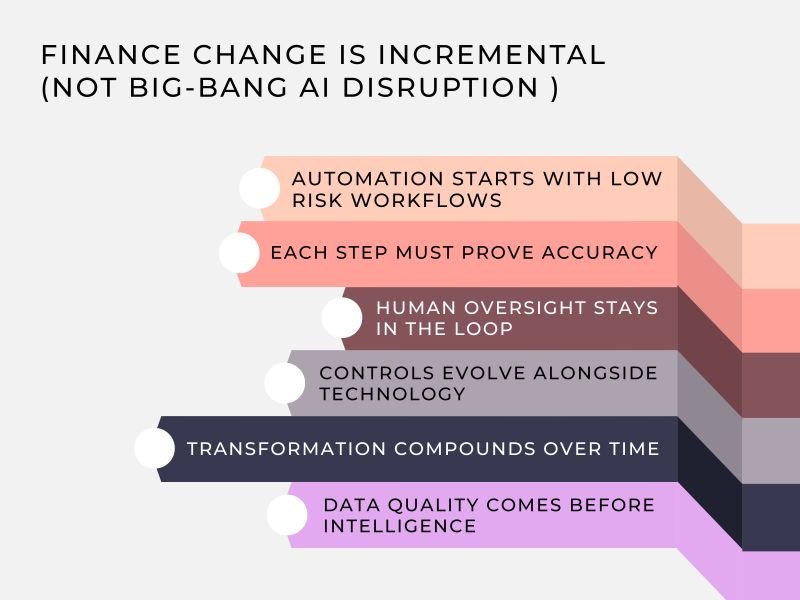
Data Silos Break AI Accuracy
An AI agent trained to forecast cash flow needs unified data: GL balances, open AR aging, open AP aging, and historical cash patterns. If GL and AR disagree on the current state, the agent makes poor forecasts. If GL and AP have different posting rules, the agent cannot learn patterns.
Organizations with unified data architecture deploy finance AI 4x faster than those without. The speed difference comes from elimination of integration work. Teams with silos spend 6 months on data mapping and reconciliation before the AI can even start learning.
What Unified Data Architecture Looks Like in Finance
Organizations closing the books in 3 days and deploying AI agents reliably have built unified data architecture. They have one GL. One AR system. One AP system. Reconciliation between them is automatic, not manual.
In that environment, an AI agent flagging an anomaly is reading current state. A forecast is built on unified history. A reconciliation agent auto-matches transactions without spreadsheet hunting. The AI works because the data is clean and unified.
The hardest problem in finance AI is not the AI. It is building data architecture where all financial systems speak the same language and trust a single source of truth.
Steps to Solve the Integration Challenge
Finance leaders should treat data architecture as a prerequisite to AI, not a side project. Before buying an AI platform, answer these questions: Do you have one GL or multiple? Do GL, AR, and AP systems agree on balances? Is your customer master owned by AR or by a shared source? Do you reconcile between systems weekly or hourly?
If the answers indicate silos, fix those first. Unified data architecture is the fastest path to reliable AI. Organizations with unified data deploy AI 4x faster and report 3x higher accuracy in AI outputs. The ROI of solving data integration is immediate.
Build Data Foundation Before Buying AI
Finance leaders evaluating AI platforms should start with data architecture, not vendor demos. The best AI in the world cannot overcome silos and quality problems. The worst AI will work if data is clean and unified.
Organizations winning in 2026 have solved data integration and unified architecture. That foundation makes AI reliable, deployment faster, and ROI real. Data first. Tools second.
Research & Sources
The ChatFin Advantage
ChatFin runs inside your ERP and reads from unified data architecture. Because ChatFin operates on your single source of truth, AI agents are reliable from day one. No integration delays. No data quality problems. Unified data feeds unified AI.
Learn more: Financial Close Automation Guide