
JD EDWARDS EXECUTIVE
Can AI Agents Improve JD Edwards Productivity Without Replacing or Migrating Away From the ERP?

The frustration usually comes from the gap between JD Edwards data and the person who needs an answer, and that gap survives a migration.
- JD Edwards is not a legacy problem waiting for a decision. Oracle aligned Release 26 as Applications Update 26 with Tools 9.2.26 and has extended Premier Support through at least 2036.
- Most complaints about the ERP are complaints about access to it: reports that do not exist, exports that are stale, questions that require an analyst.
- An AI layer addresses that gap without touching the system of record, which is where your controls and your accounting logic live.
- Migration replaces the interface and carries the same access problem into a new system, usually alongside a multi year programme and a data project.
- ChatFin sits on your existing instance through published interfaces, installs nothing inside EnterpriseOne, and can be removed without a trace.
The question behind this question is usually a board conversation. Somebody has proposed that finance is slow because the ERP is old, and the implied remedy is a migration with a business case attached to it.
That reasoning deserves scrutiny, because in most JD Edwards estates the ERP is doing its job perfectly well. What is failing is everything around it.
JD Edwards Is Not the Constraint People Assume
It is worth establishing the platform position before discussing alternatives, because a great deal of migration pressure rests on an assumption about longevity that no longer holds.
Oracle has continued to invest in the line, aligning Release 26 as Applications Update 26 with Tools 9.2.26, and Premier Support now runs through at least 2036. That removes the forced timeline that used to sit behind these conversations and turns migration back into a genuine choice.

The constraint is usually habit
Much of the effort in a JD Edwards shop goes into reports and steps that outlived their reason. The ERP gets blamed for work the team chose to keep doing.
We prepare this report because someone three and a half years ago said that they needed something for the board and we started doing it.
Ilana Esterrich, on the AgentCFO podcast
Ask why each recurring report exists before scoping improvements. Some of the fastest wins come from stopping work rather than automating it.
What People Mean When They Blame the ERP
Ask a finance team to be specific about their frustration and the list is remarkably consistent. Almost none of it is about the ledger being wrong or the transactions being unreliable.
It is about the distance between the data and an answer. That distance is a tooling problem sitting above the ERP, and replacing the ERP does not shorten it.
Why Migration Rarely Solves It
A new ERP arrives with a better interface and the same underlying structure: a system of record that holds transactions, and a reporting layer that answers the questions somebody anticipated.
The unanticipated question still requires an analyst. The cross module comparison still requires an export. And you have spent two years and a great deal of money to arrive at a familiar problem in a less familiar system, with a team that no longer knows where anything is.

What an AI Layer Changes Instead
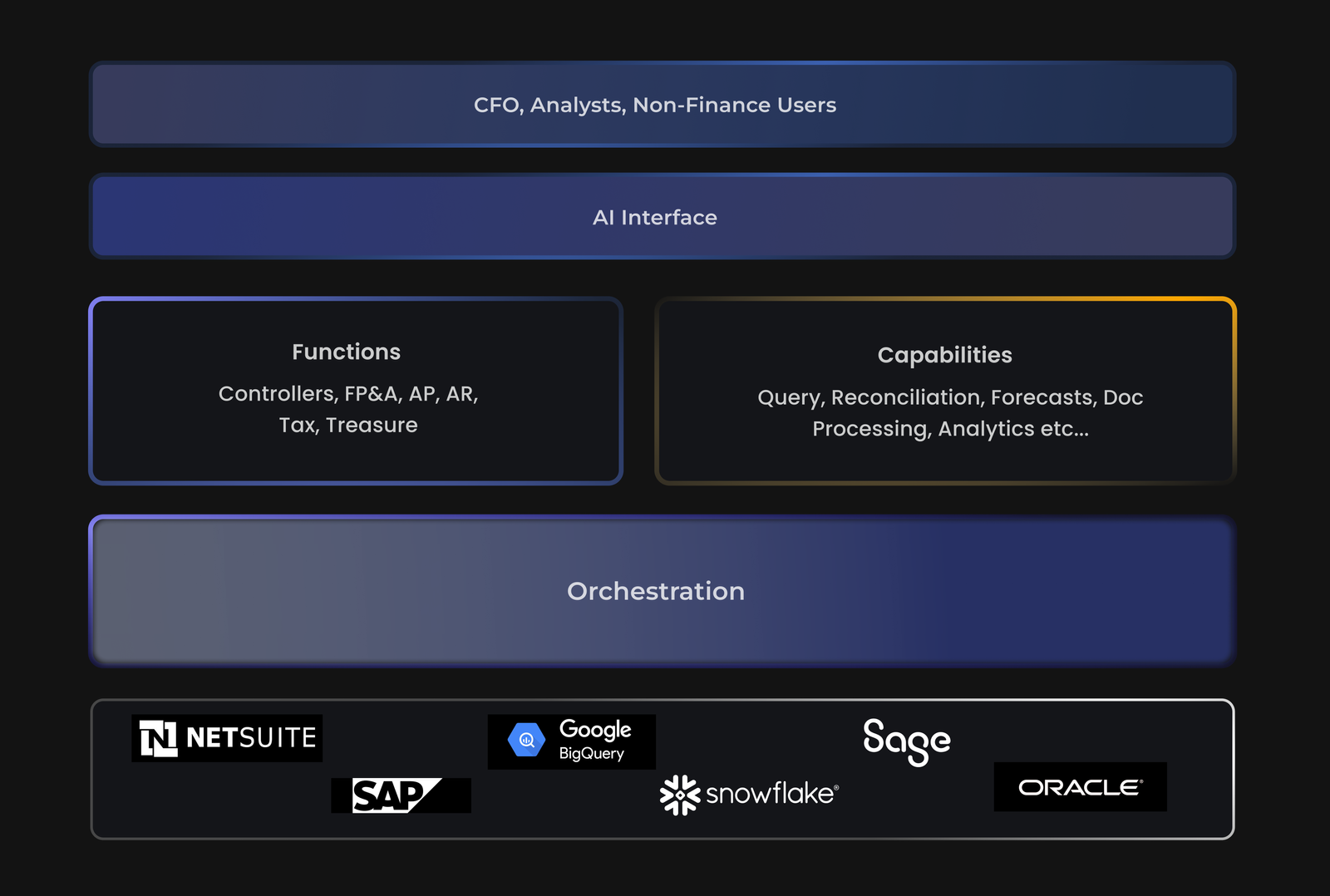
Adding an agent layer targets the actual complaint rather than the system underneath it. The ledger stays where it is, the controls stay where they are, and what changes is the distance between a question and an answer.
The important architectural property is that nothing inside EnterpriseOne is modified. No custom applications, no business function changes, no new tables. The agent calls published orchestrations and the AIS Server, which are the interfaces Oracle maintains and documents.
The Reversibility Test
This is the property that makes the decision low risk, and it is worth making it an explicit requirement of any vendor you evaluate.
If the AI layer were removed tomorrow, your JD Edwards environment should be what it was before, minus the transactions your team approved. Nothing installed, nothing modified, nothing to unwind. Migration offers no equivalent, since you cannot un migrate.
If Migration Is on the Roadmap
Some organisations will move eventually, for reasons that have nothing to do with finance productivity: an acquisition, a group standard, a broader platform decision.
Adding an agent layer now is compatible with that rather than in conflict with it. It delivers benefit during the years before any move, and the process understanding it produces, including where your exceptions come from, is directly useful input to a migration design.
The Honest Position
There are situations where JD Edwards is the constraint: a functional requirement it cannot meet, an unsupported release nobody will maintain, or a corporate decision already taken. In those cases migrate, and do it properly.
What should not happen is migrating because finance is slow, without first testing whether the slowness lives in the ERP or in the layer above it. That test costs a fortnight and the alternative costs years.

Fix the Distance, Not the Database
ChatFin runs on your existing JD Edwards instance through published interfaces, installs nothing inside EnterpriseOne, and can be removed without a trace, so productivity improves without a migration decision.
Test whether the slowness lives in your ERP or in the layer above it. That test takes a fortnight. The alternative takes years.
Frequently Asked Questions
Do we need to migrate off JD Edwards to get AI benefits?
No, and for most sites migration would be an expensive way to arrive at the same problem. Oracle aligned Release 26 as Applications Update 26 with Tools 9.2.26 and has extended Premier Support through at least 2036, so the forced timeline argument no longer applies. Orchestrator and the AIS Server are modern REST interfaces designed for external callers, which is what an AI layer needs.
Why would migration not solve the productivity problem?
Because a new ERP has the same shape: a system of record plus a reporting layer that answers anticipated questions. The unanticipated question still needs an analyst, the cross module comparison still needs an export, and you have spent years and discarded the accumulated understanding of your own configuration to arrive at a familiar problem in an unfamiliar system.
What if we are planning to migrate anyway?
Adding an agent layer now is compatible. It delivers benefit during the years a programme would otherwise consume, and the process understanding it produces, particularly a precise picture of where your exceptions originate, is directly useful input to a migration design. Master data problems also get surfaced and fixed now.