
JD EDWARDS EXECUTIVE
Can AI Agents Improve JD Edwards Productivity Without Adding Headcount or Launching a Large IT Project?

The biggest productivity gains in a JD Edwards finance function come from removing lookup, assembly and chasing.
- The work that consumes finance time is mostly searching, assembling and waiting, none of which needs judgement.
- No hiring is required. The capability you need is your JD Edwards administrator and your finance process owners, for hours rather than months.
- No large IT project is required either, provided nothing is installed inside EnterpriseOne and the integration uses published interfaces.
- Start with one process, measure it, and extend. A transformation programme is the slowest route to the same place.
- ChatFin is configured rather than built, so the deployment is a workshop and your change control is the longest step.
There is a persistent assumption that meaningful automation requires a programme: a business case, a steering group, a systems integrator and a year. That assumption is usually inherited from ERP implementation experience, where it was correct.
It is not correct here, provided you choose an approach that adopts rather than builds and that leaves your ERP untouched.
Where the Productivity Is
Sit with a finance team for a day and record what they are doing. It is almost never the thing their job description describes.
It is searching for a purchase order, opening four screens to understand one exception, waiting for a reply, and reassembling context that somebody else already assembled last week. None of that requires professional judgement, and all of it consumes people who have it.
Capacity from the low-value work
Productivity on JD Edwards without new hires comes from one place: the manual, repetitive work that absorbs skilled people's time.
Getting all this efficiency, getting out of the manual, the low value, high value stuff, all the stuff we talked about is great.
Chris Ortega, on the AgentCFO podcast
Map where that work sits before choosing agents. Productivity gained on high-value work is marginal; on low-value work it is where the headcount case lives.
Why No Hiring Is Needed
The capability required to deploy this is not AI engineering. It is knowledge of your JD Edwards environment and your finance processes, which you already have.
A product that arrives built needs your administrator for the connection and the orchestration whitelist, and your finance owners to define scope and thresholds. Both are measured in hours.
Why No Large IT Project Is Needed
The reason ERP projects are large is that they change the ERP. Objects are modified, data is migrated, and everything downstream has to be retested.
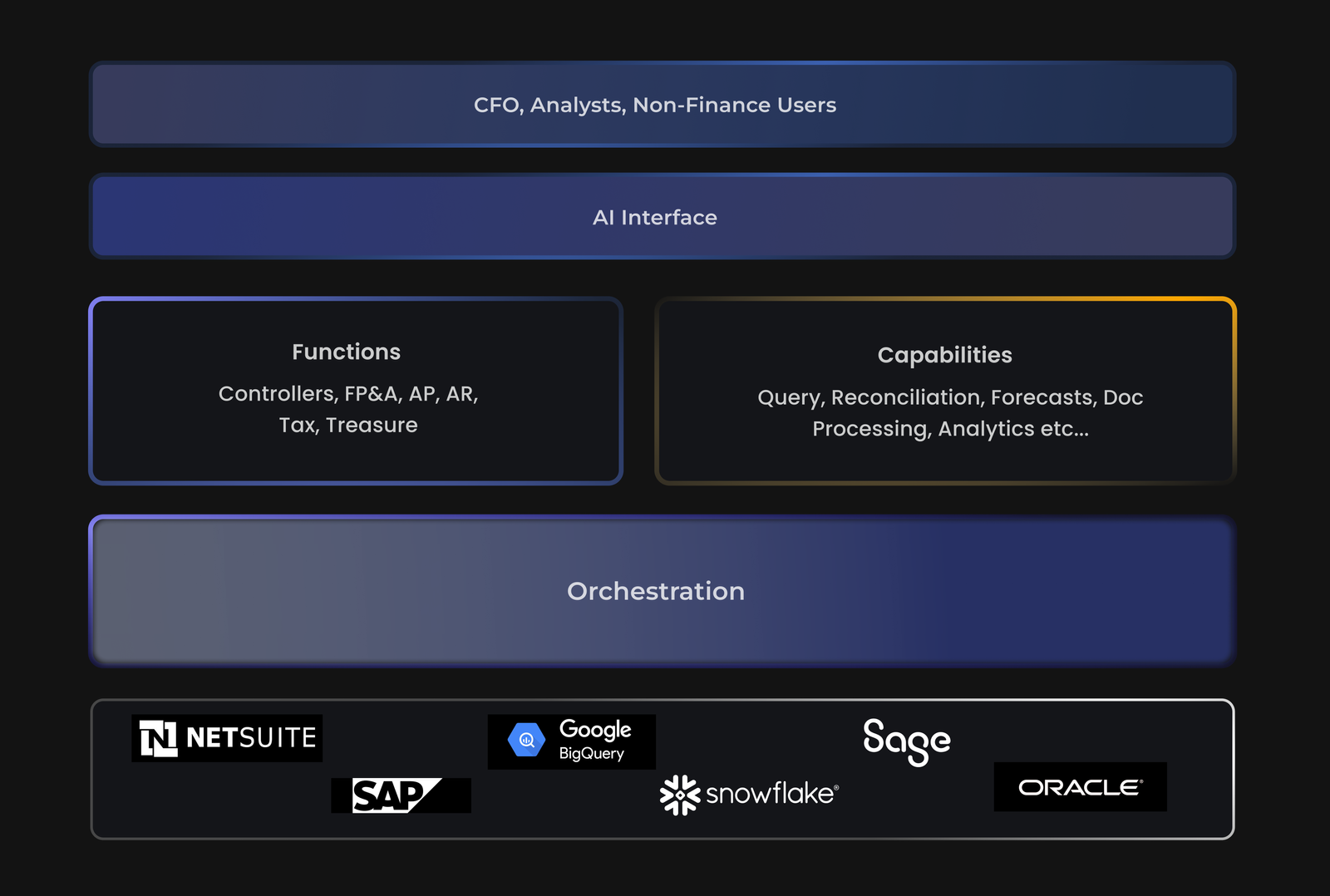
None of that applies when the integration runs entirely on published interfaces. Nothing is installed inside EnterpriseOne, no business function is modified, no table is created, and the production change conversation is about access rather than about objects.
The Small Start That Works
The alternative to a programme is a scoped deployment with a measured result, which produces a decision.
One process, your worst real cases, a baseline before and a measurement after. Six weeks including your own change control, and at the end you have a number.
What Productivity Looks Like Afterwards
The visible change is that the queue stops being a backlog and becomes a short exception list. The less visible change matters more.
Because work happens continuously rather than in period end bursts, the rhythm of the function changes. Nothing accumulates, so nothing has to be cleared under pressure, and the people doing the work spend their day on judgement rather than on lookup.
"The productivity is not in doing the work faster. It is in not doing the searching at all."

The Honest Caveats
Two things this does not do, and pretending otherwise would set up a disappointment.
It does not fix bad master data, and it will surface every problem in yours immediately, which is uncomfortable and ultimately useful. And it does not remove the need for finance judgement, which is the point.
How ChatFin Fits
ChatFin is configured rather than built. It runs on your existing JD Edwards environment through published interfaces, installs nothing inside EnterpriseOne, and is set up by your administrator and your finance owners in a workshop.
The longest step in a typical deployment is your own change control, which is how it should be, and if it were removed tomorrow your environment would be precisely what it is today.

A Workshop, Not a Programme
ChatFin removes the searching, assembling and chasing that consume JD Edwards finance teams, configured by your existing people in a workshop, with nothing installed inside EnterpriseOne.
The assumption that automation requires a year long programme is inherited from ERP implementations. It does not apply when nothing inside the ERP changes.
Frequently Asked Questions
Can we improve productivity without hiring anyone?
Yes, because the capability needed is not AI engineering. It is knowledge of your JD Edwards environment and your finance processes, which you already have. A product that arrives built needs your administrator for hours to handle the connection and orchestration whitelist, and your finance owners to define scope and thresholds. If a vendor needs specialist skills from your side, they are selling a project rather than a product.
Why does this not require a large IT project?
Because ERP projects are large when they change the ERP: objects modified, data migrated, everything downstream retested. None of that applies when the integration runs entirely on published interfaces. Nothing is installed inside EnterpriseOne, no business function is modified, no table is created, and the production change conversation is about access rather than about objects.
What will this not fix?
Two things worth being clear about. It does not fix bad master data, and it will surface every problem in yours immediately, which is uncomfortable and ultimately useful. And it does not remove the need for finance judgement, since approval, interpretation and commercial decisions stay with people. That is the point rather than a limitation.