
IFRS Compliance Automation for Finance Teams: Revenue Recognition, Leases, and Financial Instruments
- IFRS compliance automation targets three high-complexity standards where data processing demands exceed human scale: IFRS 15 (revenue recognition), IFRS 16 (lease accounting), and IFRS 9 (financial instruments). AI handles the calculation layers; accountants handle the judgment layers.
- IFRS 15 revenue recognition automation mirrors the ASC 606 automation ChatFin delivers for US GAAP companies, applying the five-step model at scale across contract portfolios with variable consideration, multiple performance obligations, and contract modifications.
- IFRS 16 lease automation calculates right-of-use asset values, lease liability amortization schedules, and the interest and depreciation split for each lease, posting the required journal entries each period from the lease register maintained in or connected to the ERP.
- IFRS 9 expected credit loss (ECL) calculation for trade receivables is one of the most data-intensive IFRS requirements, requiring aging analysis, historical loss rate data, and forward-looking macroeconomic adjustment. AI agents automate the data assembly and ECL calculation from live AR data.
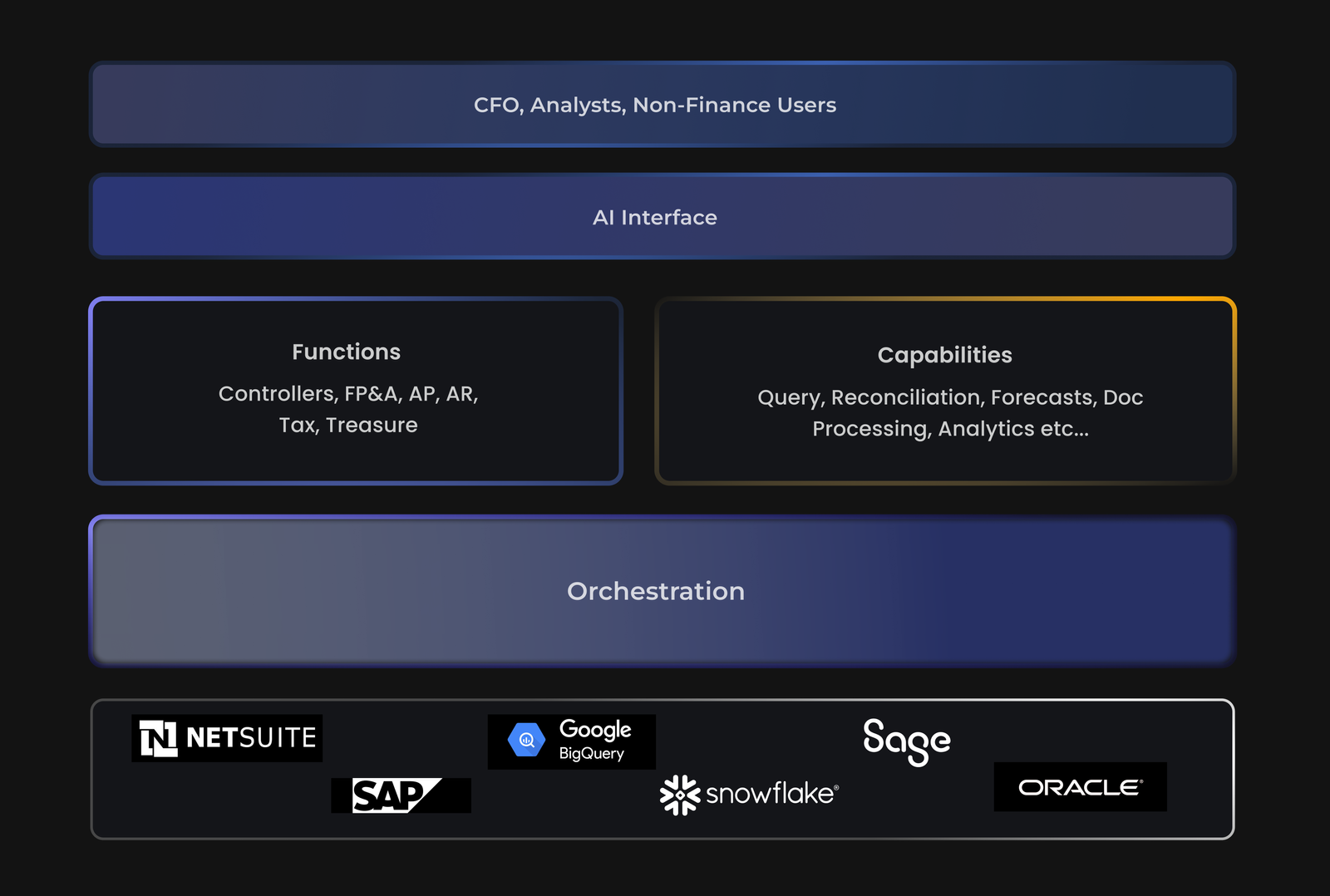
- ChatFin supports IFRS-reporting companies on NetSuite, SAP Business One, Acumatica, Dynamics 365, and Sage Intacct, applying the IFRS measurement and disclosure requirements configured for the specific organization to the live ERP data.
The International Financial Reporting Standards represent some of the most complex and judgment-intensive accounting requirements in global financial reporting. IFRS 15 revenue recognition requires a five-step model applied to every contract with a customer. IFRS 16 eliminates the distinction between operating and finance leases for lessees, requiring balance sheet recognition of virtually all leases. IFRS 9 introduces expected credit loss accounting that requires forward-looking loss estimates rather than incurred loss recognition.
Each of these standards combines a principle-based judgment layer with a significant data processing and calculation layer. AI automation addresses the data processing and calculation layer, which is where the volume, consistency, and speed advantages of AI are most relevant. The principle-based judgment layer, including the interpretation of contract terms, the assessment of whether a contract modification creates a new contract, and the selection of appropriate forward-looking macroeconomic scenarios for ECL, continues to require qualified accountant judgment.

IFRS 15 Revenue Recognition Automation
IFRS 15 and ASC 606 are substantially converged standards, sharing the same five-step model and many of the same application issues. The automation approach ChatFin uses for ASC 606 compliance applies equally to IFRS 15, with configuration differences to reflect any remaining standards divergence.
The five-step IFRS 15 model that AI agents apply at scale: Step 1, identify the contract with the customer, including combining contracts and accounting for contract modifications. Step 2, identify the performance obligations in the contract using the distinct goods or services criteria. Step 3, determine the transaction price including variable consideration with constraint analysis. Step 4, allocate the transaction price to each performance obligation using relative standalone selling price. Step 5, recognise revenue when or as each performance obligation is satisfied.

IFRS 16 Lease Accounting Automation
IFRS 16 requires lessees to recognise a right-of-use asset and a lease liability for virtually all leases, with only short-term leases under 12 months and low-value asset leases eligible for the simplified recognition exemption. The ongoing accounting requires monthly calculation of interest on the lease liability, depreciation of the right-of-use asset, and the reclassification between current and non-current portions of the lease liability as the lease progresses.
This calculation is entirely deterministic given the lease terms and the incremental borrowing rate used to discount the lease payments. AI agents automate the complete IFRS 16 accounting lifecycle from initial recognition through monthly measurement to lease termination or modification. The human judgment input is required at initial recognition, for the determination of the lease term where extension options exist, and for impairment assessments of the right-of-use asset.
IFRS 9 Expected Credit Loss Automation
IFRS 9 requires that impairment provisions for trade receivables reflect expected future credit losses rather than incurred losses. The simplified approach for trade receivables uses a provision matrix that applies loss rates, adjusted for forward-looking information, to aging buckets of the receivables balance. This calculation is data-intensive but deterministic once the provision matrix has been established and approved by management.
AI agents automate the IFRS 9 ECL calculation for trade receivables by reading the AR aging from the ERP via MCP, applying the approved provision matrix loss rates to each aging bucket after forward-looking macro adjustment, calculating the required ECL provision balance, comparing it to the prior period allowance, and proposing the adjustment journal entry. This calculation that historically required an Excel model rebuilt each period becomes a consistent, automated output from live AR data.
IFRS Compliance for Multi-Currency International Companies
International companies reporting under IFRS face additional complexity from foreign currency translation and the requirement to present financial statements in a functional and presentation currency. IAS 21 requires monetary items to be retranslated at the closing rate each period, with exchange differences recognised in profit or loss. Non-monetary items are translated at the historical rate of the transaction. Equity items are translated at the historical rate of the issuance or contribution.
ChatFin handles multi-currency IFRS compliance in ERPs that support multi-currency accounting including NetSuite, SAP Business One, Acumatica, and Dynamics 365. The agent reads exchange rates from the ERP rate tables, applies the IAS 21 translation rules to each balance category, calculates the translation difference, and posts the currency retranslation journal entry, including the foreign currency translation reserve entry in other comprehensive income for net investments in foreign operations.
IFRS Compliance Automation on Your ERP: ChatFin
ChatFin configures Claude AI agents with your IFRS accounting policies and connects them to your ERP data via MCP, automating the calculation layers of IFRS 15, 16, and 9 while presenting the judgment-layer decisions to your qualified accountants for review and approval. IFRS compliance that scales with your contract portfolio, lease estate, and receivables book without scaling the headcount required to maintain it.
See IFRS Compliance Automation