
ERP INTEGRATION
Connect Claude to JD Edwards: The ChatFin MCP Setup
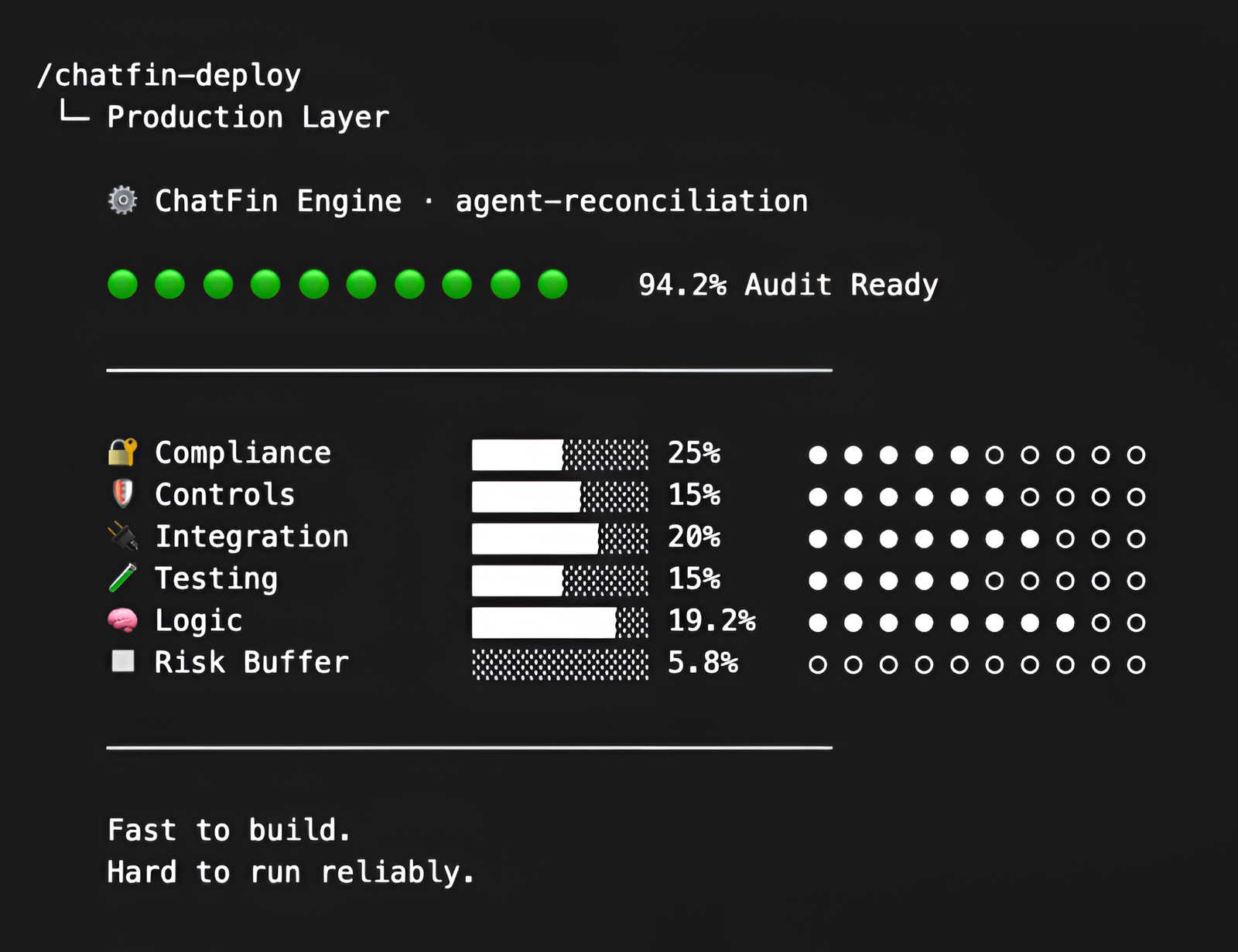
ChatFin runs an MCP server over AIS that connects Claude to JD Edwards through a scoped service account.
- The Model Context Protocol gives Claude a standard way to reach external systems. It defines the interface, not the finance logic behind it.
- A generic MCP connector can move JDE data. It carries no field mappings, no posting rules, and no understanding of what the records mean.
- ChatFin runs a finance native MCP server over JD Edwards, exposing GL, AP, AR, and inventory as business objects.
- Scoping happens at the service account, so what the account can see is what the agent can see.
- Approval routing and logging are part of the server.
Most teams asking how to connect Claude to JD Edwards are asking a narrower question: what does the connection consist of, and who maintains it. The answer matters, because a demo built on a one off script and a production connection that runs the close every month are different pieces of work.
This guide covers the setup itself. ChatFin runs an MCP server layer over JD Edwards, which is what turns a model that can talk about finance into an agent that can work inside your JDE instance.
How ChatFin Connects Claude to JD Edwards

What Claude Can Do Once the Connection Is Live
Where Generic Connectors Run Out
Building your own MCP connector to JDE is achievable for one workflow. The cost shows up later. Field mappings drift when someone adds a category code. Posting logic has to be rewritten when a new document type appears. Nobody owns the connector when the person who wrote it changes teams. ChatFin maintains the layer as a product, which moves that work off your roadmap.
Why the Integration Layer Decides Whether This Works
The protocol is the easy part of this problem. The hard part is the JDE surface behind it: a table structure that needs interpretation, security that has to be honored exactly, and write back rules that keep the ledger defensible. A connector that gets the protocol right and the surface wrong is worse than no connector, because the answers look confident.
"MCP moves the data. ChatFin makes it mean something, and posts it back under the controls finance needs."
If you are connecting Claude to JD Edwards for a proof of concept, a generic connector will get you there. If the connection has to survive a close cycle, an audit, and a personnel change, run it on a layer somebody maintains. That is what ChatFin is.
Connect Claude to JD Edwards with ChatFin
ChatFin runs a finance native MCP server over JD Edwards, exposing your data as business objects with permission handling, approval routing, and logging already built in.
Use a generic connector for a demo. Use ChatFin for the connection that has to run every month.
Frequently Asked Questions
What does the Claude to JD Edwards connection consist of?
An MCP server layer that talks to JDE through AIS. ChatFin runs this layer, exposing GL, AP, AR, and inventory as business objects, scoped by a service account, with approval routing and logging included.
Can I build my own MCP connector to JDE?
For a single workflow, yes. The ongoing cost is field mapping drift, posting logic for new document types, and ownership when staff change. ChatFin maintains the layer as a product instead.
Does a read only pilot require a different setup?
No. Endpoint scoping is a configuration choice, so a read only pilot can expand to write back without rebuilding the connection.