
How ChatFin Delivers 97%+ AI Recon Accuracy on NetSuite
How NetSuite finance teams achieve 97%+ reconciliation accuracy using ChatFin's AI agents, eliminating manual matching and reducing close cycle time by days.
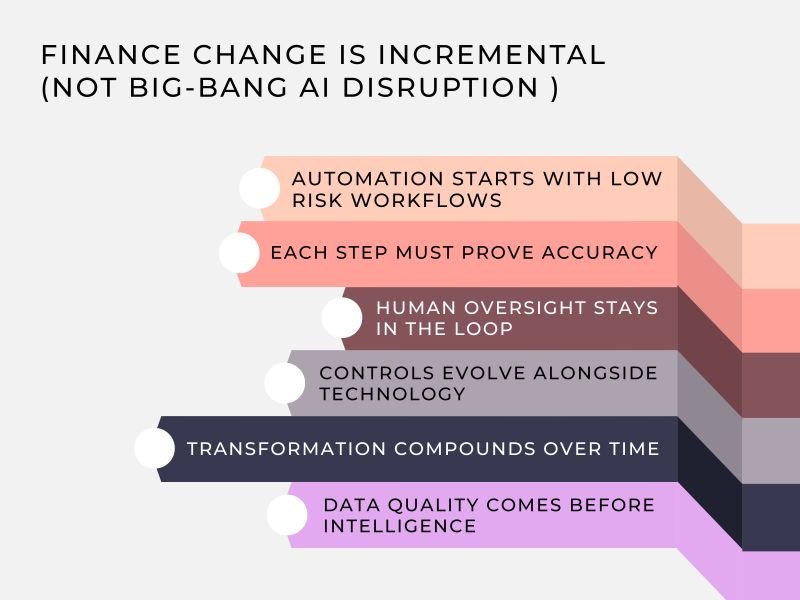
- Finance Transformation Incremental, not revolutionary. AI adoption happens gradually within teams.
- Annual Budgets Become Obsolete By February, December's budget is already outdated without continuous planning.
- VP of Finance is a Connector Between strategy and execution, requiring both technical skill and empathy.
- Isolated Budgeting Red flag that signals disconnection between finance and business operations.
- End-to-End AP Automation Transformational priority, not just a nice-to-have.
- AI + Human Balance AI handles repetition, humans handle judgment. That unlocks finance value.
Jason Yocum's career arc tells a story about how finance is changing. From operating within one of the world's largest retail operations at Gap Inc to serving as a fractional CFO for multiple organizations, he has seen finance transformation from the inside. His insights cut through the hype and focus on what actually happens when companies try to modernize their finance function.
The Budgeting Paradox: The Tyranny of December Plans
Yocum names a problem that plagues most companies: annual budgets that arrive obsolete. "Annual budgets become outdated quickly without continuous planning and alignment. By February, December budgets are already obsolete."
This happens because companies create budgets in isolation. Finance builds a plan. Business units do not see it. By the time the budget is finalized, market conditions have shifted, priorities have changed, and the board is already asking for the first reforecast.
Finance is there to help the business
Accuracy targets matter because they free the team for the part of the job that supports decisions rather than compliance.
The business to help them succeed and not to just focus on compliance rules or not just to focus on the nitpicky details about finance.
Jason Yocum, on the AgentCFO podcast
Set the match rate target, then agree what the team will do with the hours it returns. Otherwise they get absorbed.
From Budget to Continuous Planning
The solution is not a better budget. It is continuous planning and alignment. This means:
What a VP of Finance Actually Does
Yocum challenges a common misconception: a VP of Finance is not a number processor. A VP of Finance must serve as a connector between strategy and execution, requiring both technical skills and strong interpersonal abilities.
This means the VP of Finance spends time in business unit conversations, understanding constraints, identifying opportunities, and translating executive strategy into financial guardrails that teams can execute within. It is not a back-office function. It is a front-office partnership role.
"Finance should enable the business, not block it. A VP of Finance who sees their role as a connector — not a gatekeeper — changes how the organization runs."
AI Transformation: Incremental, Not Revolutionary
Yocum's take on AI in finance is grounded in reality: "Finance transformation will be incremental and cautious, not a big-bang disruption."
This is not pessimism. It is experience. Finance teams are conservative, risk-averse, and accountable for accuracy. They do not rip and replace. They layer. They test. They gradually redirect people and processes. The transformation happens gradually within existing teams, not through wholesale organizational change.

The Human-AI Balance in Finance
The future of finance is not AI replacing finance. It is AI handling the repetition so humans can handle the judgment.
Yocum advocates for automating accounts payable end-to-end, from invoice receipt through payment. This is not an incremental improvement. It is a transformational priority that frees people for higher-value work.
The Career Insight That Matters
When asked about his greatest career lesson, Yocum pointed to something often overlooked in finance: the importance of empathy and contextual understanding. A finance leader who understands the constraints and pressures of the business they are serving can make better decisions and earn better partnership with their stakeholders.
The Future of Finance Leadership
Jason Yocum's message is clear: the VP of Finance of the future is a strategic partner, not a compliance officer. They understand both numbers and business. They use automation to eliminate drudgery, not to replace people. They plan continuously, not annually. And they see their job as enabling the business to move faster and smarter.
The question for finance leaders is not "How do I implement AI?" It is "How do I become a better partner to my business?" AI is a tool for that transformation — not the transformation itself.