

Gross to Net Is the Whole Job
List price is an accounting fiction that nobody pays. What determines the revenue line is the stack of chargebacks, rebates, discounts and returns sitting underneath it.
Gross to net is the reconciliation between gross sales at list price and net revenue after deductions, which in pharmaceuticals commonly include chargebacks, government and commercial rebates, distributor fees, prompt pay discounts, returns and coupon or copay support. Each deduction settles on a different lag with a different counterparty, so the accrual is a portfolio of separate estimates rather than a single percentage, and its accuracy determines the reliability of the revenue line itself.
- The deduction stack is frequently a large share of gross sales, which makes the accrual more consequential than most estimates on the balance sheet.
- Each deduction type has its own counterparty, settlement lag and data source, so they must be estimated separately rather than as a blended rate.
- Chargebacks settle fastest and rebates slowest, which means true up behaviour differs sharply by deduction type.
- The most useful control is a per deduction true up analysis: accrued versus settled, aged, tracked over time.
- ChatFin structures the settlement data by deduction type, ties settlements back to the accrual, and ages what remains open.
In most industries the revenue line is a fairly direct consequence of what was sold. In pharmaceuticals it is the residual after a stack of deductions that can dwarf the operating cost base.
A product ships to a wholesaler at list price. The wholesaler sells to a hospital under a contract price negotiated by a group purchasing organisation and claims the difference back as a chargeback. A pharmacy benefit manager claims a rebate under a formulary agreement. A government programme claims a statutory rebate calculated on a formula. A patient uses a copay card funded by the manufacturer. Some product is returned near expiry. Each of these arrives from a different party on a different timescale.
This piece argues that gross to net deserves the analytical attention usually reserved for the revenue line itself, because it largely determines that line, and sets out what a well run gross to net process looks like.

The deduction stack
Treating gross to net as a single percentage is the root of most problems in this area, because the components behave nothing alike. Estimating them separately is not a refinement, it is the only approach that can be explained.
| Chargebacks | The difference between list price paid by the wholesaler and the contract price paid by the end customer, claimed back by the wholesaler |
| Commercial rebates | Payable to payers and benefit managers under formulary agreements, typically settled quarterly on claims data |
| Government rebates | Statutory programme rebates calculated on defined formulas with prescribed reporting, settled on programme cycles |
| Distributor fees | Service fees payable under distribution agreements, often a percentage of purchases with defined terms |
| Prompt pay discounts | Early settlement discounts, highly predictable and among the few components that can be estimated simply |
| Returns | Product returned near or after expiry, driven by shelf life, inventory in the channel and demand patterns |
| Copay and coupon support | Manufacturer funded patient assistance, settled through programme administrators on their own cycle |
Seven components, seven counterparties, seven lags. Any of them can move independently of the others, which is why a single blended accrual rate conceals more than it communicates.
Why settlement lag drives everything
The defining characteristic of each deduction is how long it takes to settle, because that determines how long the accrual is exposed to estimation error and how quickly a wrong estimate becomes visible.
Chargebacks
Settle relatively quickly as wholesalers submit claims, which means the accrual is corrected by actual data within a short window and errors surface fast.
Rebates
Settle on quarterly or longer cycles based on claims data assembled by third parties, so an estimation error can persist for several periods before it is visible.
Returns
Driven by product expiry and channel inventory, arriving in patterns that relate to shipments made a long time earlier.
Government rebates
Settled on defined cycles with prescribed calculations, where the estimation risk sits in the inputs rather than in the timing.
The practical consequence is that a gross to net process should be reviewed at different frequencies by component. Chargebacks can be trued up monthly against actual claims. Rebate accruals require a longer feedback loop and correspondingly more attention to the assumptions, because the data will not correct them quickly.

True up is the control
The single most informative analysis in gross to net is the comparison of what was accrued against what eventually settled, by deduction type and by period of sale. It is the only measure that tells you whether the estimates are actually working.
Run consistently it shows the direction and magnitude of bias per component, which is far more actionable than an aggregate accuracy figure. A chargeback accrual that is consistently high and a rebate accrual that is consistently low may produce an acceptable total while both models are wrong.
| By deduction type | Accrued versus settled for each component separately, never blended |
| By period of sale | Matched to when the sale occurred rather than when the settlement arrived, which is what tests the estimate |
| Bias direction | Consistent over or under accrual per component, which points at a specific assumption to correct |
| Ageing of open accruals | Balances relating to old sales periods that have not settled, which need investigation rather than rolling |
| Channel inventory | Units held in the channel, since deductions on those units are accrued but not yet claimed |
The last row is the input that most affects chargeback and return accuracy. Without a reliable view of inventory held in the distribution channel, the accrual is estimating deductions on units whose quantity is not known.
The revenue management landscape
This is a specialised category and the established platforms are strong. Model N handles revenue management, contract pricing and gross to net at scale for larger manufacturers, and IntegriChain focuses on channel and patient data alongside gross to net analytics. Vividly and Flintfox address adjacent trade and pricing calculation problems in neighbouring industries.
These platforms are the right system of record for contracts, chargeback processing and rebate calculation. Where teams still struggle is the assembly and reconciliation work around them: matching settlement data back to accruals by period of sale, reconciling channel inventory data from distributor reports, and producing the true up analysis in a form that can be explained to auditors and to the commercial teams whose assumptions drive it.
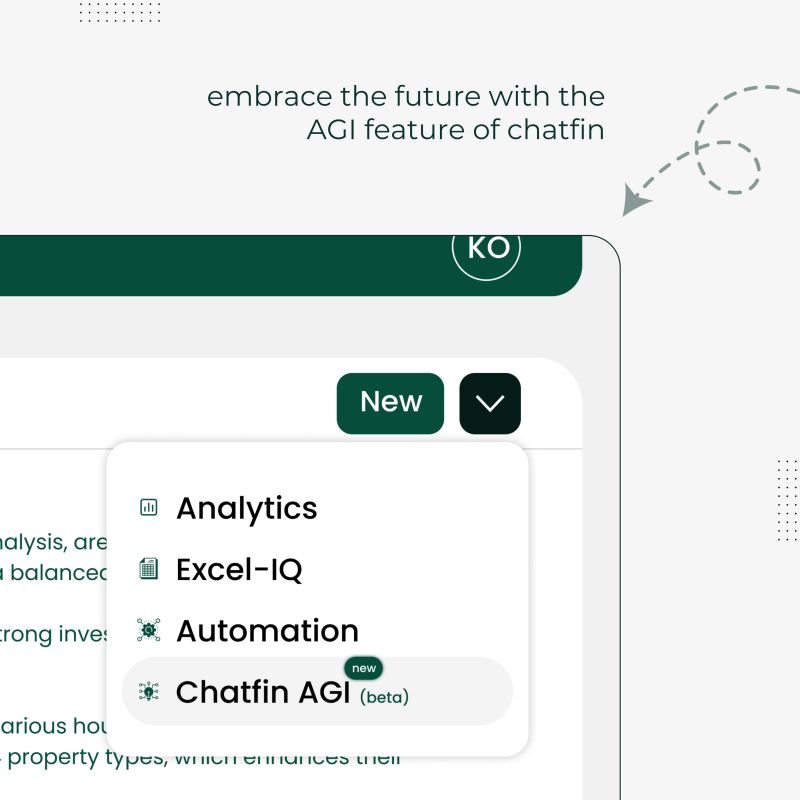
Structuring third party settlement and channel data and tying it back to accruals by period of sale is document and matching work at volume, which is where ChatFin and its pre built finance AI agents apply.
Who owns the assumptions
Gross to net sits at the intersection of finance, commercial contracting, market access and government pricing, and the assumptions behind the accrual are usually held by people outside finance.
That makes governance the practical constraint rather than methodology. A rebate accrual depends on expected formulary mix and utilisation, which market access understands. A return accrual depends on channel inventory and expiry profile, which supply chain understands. Finance owns the number and does not own most of the inputs.
The change log is the cheapest of these and the most useful in an audit, because it converts a movement in a material estimate from something to be explained retrospectively into something already documented.
How ChatFin supports gross to net
ChatFin reads the settlement and claims data as it arrives, in the formats wholesalers, benefit managers and programme administrators actually use, and structures it by deduction type, product and period of sale rather than by receipt date.
The autonomous reconciliation agent ties settlements back to the accrual they relate to, which is what makes a genuine true up possible rather than a comparison of unrelated totals. The analytics agent produces the accrued versus settled analysis by component and reports bias direction over time. The document processing agent reads distributor inventory and channel reports so the units underlying the accrual are based on data rather than assumption. The conversational finance AI layer lets finance ask which components are consistently over accrued without commissioning an analysis.
| Document processing | Reads claims, settlement and channel inventory data in third party formats |
| Reconciliation agent | Ties settlements to accruals by deduction type, product and period of sale |
| Analytics agent | Produces true up analysis per component with bias direction tracked over time |
| Pattern recognition | Flags components with persistent divergence and accruals ageing against old sale periods |
| Governed write back | Prepares accrual, true up and release entries with the supporting analysis, for approval |
The assumptions stay with the people who own them. ChatFin supplies the evidence that tests those assumptions each period and prepares the resulting entries, and a person approves every posting, which is the same governed pattern applied across automated close management.

Improving the process one component at a time
Attempting to redesign gross to net in one exercise rarely works. Component by component does, and the order should follow settlement speed.
Start with chargebacks
They settle fastest, so the feedback loop is short and any improvement is visible within a quarter rather than a year.
Build the true up by period of sale
For that one component, tie settlements to the accrual for the period the sale occurred in. This is the analysis everything else depends on.
Fix the channel inventory input
Chargeback and return accuracy both depend on knowing units held in the channel. Improving this input improves two components at once.
Then move to rebates
With the method proven on a fast settling component, apply it to the slower ones where the feedback loop is longer and the stakes are higher.
Working in this order means the method is tested where errors surface quickly, before it is applied to the components where a mistake takes several quarters to become visible.
Seven deductions, seven counterparties, seven settlement lags. A single blended accrual rate conceals more than it communicates.
ChatFin
Frequently Asked Questions
What is gross to net in pharmaceutical revenue?
It is the reconciliation between gross sales recorded at list price and net revenue after deductions. The deductions typically include chargebacks, commercial and government rebates, distributor service fees, prompt pay discounts, product returns and manufacturer funded copay support. Because each settles with a different counterparty on a different timescale, the accrual is a portfolio of separate estimates rather than a single rate.
Why should each deduction type be accrued separately?
Because they behave differently in every respect that matters. Chargebacks settle relatively quickly against wholesaler claims, so errors correct within a short window. Rebates settle on quarterly or longer cycles using third party claims data, so an estimation error can persist for several periods. Returns follow expiry and channel inventory patterns relating to much earlier shipments. A blended rate can be acceptable in total while every component is wrong.
What is a gross to net true up?
It is the comparison of what was accrued against what eventually settled, performed by deduction type and matched to the period the sale occurred in rather than the period the settlement arrived. Matching by period of sale is what makes it a genuine test of the estimate. Tracked over time it reveals the direction and magnitude of bias per component, which points at the specific assumption that needs correcting.
Can ChatFin handle chargeback and rebate settlement data?
Yes. ChatFin reads claims, settlement and channel inventory data in the formats wholesalers, benefit managers and programme administrators supply, and structures it by deduction type, product and period of sale. It ties settlements back to the accruals they relate to, produces the true up analysis per component with bias tracked over time, and prepares the resulting entries for a person to approve.
This article is general information for finance and accounting teams. It is not accounting, tax or legal advice. Confirm the treatment of your own facts with your auditors and advisers.
See ChatFin tie your settlement data back to the accrual.
ChatFin structures claims, settlement and channel data by deduction type, product and period of sale, and ties settlements back to the accrual they relate to rather than to a receipt period.
The true up analysis is produced per component with bias tracked over time, and accrual, true up and release entries are prepared for a person to approve.
Book a DemoBring a quarter of settlement and claims data.
ChatFin will structure it by deduction type and period of sale, tie settlements to the accrual, and show the bias direction for each component.