
Governing Citizen AI Adoption in Finance
Your team is already using AI you did not deploy, in spreadsheets, chatbots, and copilots. That shadow adoption is a control and disclosure risk. Here is how to govern it.
- Whether or not you deployed AI, your finance team is almost certainly using it: pasting data into chatbots, leaning on spreadsheet AI, using copilots for analysis. That is citizen or shadow AI.
- It is a real risk. Ungoverned AI in the close can mishandle sensitive data, produce unreviewed outputs that reach the numbers, and leave no trail, and regulators have flagged that management must have visibility into it.
- A ban does not work, because the tools are useful and people will use them anyway. The workable answer is a sanctioned path that is easier and safer than the shadow one.
- A governed reasoning layer gives the team the AI help they were reaching for, inside controls, which is how shadow adoption gets pulled into the light.
Ask a finance leader whether their team uses AI and many will describe the tools they officially deployed. Ask the team and you will hear something broader: someone pastes a trial balance into a chatbot to find odd entries, someone leans on spreadsheet AI for a formula, someone runs a copilot over a report. That is citizen AI, and it is happening whether or not it was sanctioned.
Treating it as harmless is a mistake, and so is trying to ban it. Ungoverned AI in the financial process is a genuine control and data risk, and regulators have signaled that management is expected to have visibility into exactly this kind of ground-level adoption. The task is to govern it, not to pretend it away.
Why shadow AI is a real risk
The exposure
The risks are concrete. Sensitive financial data pasted into a general consumer tool raises data-handling and confidentiality questions. Outputs that reach a number without review are unreviewed inputs to the financial record. And because none of it is logged, there is no trail to point an auditor to and no way for management to even know it happened.
It is precisely the combination of useful and invisible that makes shadow AI dangerous: it helps enough that people keep doing it, and it is hidden enough that leadership does not see the exposure building.
Why regulators care about the ground level
Standard-setters and securities staff have specifically pointed to management's responsibility to understand AI use across the organization, including adoption at lower levels that leadership may not have chosen or noticed.
In other words, not knowing what your team does with AI is not a defense; it is itself a gap in management's risk assessment. Visibility into citizen adoption is now part of the control expectation, not an optional nicety.
Management is expected to have visibility into ground-level AI use, so unseen shadow adoption is a control gap, not a neutral fact.
Why a ban does not work
Why prohibition fails
The instinct to prohibit ad hoc AI use is understandable and ineffective. The tools are genuinely helpful, the pressure to move fast is real, and a ban mostly drives the behavior further underground where it is even harder to see.
People do not use shadow AI to be reckless; they use it because it solves a problem faster than the sanctioned path. Remove the problem, by making the sanctioned path better, and the shadow path loses its appeal.
People do not use shadow AI to be reckless. They use it because it solves a problem faster than the sanctioned path. Make the governed path better and the shadow path loses its appeal.
Ashok ManthenaGoverning by giving a better sanctioned path
Substitute, do not ban
The workable strategy is substitution, not prohibition. Give the team a governed way to get the same help, connected to the right data, keeping a trail, and producing reviewable output, that is easier than pasting into a chatbot.
When the sanctioned tool is both safer and more convenient, adoption moves toward it naturally. You govern shadow AI most effectively by making the governed option the path of least resistance.

Where a governed layer pulls it into the light
Out-compete the shadow
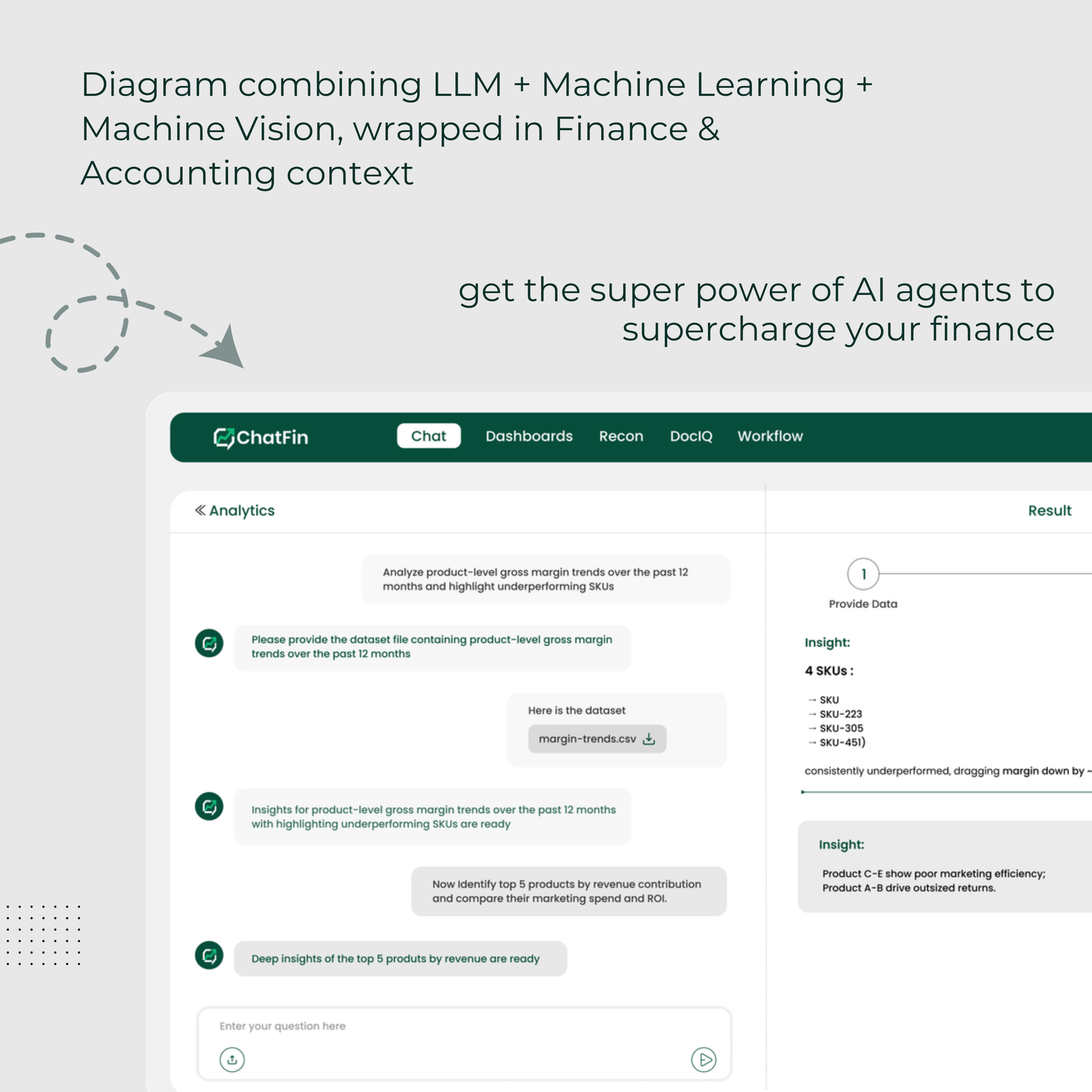
A governed reasoning layer is that better path. It gives the team the AI help they were reaching for, reading across the real systems, working the exceptions, drafting the analysis, but inside controls: defined data access, logged outputs, and human sign-off.
That does two things at once. It removes the reason people reach for ungoverned tools, and it gives management the visibility regulators expect. Shadow adoption gets pulled into the light not by policing it but by out-competing it.
Do not ban shadow AI. Out-compete it with a governed path.
Your team is already using AI you did not deploy, and that shadow adoption is a control and data risk regulators expect management to see. A ban drives it underground; a better sanctioned path pulls it into the light.
A governed reasoning layer gives the team the help they wanted, inside controls, with management visibility. This is general guidance, not legal advice; confirm your obligations with your advisors.
See the sanctioned path that out-competes shadow AI.
Tell us how your team already uses AI on the side. We will show a governed version that is easier and safer, so adoption moves to it and management gets visibility.