
From 91% Manual to 100% Automated: The AP Automation Playbook
Alphabet's CFO is deploying AI agents across invoice processing and treasury. Industry data shows only 9% of AP departments have fully touchless processing, while 66% still manually enter invoice data. The gap between partial automation and genuine efficiency is where most finance teams lose the most time and take on the most risk.
- Alphabet's Production AI Alphabet CFO Anat Ashkenazi confirmed agentic AI is live across invoice processing and treasury, not just in pilot.
- The Automation Gap Only 9% of AP departments have fully touchless invoice processing. 66% still manually enter most invoice data into their ERP.
- Time Reclaimed AP employees spend 30% of their time on manual data entry. Automation reduces that to approximately 5%.
- Fraud Exposure 47% of companies experienced fake invoice scams in 2025. Manual review is the weakest link in AP controls.
- Cycle Time Impact Full AP automation compresses invoice processing from 10 to 14 days down to 2 to 3 days.
- Gartner's 2028 Forecast 33% of enterprise software will incorporate agentic AI, with 15% of daily work decisions made autonomously.
Approval workflows are the silent drain on finance productivity. Not dramatic enough to trigger a transformation project, but persistent enough to consume hours every week across every team. Email chains, missed approvals, duplicate invoices, manual data entry into ERP systems. When Alphabet's CFO announced in February 2026 that they are deploying agentic AI across invoice processing and treasury, it was a signal that the era of manual approval workflows is ending at scale.
What Alphabet Is Actually Doing
At Alphabet's Q4 2025 earnings call, CFO Anat Ashkenazi described AI adoption extending from engineering teams all the way to back-office finance operations. Agentic AI is being deployed specifically for invoice processing and treasury, handling tasks that historically required human review and routing at every step. Gartner backs this direction with a prediction that by 2028, 33% of enterprise software will incorporate agentic AI and 15% of daily work decisions will be made autonomously.
The controller's role is not being eliminated. It is being elevated. When AI handles routing, matching, and exception flagging, controllers stop being manual gatekeepers and start being process architects who design the systems and set the rules the AI follows.
The AP Automation Gap Is Larger Than Most People Admit
MHC Automation's 2026 AP Trends report puts hard numbers on the state of the industry. Only 9% of AP departments have fully touchless invoice processing. 66% still manually enter most invoice data into ERP systems. AP employees spend roughly 30% of their time on manual data entry. Automation reduces that to approximately 5%.
Fraud Controls: The Case for Automation Goes Beyond Efficiency
The fraud data alone makes a compelling case for moving past manual AP workflows. 47% of companies experienced fake invoice scams in 2025. Duplicate or erroneous disbursements represent 0.8% to 2% of total payments annually. 1% of all processed invoices are duplicates. These are not edge cases. They are predictable outcomes of processes that rely on human attention at every step.
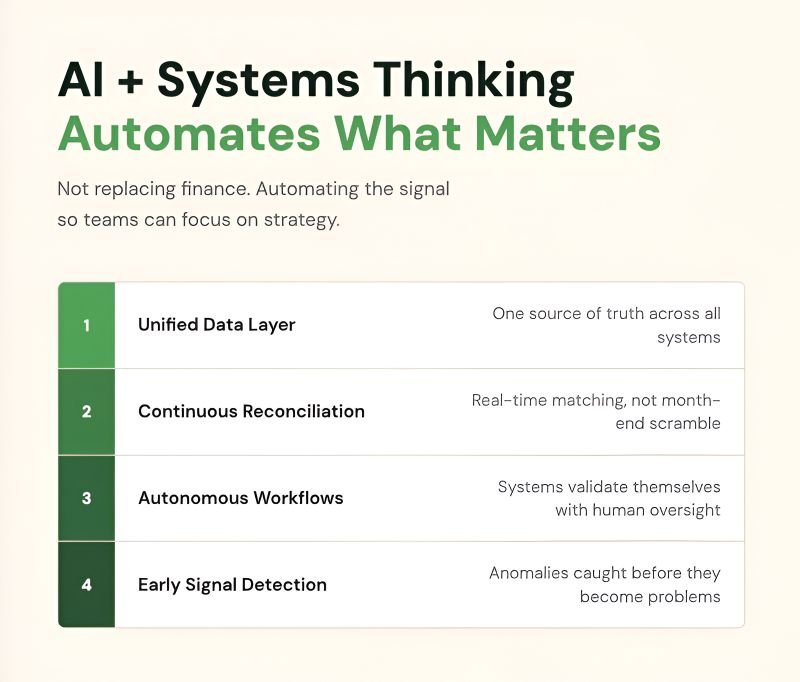
Automated AP systems embed controls by design. Supplier validation happens at onboarding, not at invoice receipt. Duplicate detection runs at the system level, not during manual review. Approval routing enforces policies consistently, not based on whether the right person happened to check their email.
"Accounts payable controls how and when payments move through organizations. That is where AP delivers real strategic value." - Ernie Humphrey, Treasury Webinars
From Email Chase to Real-Time Visibility
The biggest shift from manual to automated approval workflows is not speed. It is visibility. In a manual system, the only person who knows where a transaction stands is the person who last touched it. In an automated system, every stakeholder can see status in real time: pending approvals, exceptions, SLA timelines, and bottlenecks.
That visibility changes the conversation in finance team meetings. Instead of discussing what is stuck and why, controllers can discuss what patterns are creating the most exceptions, which vendors have the highest error rates, and where policy changes could reduce the manual workload further. The data is already there. The question is whether the systems surface it.
Building Finance Systems That Scale
The AP automation opportunity is not a future technology play. 77% of AP departments have already deployed some automation. The gap is between partial automation and end-to-end workflow design that eliminates manual touchpoints rather than just digitizing them.
The organizations that get this right will run leaner finance teams, carry less fraud risk, close faster, and give controllers the time to do the work that actually requires their judgment rather than their patience with email threads.
The ChatFin Advantage: Enterprise Finance Automation Platform
ChatFin is a finance AI super-agent platform that runs directly inside your ERP - NetSuite, SAP, Oracle, or Acumatica. Unlike disconnected point solutions that create more integration work, ChatFin connects AP, AR, reconciliation, forecasting, and compliance in a single autonomous system. With 100+ pre-built finance agents, ChatFin teams deploy agentic automation in weeks, not months. The platform learns your workflows, handles exceptions intelligently, and surfaces only true anomalies for human review.
Organizations deploying ChatFin report measurable results: 40-60% reduction in close cycle time, 80%+ automation rates on exception handling, and finance teams freed from tactical work to focus on strategic priorities. ChatFin does not replace finance judgment. It eliminates the mechanical work that masks it.
Learn more: Accounts Payable AI Automation: CFO Decision Guide for 2026
Additional resource: AI Accounts Payable Automation: From Manual Invoices to Smart Workflows