
Finance Teams Expanding Scope: From Tactical to Strategic Work in 2026
87% of finance professionals report expanded work scope. They are moving from tactical data entry and reconciliation to strategic analysis, business partnership, and value creation. Here is how finance careers are evolving in 2026.
- Work Scope Expansion 87% of finance professionals taking on new responsibilities beyond their previous role.
- From Tactical to Strategic Data entry and reconciliation automated. Focus shifts to analysis, insight, and business partnership.
- New Skills Required Data analytics, financial technology integration, business advisory becoming core competencies.
- Career Advancement Opportunity Teams freed from tactical work move into strategic roles with higher impact and compensation.
- Reskilling Challenge Not everyone adapts. Finance professionals must evolve skills or risk becoming obsolete.
The finance function is being transformed from the bottom up. Junior accountants that spent 30% of their time on month-end close are now spending 5%. Their manager frees them for analytical work. The result: higher engagement, more impact, better career trajectory.
The Scope Expansion Phenomenon
According to a recent survey, 87% of finance professionals report expanded work scope as AI and automation tools handle routine tasks. The pattern is consistent: tactical work shrinks, strategic work expands. Finance professionals that embrace this shift thrive. Those that resist become constrained.
What does scope expansion look like?
Accountant: Previously: month-end close, reconciliations, transaction posting. Now: close automation monitoring, variance analysis, business partnering with operations leaders on cost management.
Analyst: Previously: consolidating data from departments, building financial models, generating reports. Now: interpreting data stories, building predictive models, advising business leaders on financial implications of strategic decisions.
Controller: Previously: ensuring accuracy, enforcing controls, managing close process. Now: designing autonomous finance systems, governing AI agents, partnering with business leaders on strategic capital allocation.
The scope varies more than the title suggests
Two teams with the same name can own completely different work, which is why scope expansion looks different everywhere.
I've seen them own the calculation, I've seen them own the plans, I've seen FP&A doing rev ops, I've seen them doing strategic finance, I've seen them not doing it.
Paul Barnhurst, on the AgentCFO podcast
Write down what your team owns today and what it owned two years ago. The delta is the training plan.
The Skills That Matter Now
Scope expansion brings new skill requirements. The skills that mattered in 2020 are not the same skills that matter in 2026.
The Career Acceleration Path
Finance professionals adapting to scope expansion are seeing accelerated career growth. Why? Because they move from support functions to strategic partners.
A finance manager that used to manage month-end close now partners with the CFO on capital allocation strategy. That is a more senior role. Higher impact. Faster path to VP/CFO.
Finance professionals that resist the shift get constrained. They become the "close manager," the specialist that everyone comes to for month-end questions. They do not advance. They do not increase impact.
"The finance professionals that thrive in 2026 are the ones that stopped being transaction processors and became business advisors. They took on analytics responsibilities, learned the business deeply, and moved into strategic roles. Those that did not make the shift are stuck in specialist roles." - Finance Recruiter
The Reskilling Imperative
Scope expansion is not optional. Finance professionals must evolve or face obsolescence.
This is not unique to finance. It is happening across functions. But finance has a unique advantage: the data. Financial data is comprehensive, accessible, and highly valued. Finance professionals that learn to analyze it, interpret it, and advise on it are incredibly valuable.
The reskilling required:
The Organizational Impact
When a finance team frees 30% of capacity from tactical work and redeploys it to strategic work, the organization benefits immediately.
That freed capacity goes to:
Better Forecasting: More time for analytics means better forecasts. Business leaders get more accurate guidance.
Faster Decision Support: Scenario analysis happens in hours instead of weeks. Executives make faster, better-informed decisions.
Cost Optimization: Finance partners with operations on continuous improvement. Costs come down 5-10% without reducing headcount.
Finance Careers Are Evolving From Execution to Strategy
The expansion of scope is both an opportunity and a challenge. For finance professionals that embrace it, it is a path to more impactful, better-compensated roles. For those that resist, it is a path to obsolescence.
Finance professionals and organizations that invest in reskilling now will position themselves for success in 2026 and beyond. That is where finance is going—from transaction execution to strategic partnership.
ChatFin: Enabling Finance Teams to Focus on What Matters
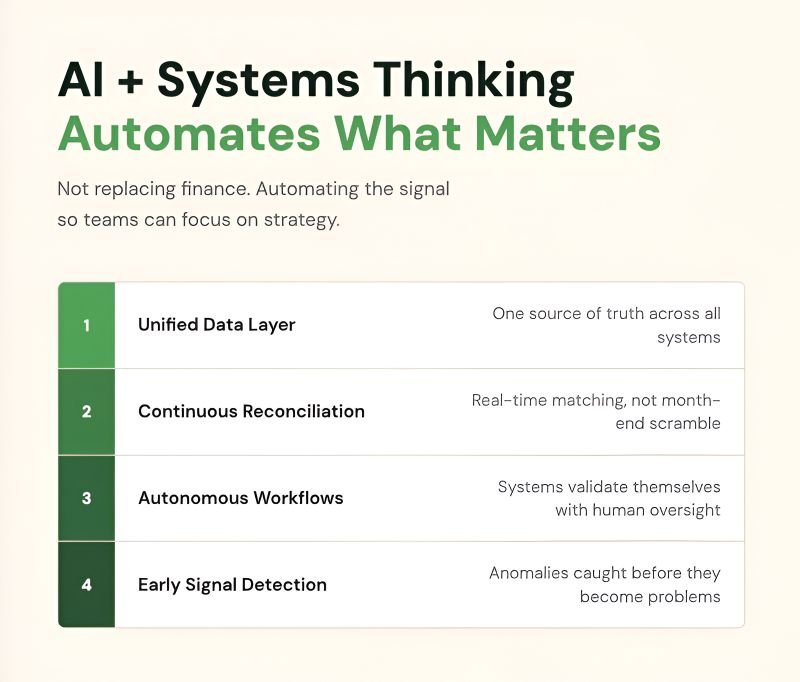
ChatFin frees finance teams from tactical work so they can focus on strategic impact. Close automation, reconciliation agents, compliance automation—all handled by AI. Finance professionals focus on analysis, partnership, and value creation. The result: higher-impact roles, faster career growth, and more satisfied finance teams.
Learn more: Finance Career Evolution: From Execution to Strategy in 2026
Additional resource: Reskilling Finance Teams: Building Capabilities for Strategic Roles