
Finance Data Warehouse & AI Analytics: Real-Time Intelligence Platform
Finance data warehouse infrastructure powered by AI analytics turns enterprise financial data into real-time predictive engines. 90% of CFOs implementing AI analytics by 2026.
- 90% CFO Adoption Gartner predicts 90% of finance departments will implement AI-powered solutions by 2026.
- 92% Prep Time Reduction AI agents reduce dashboard and report preparation time by 92%, freeing analysts for deeper analysis.
- Operationalized AI By end of 2026, firms will be segmented not by who adopted AI, but who made it work in daily operations at scale.
- Cost Reduction Up to 20% Finance analytics infrastructure enables 20% operating cost reduction, enhanced customer engagement, and new revenue.
- Plain English Analytics Modern finance analytics means asking data questions in plain English and getting predictive answers instantly.
Finance data warehouse technology has existed for decades. But in 2026, AI transforms data warehouses from repositories of historical data into predictive intelligence engines. Rather than asking "what happened," finance teams ask "what will happen and what should we do about it"—and get answers in seconds, not days.
The Modern Finance Data Stack
Modern finance is fundamentally different from traditional data warehousing. It is not about centralizing information. It is about turning datasets into predictive engines. CFOs modernizing their data stacks are seeing 20% operating cost reductions, enhanced customer engagement through personalization, and unlocked revenue from data-driven products.
Traditional warehouse: Store historical transactions in structured tables. Users write queries to explore data. Reports take days to build.
AI-powered warehouse: Stream real-time data from sources. AI agents analyze it continuously. Dashboards update automatically. Users ask questions in plain English. Agents investigate autonomously and deliver explanations.
Key Capabilities of Finance Data Warehouses in 2026
"By 2026, the industry will be re-segmented not by who adopted AI, but who made it work in practice. Leaders will be firms where AI is embedded in daily operations at scale." - Databricks Finance AI Research
Implementation Roadmap
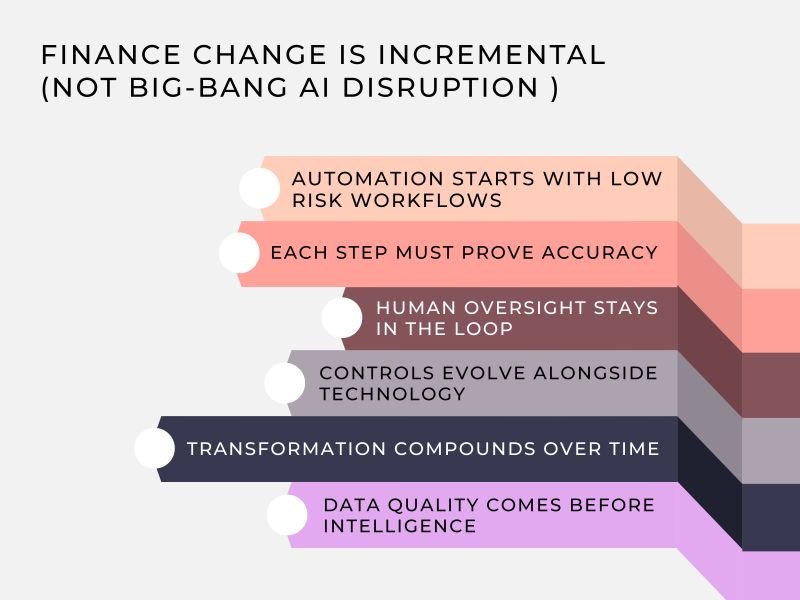
Successful deployments follow a structured approach. Start with data foundation: ensure quality, completeness, and timeliness. Then layer analytics: build dashboards, add predictive models, deploy autonomous agents. Focus on adoption: ensure users adopt the tools through training and governance.
Data Warehouse is the Foundation of AI Finance
90% of CFOs will implement AI analytics by 2026. Those with strong data warehouse foundations will deploy and scale AI faster than competitors. Those without will struggle with data quality issues that undermine AI accuracy.
Finance organizations investing in data warehouse infrastructure and AI analytics will achieve exponential competitive advantages through faster insights, better predictions, and automated decision-making at scale.