
AI STRATEGY
When AI Gets Switched Off: The Fable 5 Suspension and Your Finance AI Continuity Plan

On June 12, 2026, Anthropic suspended access to its newly released Fable 5 and Mythos 5 models to comply with US Department of Commerce export controls. Access was restored on July 1. The models came back, but the lesson holds: a model you depend on can be switched off, and finance needs a plan for that.
- Anthropic released Fable 5 and Mythos 5 on June 9, 2026, suspended access on June 12 to comply with export controls, and restored it on July 1.
- The interruption was outside any customer's control, driven by regulation rather than a technical fault.
- Finance automation that hardcodes one model inherits that model's availability risk, including regulatory suspension.
- A continuity plan means a fallback model, an abstraction layer so switching is configuration not a rebuild, and clear ownership of the process during an outage.
- The workflow, controls and audit trail should live above the model, so the finance function keeps running when any single model does not.
The Fable 5 episode is a clean example of a risk finance teams rarely price in. The models were capable and available one week, unavailable the next for regulatory reasons, then available again. No customer did anything wrong. Access simply changed.
If a close step, a reconciliation or an accounts payable check depends on one specific model being reachable, then that step inherits every reason that model might go dark, including ones that have nothing to do with performance.
What actually happened
Anthropic launched Fable 5 and Mythos 5 on June 9, 2026. Three days later it suspended access to both to comply with US Department of Commerce export controls. The Department lifted those controls on June 30, and Anthropic restored access on July 1.
For anyone whose workflow ran on those models, the practical experience was a multi week gap where a tool they had built around was not usable, for reasons entirely outside the technical stack.
Why this is a finance problem, not just an IT one
Finance runs on deadlines. A close does not wait for a model to come back.

What a continuity plan looks like
The goal is that no single model outage stops finance. Three ingredients get you there.
Where ChatFin fits
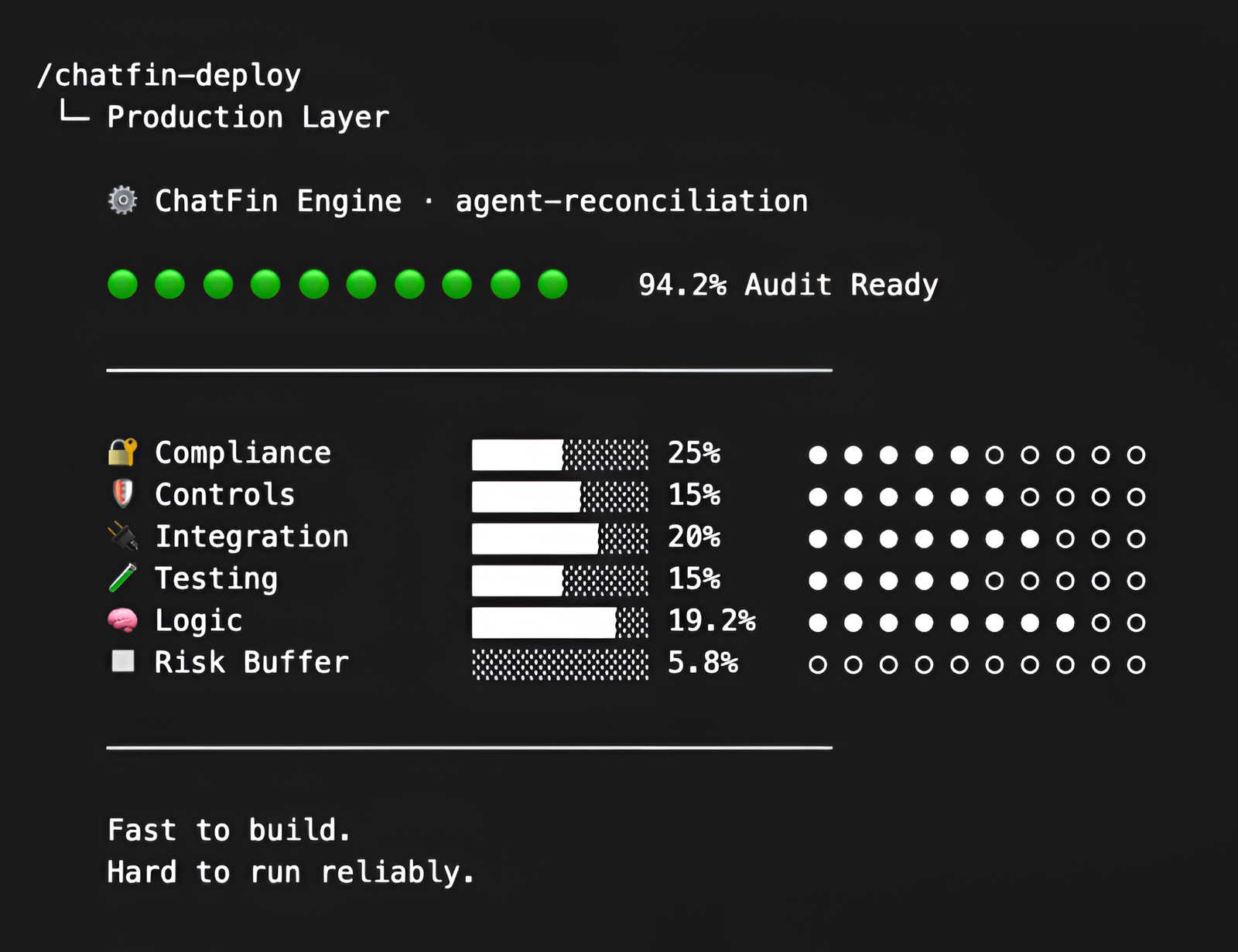
ChatFin is model agnostic by design. The finance workflow, close, reconciliation, accounts payable validation and reporting, sits above the model, so the choice of model is configuration. If one model is unavailable, the process continues on another.
The controls do not move either. The ERP stays the system of record, write-back stays human approved, and every step keeps its prompt to transaction trail regardless of which model did the work.
The models came back. The lesson did not: a model you depend on can be switched off for reasons that have nothing to do with how good it is.
Plan for the Model to Be Unavailable
The Fable 5 suspension was short, and it was a preview of a real category of risk. Finance teams that build around a single model inherit that model's availability, including regulatory action.
ChatFin keeps the workflow, the controls and the trail above the model, so a suspension anywhere becomes a configuration switch rather than a stopped close.