
AI MODELS
DeepSeek V4 for Finance: Can Open-Weight Models Handle Enterprise Accounting?

DeepSeek released V4 on April 24, 2026 as an open-weight, MIT-licensed model family that runs on your own hardware at a fraction of proprietary pricing. For enterprise accounting, that combination is genuinely interesting on data residency and cost. It also comes with limits worth naming plainly.
- DeepSeek V4 is open-weight under the MIT license, in two variants (Pro at 1.6T parameters, Flash at 284B), both with a 1 million token context by default.
- It is self-hostable, so sensitive financial data can stay inside your own environment.
- Pricing is far below proprietary frontier models, which changes the economics of high-volume accounting work.
- By the vendor's own framing it trails state-of-the-art closed models by roughly three to six months, and there is no vendor SLA behind self-hosted weights.
- Provenance and compliance review matter for regulated finance data, which is exactly why a model-agnostic layer that can run open weights where policy requires is useful.
DeepSeek V4 is the most prominent open-weight release of 2026. It ships two models under a permissive license, both with a large context window, and it undercuts proprietary frontier pricing by a wide margin.
For accounting, the appeal is not the leaderboard. It is the ability to keep sensitive data on your own infrastructure and to run high volumes cheaply. Both are real. So are the trade-offs.
What open-weight unlocks for accounting
Two properties matter most for finance data: where it runs, and what it costs.
The limits to weigh honestly
The same properties that make it attractive also set the boundaries.
So can it handle enterprise accounting?
For structured, high-volume work under human review, an open-weight model like V4 is a reasonable fit, especially where data residency rules out sending data to an external API. For the hardest judgment calls, a stronger model still earns its place.
The answer is rarely all or nothing. It is a routing decision: run what you can on cheap, self-hosted weights, and reserve a stronger model for the cases that need it.
Where ChatFin fits
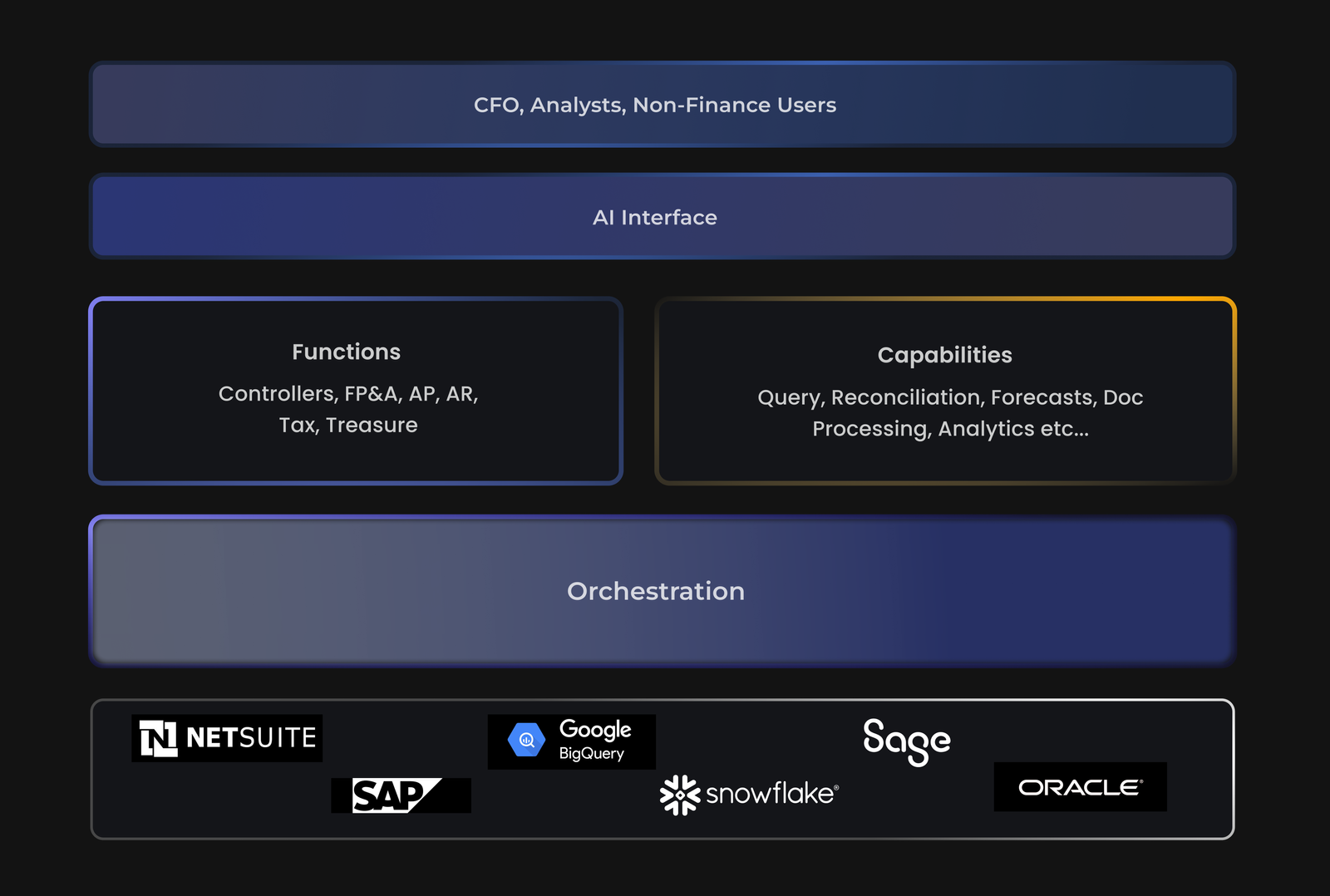
ChatFin is model agnostic, so where policy or cost calls for an open-weight, self-hosted model, it can run there, and where a task needs frontier reasoning, it can route accordingly. The finance workflow and controls stay constant across both.
The ERP remains the system of record, write-back stays human approved, and every step keeps its audit trail, whichever model did the work.
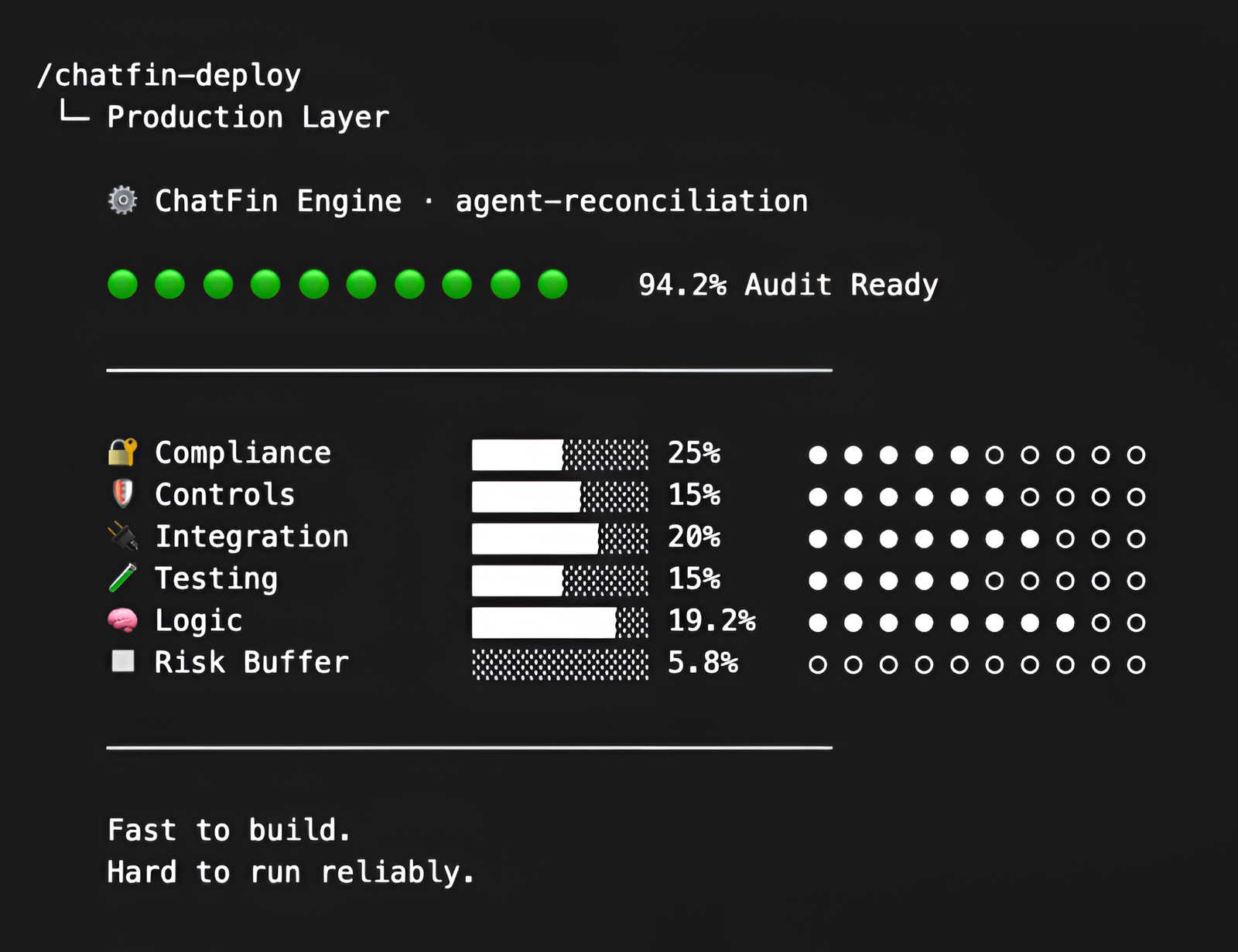
It is rarely all or nothing. Run what you can on cheap, self-hosted weights, and reserve a stronger model for the cases that actually need it.
Open-Weight Where It Fits, Governed Everywhere
DeepSeek V4 makes a real case for open-weight, self-hosted AI in finance where data residency and cost dominate. The capability gap and the lack of an SLA are the price of that control.
ChatFin lets you use open weights where they fit and stronger models where they do not, all inside one governed workflow with human sign-off on every write.