
DeepSeek Raises $7.4B at $50B Valuation: China AI Finance Implications
DeepSeek's first external funding round, more than $7.4 billion at a valuation exceeding $50 billion, made it China's most valuable AI startup. The number is striking, but the more important story for finance is DeepSeek's strategy: open-weight, cost-efficient models that commoditize the model layer, and shift the value to how AI is applied.
- DeepSeek raised over $7.4 billion (about 50 billion yuan) in its first external round, at a post-money valuation exceeding $50 billion, becoming China's most valuable AI startup.
- Backers reportedly included Tencent, CATL, JD.com, NetEase and China's national AI fund; founder Liang Wenfeng contributed about $3 billion and retained control through an unusual structure.
- DeepSeek's differentiator is open-weight, cost-efficient models (its V3 and R1 gained global attention), which pressure the whole market to compete on cost efficiency.
- For finance, the takeaway is not the funding number; it is that capable AI is getting cheaper and more commoditized, so the value shifts to application, not model access.
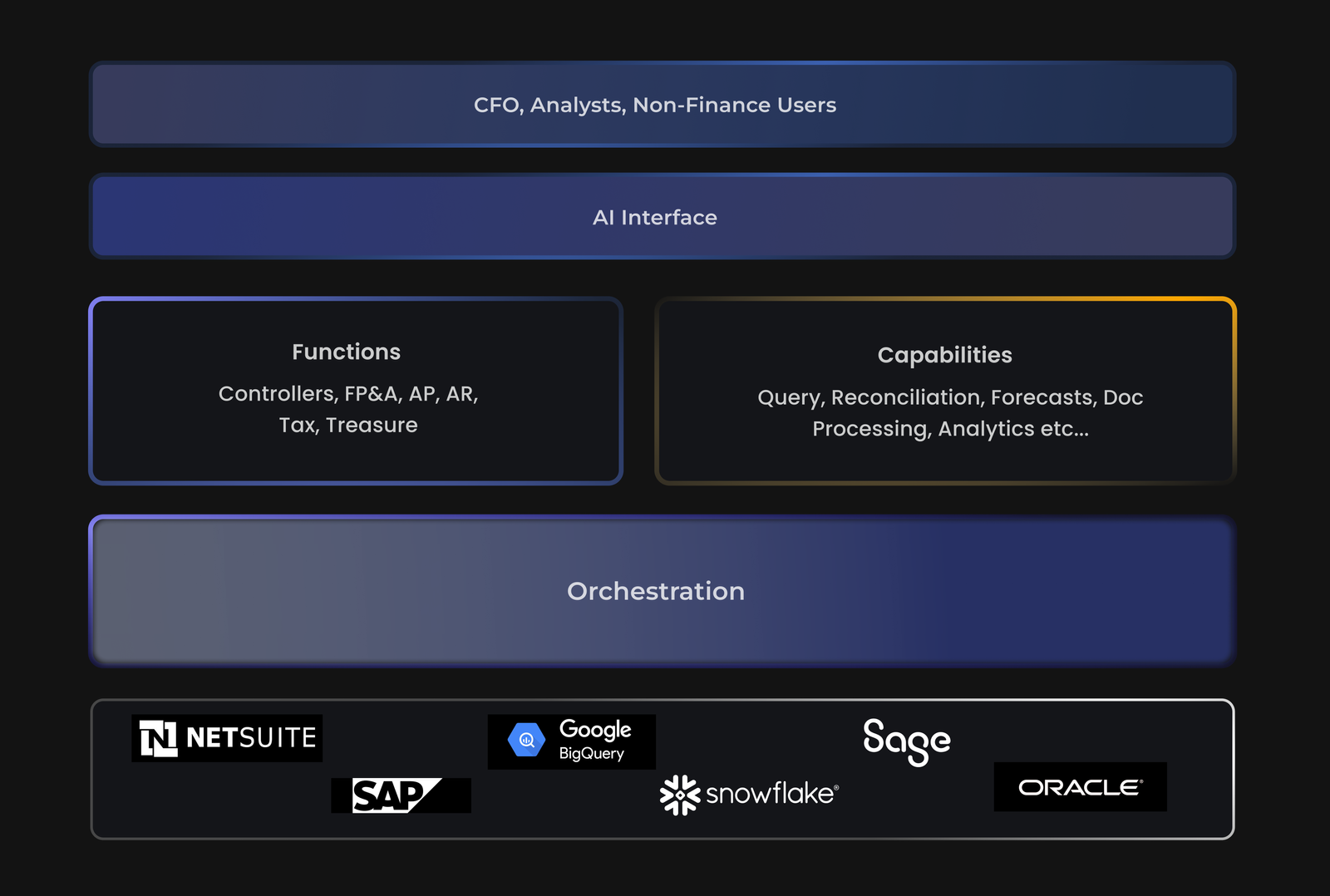
- ChatFin's thesis fits that shift: the model is the engine, but grounding in your data and posting to the ERP is what turns it into finance outcomes.
A Chinese AI lab raising over seven billion dollars in its first outside round is a headline in its own right. But headlines fade, and the durable question for finance leaders is what a development like this actually changes about the AI they will use.
This is a neutral read on the DeepSeek raise and, more usefully, what its strategy implies for finance AI.
What happened
DeepSeek closed its first external funding round in mid-2026, raising more than $7.4 billion, roughly 50 billion yuan, at a post-money valuation exceeding $50 billion, making it China's most valuable AI startup. Reported backers included Tencent, battery maker CATL, JD.com, NetEase and China's national AI investment fund, while founder Liang Wenfeng contributed around $3 billion personally and retained control through an unusual investment structure. The capital is earmarked for research, compute infrastructure and scaling its models. It remains far below the valuations of the largest US AI labs, but it is a serious independent competitor.

The strategy that matters: open-weight and cheap
The funding number is less important for finance than the strategy behind it. DeepSeek's models, its V3 and R1 among them, drew global attention for combining strong performance with cost efficiency, and its open-weight approach publishes model weights freely. The effect is to commoditize the model layer, pressuring the whole market to compete on cost and efficiency rather than raw capability alone. Capable AI, in other words, is getting cheaper and more widely available.
What it means for finance AI
For a finance leader, the practical implication is not about geopolitics or valuations; it is about economics. As models commoditize and get cheaper, access to a capable model stops being the differentiator, because everyone has one. The value moves up the stack to application: how the AI is grounded in your actual data, whether it integrates with your systems, and whether it closes the loop into the ledger.
Why this favors the application layer
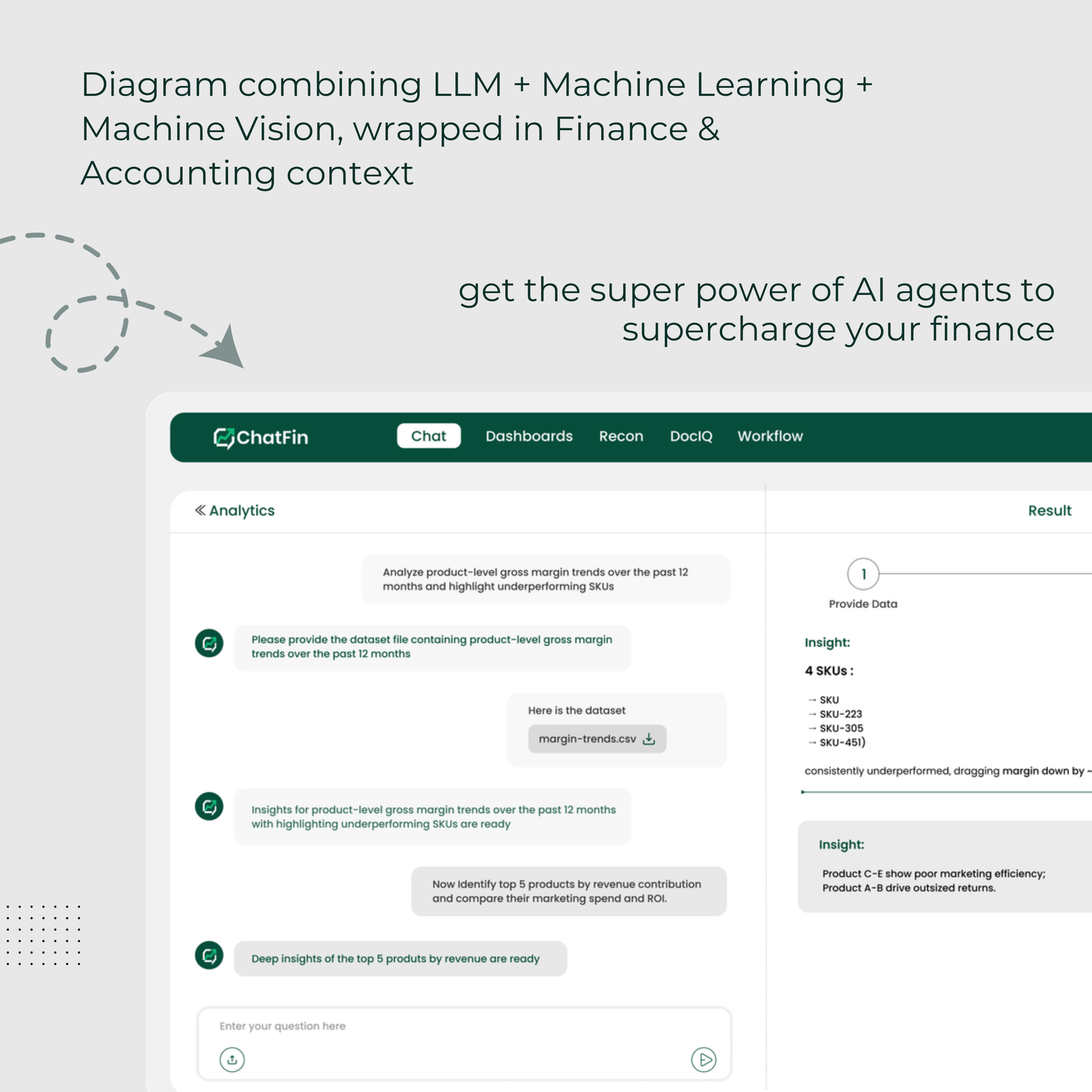
This is exactly the thesis ChatFin is built on. A more capable, cheaper model raises the ceiling, but in finance the value depends on two unglamorous things a model alone cannot provide: grounding, so every number ties back to your ledger, and integration, so results post back into the system of record. A frontier model without those is a smarter demo. DeepSeek's raise is one more sign that the model layer is commoditizing, and that the durable value is in the finance-specific application on top.

As the model layer gets cheaper and more commoditized, having a capable model stops being an advantage. What you do with it, on your own data and ledger, is the whole game.
The Model Is the Engine; Application Is the Advantage
DeepSeek's raise and open-weight strategy are one more signal that capable AI is commoditizing and getting cheaper. That is good for finance, and it moves the advantage to application, grounding in your data and posting to your ERP.
Let the model layer get cheaper. ChatFin turns whatever model is underneath into grounded, posted finance outcomes on the ERP you already run.