
SAP BUSINESS ONE EXECUTIVE
What Data Preparation Is Required Before Deploying AI Agents on SAP Business One?

Less than most vendors imply, and the honest answer surprises people. You do not need a data cleanup project before you start. The agent surfaces your data problems faster and more precisely than any audit would, so the sensible order is often deploy narrowly, see what breaks, then fix what matters.
- You do not need a full data cleanup before deploying. That instinct delays the benefit and over prepares for problems that may not matter.
- A few things genuinely matter: consistent master data on the entities in scope, and clear ownership of what an exception means.
- Most data problems are best found by the agent, which surfaces them precisely rather than in the abstract.
- User defined fields and custom processes need to be understood, not cleaned, so the agent knows what they mean.
- ChatFin surfaces data issues as it works and lets you fix what affects the process in scope rather than everything at once.
Data preparation is where AI projects go to stall. A vendor recommends a cleanup, the cleanup becomes a project, the project has no clear end, and the AI deployment never starts.
The honest position is that most of that preparation is unnecessary up front, and the agent is a better data auditor than the audit you would run instead.
Why a Full Cleanup First Is the Wrong Instinct
The reasoning sounds prudent: clean the data, then automate. In practice it delays every benefit and prepares for problems that may never touch the process you actually deploy.
A cleanup with no defined scope has no defined end, and a smaller company cannot afford to spend months tidying data before seeing any value. The better order inverts it.
What Genuinely Matters Up Front
A short list, scoped to the process you are deploying rather than the whole system.
Let the Agent Find the Problems
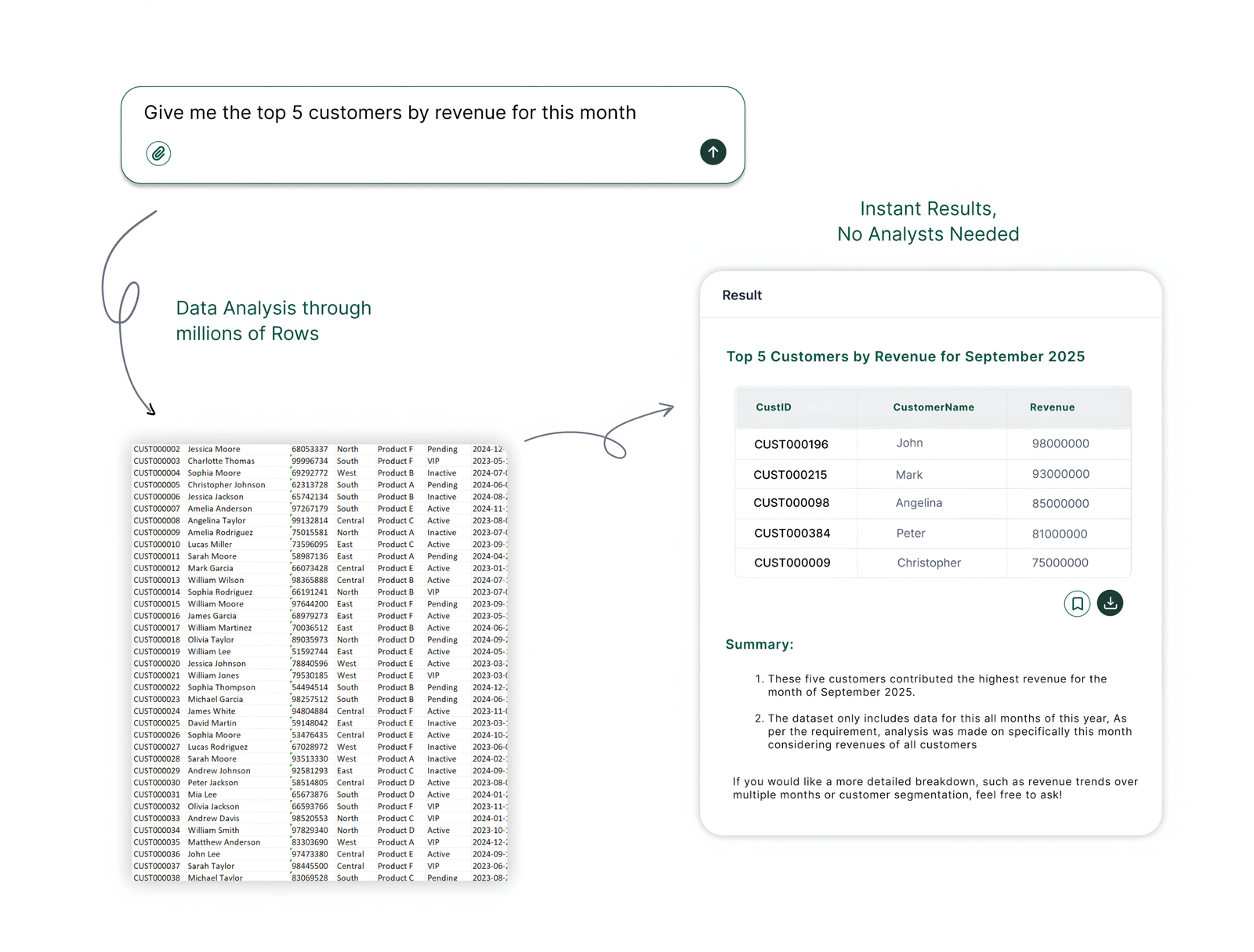
This is the counterintuitive part. An agent working against your live data surfaces problems precisely and in context, which is far more useful than an abstract data audit.
It will tell you that a specific supplier is coded three different ways, that a category is used inconsistently across the business, or that certain items have no cost. Those are actionable findings, tied to real transactions, rather than a general report that everything could be better.
User Defined Fields Need Understanding, Not Cleaning
SAP Business One companies customise heavily through user defined fields and objects, and these matter for AI but not in the way people expect.
They do not need cleaning. They need to be understood, so the agent knows that a particular user defined field carries the project code, or the delivery region, or whatever your business put there. That is a mapping exercise, not a data quality one.
The Data That Can Wait
Being explicit about what you can defer is as useful as the list of what matters, because it prevents the deployment stalling on things that do not affect it.
A Sensible Preparation Sequence
Rather than a cleanup project, run a short readiness check scoped to the first process, then let the deployment itself drive the rest.
That keeps preparation proportional and means the effort goes into the data that actually affects the value you are trying to create.
"The agent is a better data auditor than the audit you would run instead. It tells you what is wrong, precisely, and only where it matters."

How ChatFin Handles Data Readiness
ChatFin is configured against the process you are deploying, so preparation is scoped to that process rather than the whole system. During configuration it maps your user defined fields and custom conventions so it uses them correctly.
As it works it surfaces data inconsistencies precisely and in context, so you fix what affects the process rather than running a cleanup with no end. Our page on internal skills covers who does this work.

Prepare the Process, Not the Whole System
ChatFin scopes data preparation to the process you are deploying, maps your user defined fields and custom conventions, and surfaces the data problems that actually matter as it works.
You do not need a data cleanup before you start. The agent finds your data problems faster and more precisely than any audit.
A Short Readiness Check Scoped to One Process
Readiness for an AI agent on SAP Business One belongs to one process, not to the whole database. If the first process is payables, the questions are about the business partner records for suppliers, how expense accounts are used and who owns an exception. Item master quality, customer records and old transactions do not enter into it yet.
Take a handful of recent invoices from the process and ask, for each one, whether a stranger could code it correctly from the master data alone. Where the answer is no, the gap is usually a missing rule or an undocumented field. That is what to write down before go-live, and it takes far less time than a cleanup.
Paul Barnhurst, known as The FP&A Guy, on schema and context for AI.
“You need a good schema, a good understanding of your data. The better you can give that to AI, the better you can give it the context, the better answers it can give you.”
Data Questions by First Process
The check changes with the process you start on. Five starting points and what to look at for each.
- Starting with payables. Look at the supplier records the invoices will land on: the same supplier entered twice, missing payment terms, bank details nobody owns. The item master can wait.
- Starting with receivables. Customer records and payment terms matter here, and supplier records do not. Collections need the right contact and the right terms to read the open items.
- Starting with inventory questions. Items need consistent units and costs, and item groups need to mean what people think they mean. An item with no cost shows up as a finding.
- A user defined field with a project code. Write down what it holds and who fills it in. The field does not need cleaning. The agent needs to know to use it.
- An exception type with no owner. Name a person for each kind of exception, otherwise the agent's queue has nowhere to go. This takes a conversation, not a data project.
Adam Swoverland, VP of Finance at US Auto Force, on experimenting with AI and data.
“Part of that experimentation process is understanding is your data set up in a way to best capitalize on AI? You may think I have a use case for it, but if your data isn't set up in a way, you're gonna end up spending more money and time to set it up the correct way to be able to use that.”
Quick Answers on B1 Data Readiness
Do I need to clean my sap business one data before using ai?
Not as a separate project. Scope a short check to the first process, deploy narrowly and fix what the agent surfaces. A cleanup with no defined scope has no defined end and delays the start.
What master data matters for sap b1 ai agents?
The records the first process touches: suppliers for payables, customers for receivables, items for inventory. They need to be consistent enough for the agent to match documents to them.
How should user defined fields be handled for ai in sap business one?
Explain them instead of cleaning them. Write down what each field holds in business terms, such as a project code or a delivery region, so the agent uses it correctly.
What happens to bad data once an sap b1 ai agent is running?
It shows up as specific findings tied to real transactions, such as one supplier coded three ways. You fix those in order of impact instead of auditing everything at once.
Who should own data fixes in an sap business one ai project?
Each kind of exception needs a named person, usually the owner of that process, such as the AP lead for supplier records and the controller for coding questions.
Frequently Asked Questions
What data preparation is needed before deploying SAP Business One AI?
Less than most vendors imply. What genuinely matters, scoped to the process you are deploying, is consistent master data on the entities in scope, consistent coding conventions, clear ownership of what an exception means, and correct user access design. A full data cleanup up front is usually the wrong instinct, because it delays value and over prepares for problems that may never touch the deployed process.
Should we clean our data before starting?
Usually not as a project first. An agent working against your live data surfaces problems precisely and in context, telling you that a specific supplier is coded three ways or a category is used inconsistently, which is far more actionable than an abstract audit. The sensible order is deploy narrowly, let the agent find what matters, then fix that in priority order.
What about user defined fields and custom processes?
They need understanding, not cleaning. SAP Business One companies customise heavily through user defined fields and objects, and the agent needs to know what each one holds, whether it is a project code, a delivery region or something else specific to your business. That is a mapping exercise done during configuration, not a data quality one.