
Continuous Close vs Month-End Close: The 10-Day Efficiency Gap Explained
Leading teams close in 3 days. Traditional teams close in 10-15 days. The difference is not faster people. It's a fundamentally different operating model enabled by agentic AI.
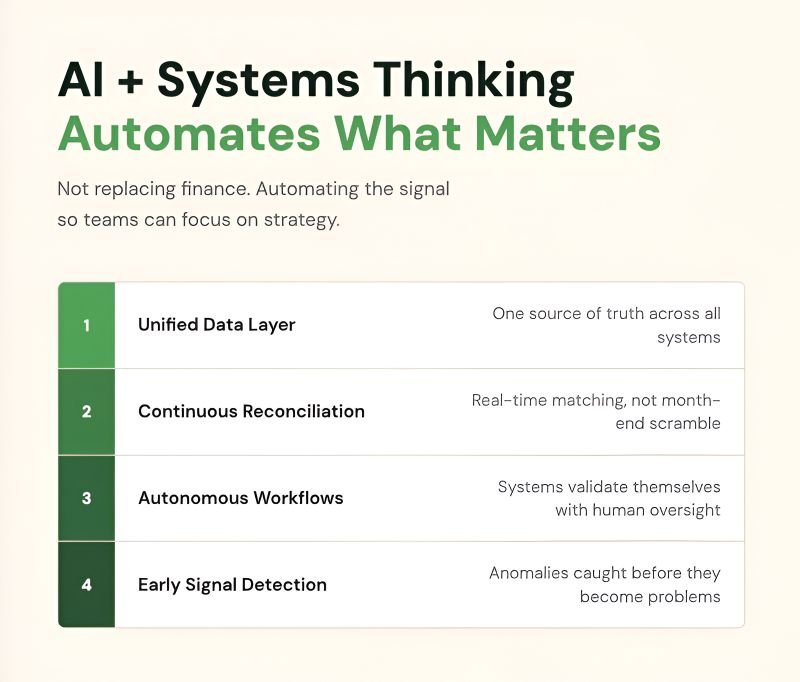
- Month-End vs Continuous Traditional close compresses work into 10-15 days. Continuous close processes transactions daily or weekly. Work distributes across the month.
- Discovery vs Confirmation Month-end discovers problems at close. Continuous close finds issues when they occur. Problems are smaller and resolution is faster.
- Bottleneck Elimination Traditional close has sequential bottlenecks. Continuous close removes human handoffs. Automation handles routine work autonomously.
- Team Efficiency Month-end requires weekends and overtime. Continuous close is steady-state automation. Team works normal hours.
- Financial Visibility Month-end produces financial statements once per month. Continuous close enables daily or weekly closes with full financials.
- Audit and Control Controls embedded in daily processes. No month-end control backlog. Audit trails complete and contemporaneous.
The month-end close is a firefighting exercise. Everyone drops their work. The team compresses five weeks of reconciliation, validation, and reporting into a compressed 10-15 day sprint. Bottlenecks compound. Mistakes multiply. People work weekends.
Continuous close is a steady-state process. Work distributes across the month. Automation handles volume. Humans handle judgment. The close becomes confirmation, not discovery.
What Continuous Close Actually Means
Continuous close processes transactions and reconciliations daily or weekly instead of all at month-end. Pre-close validation happens throughout the month. Issues are resolved in real-time.
In a traditional close, you discover a reconciliation issue on day 22 of the month. In a continuous close, you discover it on day 3 when it occurs. By the time close comes around, all issues are already resolved.
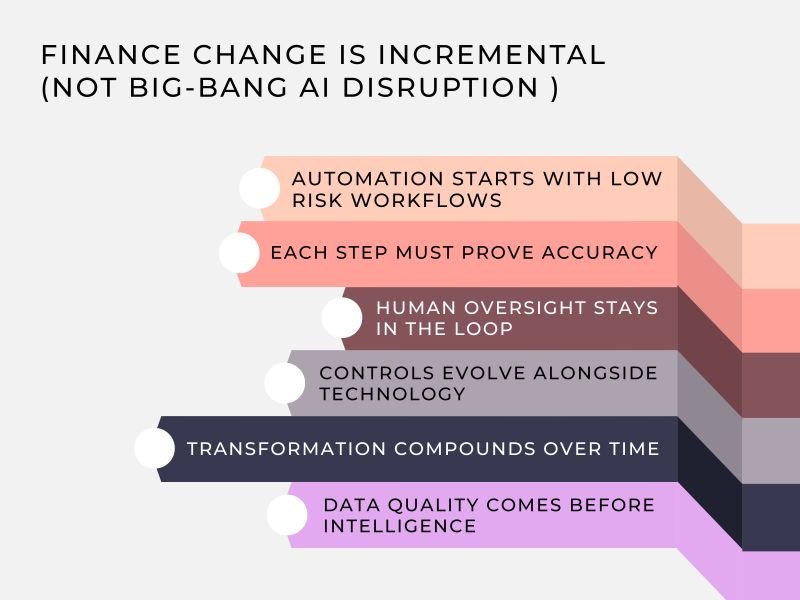
The Efficiency Compounds Across Functions
Bank reconciliation moves from monthly to daily. Trial balance moves from manual to continuous validation. Variance analysis shifts from month-end investigation to daily monitoring.
Each shift eliminates a bottleneck. The compounding effect is a 10-day reduction in close cycle. Not because people work faster. Because the work distributes and bottlenecks disappear.
Control and Audit Strengthen
Month-end close creates audit trails as an afterthought. Continuous close embeds controls in every transaction. By the time the close cycle runs, the control environment is already documented and validated.
This shift moves audit from post-close checking to contemporaneous monitoring. Issues are caught and resolved when they occur, not discovered in audit review.
When you discover problems daily, not monthly, the problems are smaller and resolution is faster.
The Model Is Shifting
Leading teams already operate continuous close. Traditional month-end close is now the efficiency outlier. The gap compounds. Teams operating continuous close get financial visibility days earlier. They resolve issues faster. Their teams work normal hours.
The month-end close as a compressed event is over. Continuous close is the standard.
The ChatFin Advantage
ChatFin enables continuous close inside your ERP. Pre-built agents validate daily. Exceptions resolve in real time. Close cycles compress to 2-3 days.
Learn more: Continuous Close Implementation Guide