

Constraining Variable Consideration
The invoice says one hundred. Experience says the customer will eventually take back eight. The accounting question is how much of that eight you are required to recognise now, and on what evidence.
Variable consideration is the part of a contract price that is not fixed: rebates, discounts, refunds, penalties, price concessions and returns. Under ASC 606 it is estimated using either the expected value method or the most likely amount, whichever better predicts the outcome, and then constrained so that revenue is recognised only to the extent a significant reversal is not probable. The estimate is a data exercise. The constraint is a judgement that has to be documented.
- Variable consideration is estimated at contract inception and updated each period. It is not a year end adjustment.
- Two methods are available and the choice is driven by the shape of the population, not by preference.
- The constraint is where most of the judgement sits, and it is the part auditors ask to see documented contemporaneously.
- The estimate depends on historical outcome data by customer and product, which is usually available and rarely assembled.
- ChatFin assembles the historical outcome data, applies your chosen method by portfolio, and prepares the estimate with the supporting evidence attached.
Almost every commercial arrangement contains something that is not fixed. A volume rebate, a right of return, a price protection clause, a performance penalty, a discretionary concession that has been granted every year for a decade.
The accounting treats these as part of the transaction price rather than as a later cost, which means revenue is reduced when the sale is recognised rather than when the customer claims. That turns a commercial expectation into a measurement problem, and then applies a constraint on top of it so that revenue is not recognised where a later reversal is probable.
This page explains the two estimation methods and when each fits, how the constraint should be applied and evidenced, where the necessary data actually lives, and how to run the estimate as a period process rather than an annual reconstruction.

What counts as variable consideration
The category is wider than most teams initially assume, and items that sit in operational processes rather than in the contract are the ones most often missed.
Implicit price concessions deserve particular attention. Where a company has consistently granted credits in circumstances it was not contractually required to, that pattern of conduct is part of the arrangement, and treating each credit as a separate later decision understates the variability in the transaction price.
Choosing between the two methods
The standard offers expected value and most likely amount. The choice is not a policy election applied across the business, it is made for each type of variability based on which better predicts the outcome.
Expected value
A probability weighted sum across a range of outcomes. Appropriate where there are many similar contracts and the outcome distribution is meaningful, such as a returns population across thousands of transactions.
Most likely amount
The single most likely outcome from a small number of possibilities. Appropriate for binary or near binary arrangements, such as a performance bonus that either is or is not earned.
Applying one method everywhere
Using expected value for a binary bonus produces a figure that no outcome will ever equal. Using most likely amount for a large returns population ignores the distribution entirely.
Grouping similar contracts
Where contracts share characteristics, estimating at portfolio level is permitted and usually more reliable than contract by contract estimation on a large population.
Documenting which method was chosen for which type of variability, and why, is a small piece of work that resolves a recurring audit question before it is asked.

The estimate needs a data source
Both methods depend on history that sits in billing and credit systems rather than in the accounting file.
The AgentCFO podcast warned that AI states an answer with the same confidence whether it is right or wrong, so the reviewer carries the doubt.
Identify the report behind each estimate and how far back it goes, then set the constraint against that record.
Applying the constraint
Having estimated the amount, the constraint asks a separate question: how much of that estimate can be included in revenue without it being probable that a significant reversal will later be required.
This is the judgement layer and it is not a mechanical haircut. The standard points to specific factors that increase the likelihood of reversal, and a defensible conclusion addresses them rather than applying a percentage.
| Susceptibility to external factors | Market volatility, third party actions or weather affecting the outcome |
| Time to resolution | How long until the uncertainty is resolved, since longer periods carry more risk of change |
| Experience | Whether the entity has relevant experience with similar contracts and whether that experience is predictive |
| Range of outcomes | A broad range of possible amounts indicates more constraint than a narrow one |
| Practice of concessions | A history of offering price concessions or changing terms, which increases variability |
Working through those factors and recording the conclusion at the time is what makes the constraint reviewable. A percentage applied without reference to them will be challenged, and reconstructing the reasoning months later is considerably harder than writing it down when the estimate was made.
Where the estimation data lives
The estimate depends on historical outcome data, and that data almost always exists somewhere in the ledger. What it lacks is structure, because outcomes are recorded as credit notes, deductions and adjustments rather than as a labelled population.
The last item is frequently overlooked and is one of the more useful pieces of evidence available, because it is calculable from data already held and speaks directly to one of the constraint factors.
Where revenue software helps
Revenue recognition platforms handle the mechanics of allocation, scheduling and reporting well. Zuora RevPro, Maxio and Ordway manage performance obligations, allocation and recognition schedules, and Model N handles revenue management and gross to net in regulated industries where variability is the dominant feature of the arrangement.
Where these platforms need help is the estimation input. They will apply a variable consideration figure and constrain it as configured, and they do not assemble the historical outcome population that justifies the figure. That assembly usually happens in a spreadsheet built once and refreshed under time pressure.
Assembling outcome history from ledger detail each period is the repetitive part, and it is what ChatFin automates alongside the wider close described in AI financial close software.
How ChatFin supports the estimate
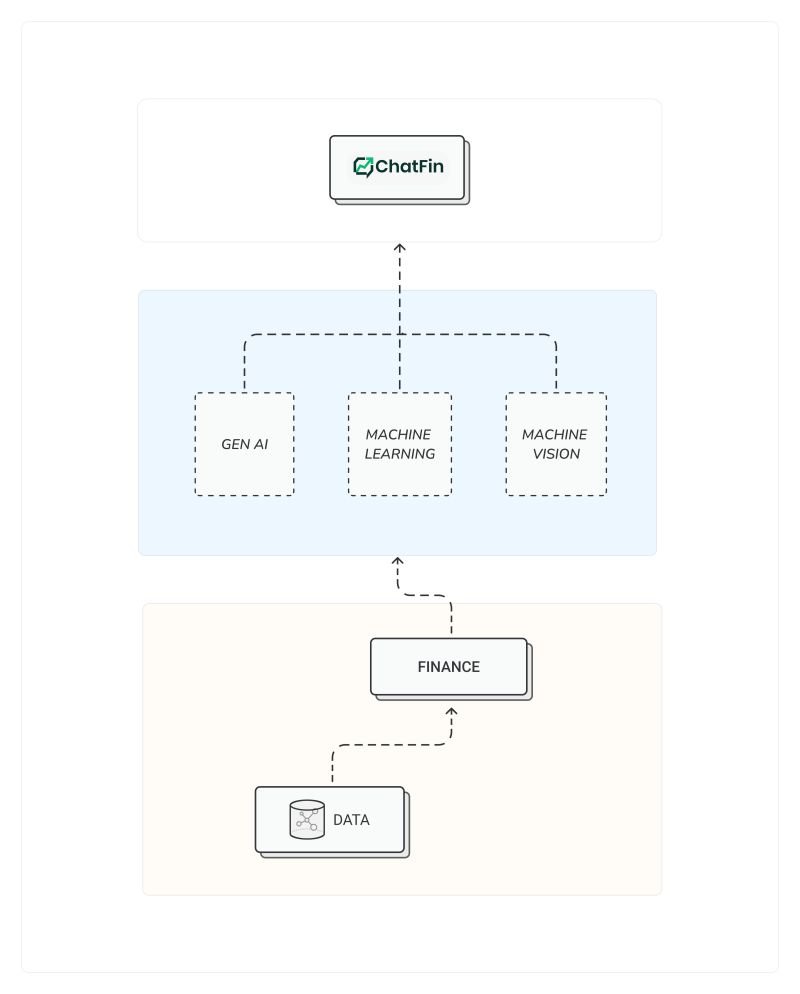
ChatFin assembles the historical outcome population directly from the ERP: credit notes, returns, customer deductions and concessions, structured by customer, product and reason rather than as an undifferentiated list of adjustments.
The analytics agent then produces the distribution needed for an expected value estimate or the outcome frequency needed for a most likely amount, at the portfolio level you define. It also calculates time to resolution from sale to credit, which supports the constraint assessment with evidence rather than assertion. The conversational finance AI layer lets the revenue team interrogate the population directly, asking for example how return rates differ by product family.
| Reconciliation agent | Structures credit notes, returns and deductions into an outcome population by customer and product |
| Analytics agent | Produces distributions, expected values and outcome frequencies at your chosen portfolio level |
| Contract intelligence | Extracts rebate, return and concession terms from the underlying agreements |
| Pattern recognition | Identifies implicit concession patterns where credits are granted outside contractual terms |
| Governed write back | Prepares the revenue reduction entry with the supporting population attached, for approval |
The constraint conclusion remains a judgement made by your revenue team. ChatFin supplies the evidence each of the constraint factors calls for and records the conclusion alongside it, so the documentation is contemporaneous rather than reconstructed.

Making it a period process
The objective is an estimate that updates each period on the same basis rather than one that is rebuilt annually under pressure.
Inventory the sources of variability
List every type across the business, including implicit concessions and customary return practice, not just what is written into contracts.
Choose and document the method per type
Expected value or most likely amount, with a one line reason. This single document removes a recurring audit question.
Build the outcome population once
Structure historical credits, returns and deductions by customer, product and reason. Once built, it refreshes rather than being rebuilt.
Record the constraint reasoning each period
Address the constraint factors explicitly and briefly. Contemporaneous beats thorough and late.
Teams that complete step three find the subsequent periods take a fraction of the time, because the difficult part was always assembling the population rather than calculating from it.
A history of granting credits you were never required to grant is part of the arrangement, whatever the contract says.
ChatFin
Frequently Asked Questions
What is variable consideration under ASC 606?
It is the part of the transaction price that is not fixed, including volume rebates, discounts, rights of return, refunds, price concessions, performance bonuses and penalties. It is estimated at contract inception using either the expected value method or the most likely amount, updated each reporting period, and then constrained so revenue is recognised only to the extent that a significant reversal is not probable.
When do you use expected value versus most likely amount?
Expected value, which is a probability weighted sum, suits situations with many similar contracts where the distribution of outcomes is meaningful, such as returns across a large customer base. Most likely amount suits binary or near binary arrangements, such as a performance bonus that is either earned or not. The choice is made for each type of variability based on which better predicts the outcome, not as a single policy election.
How do you document the constraint?
By addressing the factors the standard identifies rather than applying a percentage. Consider susceptibility to factors outside your influence, the time until the uncertainty resolves, whether you have predictive experience with similar contracts, how broad the range of possible outcomes is, and whether you have a practice of granting concessions. Record the conclusion at the time the estimate is made, since reconstructing the reasoning later is considerably harder and less persuasive.
Can ChatFin help estimate returns and rebate reserves?
ChatFin assembles the historical outcome population from your ERP, structuring credit notes, returns, deductions and concessions by customer, product and reason, and produces the distributions or outcome frequencies your chosen method requires. It also calculates time to resolution, which supports one of the constraint factors directly. The constraint conclusion itself remains a judgement your revenue team makes and documents.
This article is general information for finance and accounting teams. It is not accounting, tax or legal advice. Confirm the treatment of your own facts with your auditors and advisers.
See ChatFin assemble your outcome population from ledger detail.
ChatFin structures historical credits, returns, deductions and concessions by customer, product and reason, and produces the distributions your estimation method requires at portfolio level.
Time to resolution and implicit concession patterns are calculated as constraint evidence, and the revenue reduction entry is prepared with the population attached for approval.
Book a DemoBring a year of credit notes and deductions.
ChatFin will structure the outcome population by customer and product, produce the distribution, and calculate time to resolution as constraint evidence.