
Claude Opus 4.8 vs GPT-5.6 for Finance Teams: 2026 Head-to-Head

Claude Opus 4.8 and OpenAI's GPT-5.6 are both strong choices for finance, and they win in different places. Opus is stronger on deep reasoning and careful document work. GPT-5.6 offers a tiered family and a coding-agent edge. The layer above the model changes results more than the choice of model does.
- GPT-5.6 ships as three tiers (Sol, Terra, Luna), which gives finance a clean cost-to-capability ladder OpenAI reports beats prior-generation models on price.
- OpenAI reports Sol leads the coding-agent index, while a gap remains on SWE-Bench Pro versus Anthropic's Mythos 5.
- Opus 4.8 leans into deep reasoning, careful document reading and legible explanation, which suit judgment-heavy finance work.
- Neither is a system of record, and for finance the deciding factor is often reasoning quality and explanation versus cost and tiering.
- The bigger point: a model-agnostic layer lets you use both, so the head-to-head becomes a routing choice instead of a lock-in.
Both models are good, at slightly different things, so picking one for everything makes little sense.
Where GPT-5.6 pulls ahead
Its tier structure and cost stand out for finance.
“You do not need a separate close management software, a special reporting tool, a working capital tool. You need a good system of action with an AI layer.”
Where Opus 4.8 pulls ahead
Its strengths map to the judgment-heavy end of finance.
The bigger risk sits with the user
Benchmarks separate these two models by a few points on finance tasks. The gap between a team that checks model output and one that does not is far wider.
In certain cases with AI, people are lazy enough that they're just typing a prompt and letting that be the answer.
Paul Barnhurst, on the AgentCFO podcast
Whichever model you choose, set a rule that any number headed for a report gets traced back to its source before anyone uses it.
Where they tie, and where neither wins
Both are strong general models, both handle mainstream finance drafting and analysis well, and neither is your ledger. On SWE-Bench Pro, OpenAI's own tables show Sol trailing Anthropic's Mythos 5, while GPT-5.6's tiers lead on cost. It is a split decision, not a knockout.
For most finance teams the deciding question is whether you value reasoning depth and explanation or cost and tiering more for the specific work in front of you.
The point that outranks the pick
Because both are good and each wins somewhere, use both and route each task to the better fit.
ChatFin is model agnostic, so it can send hard reasoning to Opus and high-volume work to a cheaper GPT-5.6 tier, all inside one governed workflow with the ERP as the source of truth and human approved write-back.
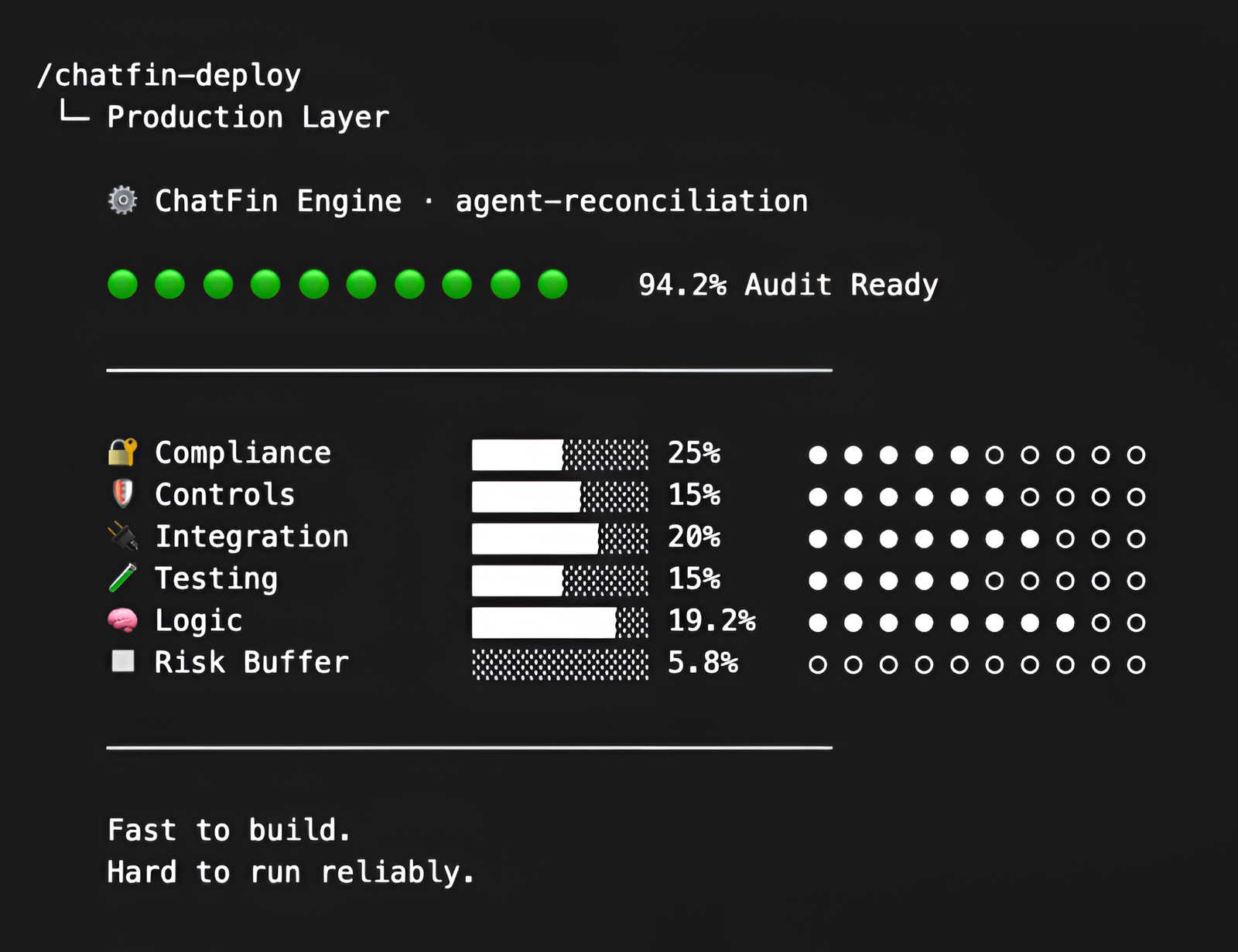
Both are good, and each wins somewhere. Route each task to the better fit.
What a finance chief says about picking models and avoiding lock-in
Teddy Collins, EVP of Finance at SeatGeek, on choosing between models for each task and staying free to switch, and on keeping repeatable rules out of the model. The video is his full Agent CFO Podcast episode.
“Are we using Fable versus Opus versus Sonnet? What thinking mode do we need? We have best practices internally, and a harness that can make that decision.”
“We want to stay up to speed on all these tools and not get locked in to one in particular.”
“Not everything needs an AI solution. If something’s deterministic, if this then that and repeatable, keep it in the deterministic bucket. We don’t need to burn tokens to do that.”
Quotes are trimmed for filler words and checked against the episode transcripts.
Use Both, Route by Task
Opus 4.8 and GPT-5.6 are both strong finance choices, with Opus leaning on reasoning depth and GPT-5.6 on tiered cost and coding-agent strength.
ChatFin lets you use both and route by task, so the head-to-head becomes a configuration decision inside a governed layer rather than a lock-in.
Related Articles
Diagrams and screenshots: ChatFin. Video and podcast quotes: the Agent CFO Podcast on the ChatFin YouTube channel.