
JD EDWARDS STRATEGY
Should You Buy a Prebuilt JD Edwards AI Agent Platform or Build a Custom Solution With Orchestrator and an AI Model?
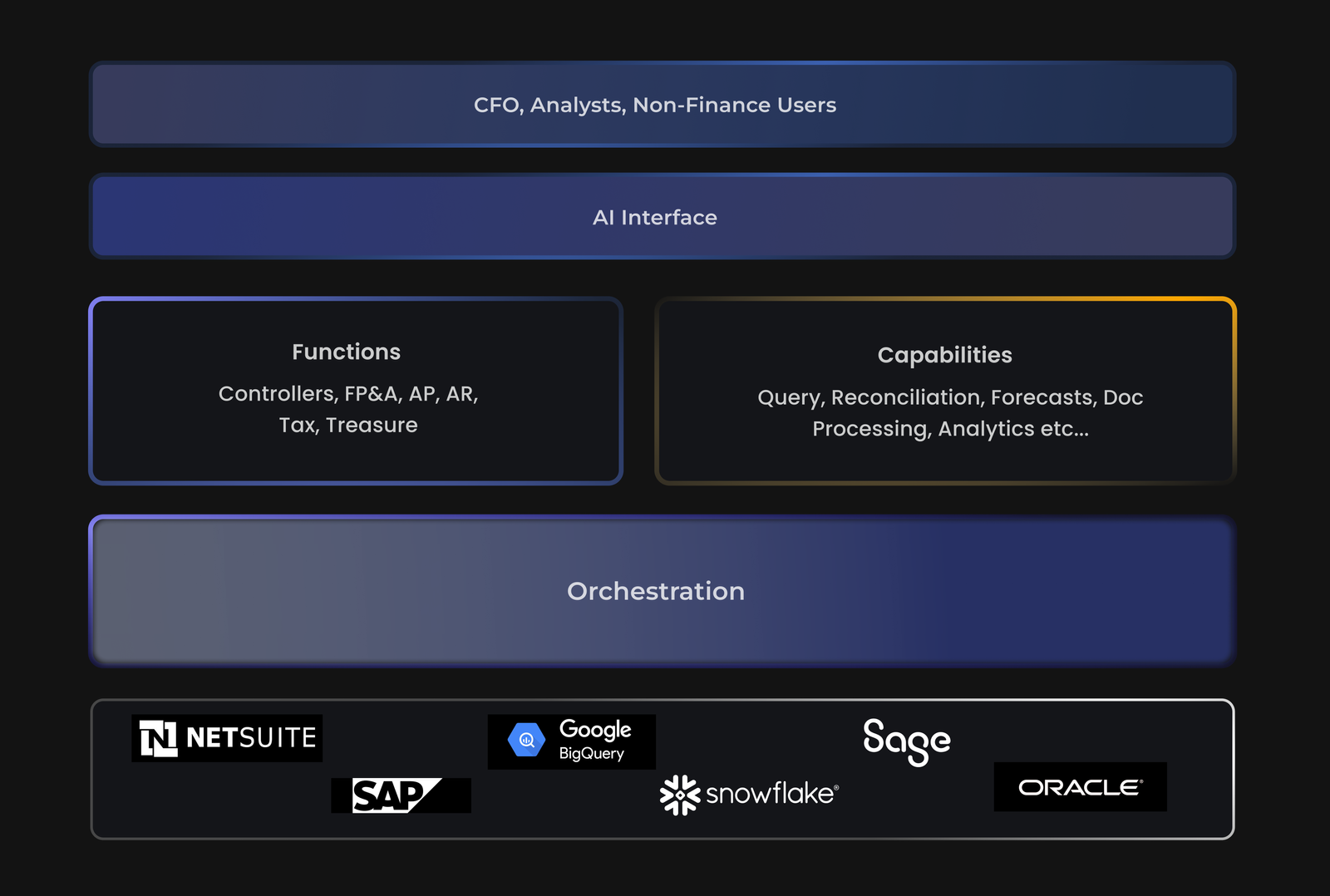
A working prototype against JD Edwards takes a few weeks, and the project is everything that comes after the connection.
- Connecting to JD Edwards is the easy part. Orchestrator and the AIS Server are designed for external callers and a competent team gets a read only assistant working quickly.
- The effort sits in what follows: finance logic, exception handling, approval workflow, audit design and the memory of how your organisation codes and closes.
- A build makes sense when your requirement is unusual, you have durable engineering capacity, and AI systems are a capability you intend to own.
- Buying makes sense when the requirement is standard finance work and you would rather spend the quarter on outcomes than on infrastructure.
- ChatFin ships the layer a build spends a year producing, running on your instance through the same published interfaces you would have used.
This decision usually gets made on the wrong evidence. Somebody builds a demonstration in a fortnight, it works, and the conclusion is that the full system is a quarter of work. The demonstration was the easy ten percent, and it was easy because the hard parts were absent.
What follows is an honest accounting of both routes, including where a build is the right answer.
What a Build Gets Right Quickly
Credit where it is due. JD Edwards is a good platform to build against, and a capable team will make visible progress fast, which is why so many organisations start down this road.
The Seven Things Builds Underestimate
Each of these is invisible in a prototype and unavoidable in production. Together they account for the gap between a working demonstration and something a controller will rely on.
The Honest Case for Building
There are real situations where a build is the correct decision, and pretending otherwise would be dishonest. All three of these conditions should hold, not just one.

The Honest Case for Buying
Equally, the conditions where buying is obviously right are common, and most JD Edwards finance functions meet them.
The core question is whether the thing you want to exist is a differentiator. Voucher match exception handling and bank reconciliation are not competitive advantages. They are costs, and building your own version of a solved problem is an expensive way to arrive at parity.
The Cost Nobody Models
Build discussions usually compare development cost against licence cost, which omits the two largest terms.
The first is the ongoing ownership burden. The second, and usually larger, is the value of the months between starting and having something that works, during which the manual process continues to run and cost what it costs today.

The Middle Path That Often Wins
The choice is not binary and treating it as such produces worse decisions than the situation requires.
A common and sensible pattern is to adopt a product for the standard finance work where a solved answer exists, and build the specific things on the same interfaces. Because both approaches use published orchestrations, they coexist without conflict and nothing has to be decided permanently up front.
How to Decide in a Fortnight
Rather than debating this in the abstract, run a short test that produces evidence. Pick your most painful process, scope what a build would have to cover including approvals and audit, and evaluate a product against the same process using real exception data.
The comparison then has numbers in it. Time to first useful output, human touches removed, and the engineering commitment implied by each route.

Build the Differentiator, Buy the Solved Problem
ChatFin provides the layer a build spends a year producing, running on your JD Edwards instance through the same published interfaces you would have used, with approvals and audit trails already designed.
Connecting to JD Edwards is a fortnight. Everything after the connection is the project.
Frequently Asked Questions
Is building JD Edwards AI agents on Orchestrator realistic?
Technically yes, and a capable team will get a read only assistant working in weeks, because AIS and Orchestrator are designed for external callers. The difficulty is everything after the connection: the data conventions that cause confidently wrong answers, exception handling, approval workflow, audit design, the memory of how your organisation codes, and permanent maintenance through model changes and Tools Releases.
When is building the right choice?
When three conditions hold together, not just one. Your requirement is unusual rather than standard finance work, you have engineering capacity that will still exist in two years because ownership does not end at go live, and AI systems are a capability you have deliberately decided to own. If your requirement is voucher matching and bank reconciliation, you are building your own version of a solved problem.
Do we have to choose one or the other?
No, and treating it as binary produces worse decisions. A common pattern is adopting a product for the standard finance work where the answers are already encoded, and building the specific things on the same published interfaces. Because both call AIS and Orchestrator they coexist without conflict, so nothing has to be decided permanently up front.