
Best LLM for Financial Statement Analysis in 2026

Reading a set of financial statements well rewards a specific mix of traits: enough context to hold the whole filing, careful reasoning over the numbers and the notes, and an explanation you can defend. No single model wins all three, so the answer is a routing decision for each step.
- Statement analysis rewards large context, careful reasoning and a legible explanation more than a top benchmark score.
- Gemini 3.1 Pro's 1 million token context can hold a full filing in one pass, useful for whole-document reads.
- Claude leans into careful reasoning and clear explanation, which suit the judgment-heavy parts of analysis.
- GPT-5.6's cheaper tiers handle high-volume extraction and ratio work at a fraction of frontier cost.
- The numbers must come from the statements, not the model, so a governed layer with sourced figures decides the outcome.
Analyzing a financial statement means reading a long document, pulling the right figures, reasoning about what they mean together, and explaining it so a reviewer can follow. Different models are better at different parts.
So ask which model fits each part of the work, and how you keep the numbers honest.
What statement analysis actually needs
Three traits matter more than a leaderboard position.
Where each model fits
Map the strengths to the work and the picture is a split, not a single winner.
The rule that outranks the model
Whichever model reads the statements, the figures it reports must trace back to the statements themselves, not be generated to fill a gap. A confident wrong number is worse than a slower right one.
That is why the model choice is secondary. The primary decision is a layer that keeps the numbers sourced and the reasoning checkable.
Judge models on the reading, check the maths
Language models read annual reports and notes quickly and well. Recomputing ratios and reconciling segment totals is where they need checking.
A theme on the AgentCFO podcast was that finance expects too much of AI on precise numerical output and too little on the reading, summarising and drafting around it.
Use the model to read and interpret statements, and recompute every ratio it quotes in a spreadsheet or code before it reaches a memo.
How ChatFin handles it
ChatFin is model agnostic, so it can route a whole-filing read to a large-context model, bulk ratio work to a cheaper tier, and the defensible driver analysis to a careful reasoner, all in one governed workflow.
The numbers stay sourced from your ledger and filings, write-back stays human approved, and every step keeps its trail, so each result can be checked against its source.
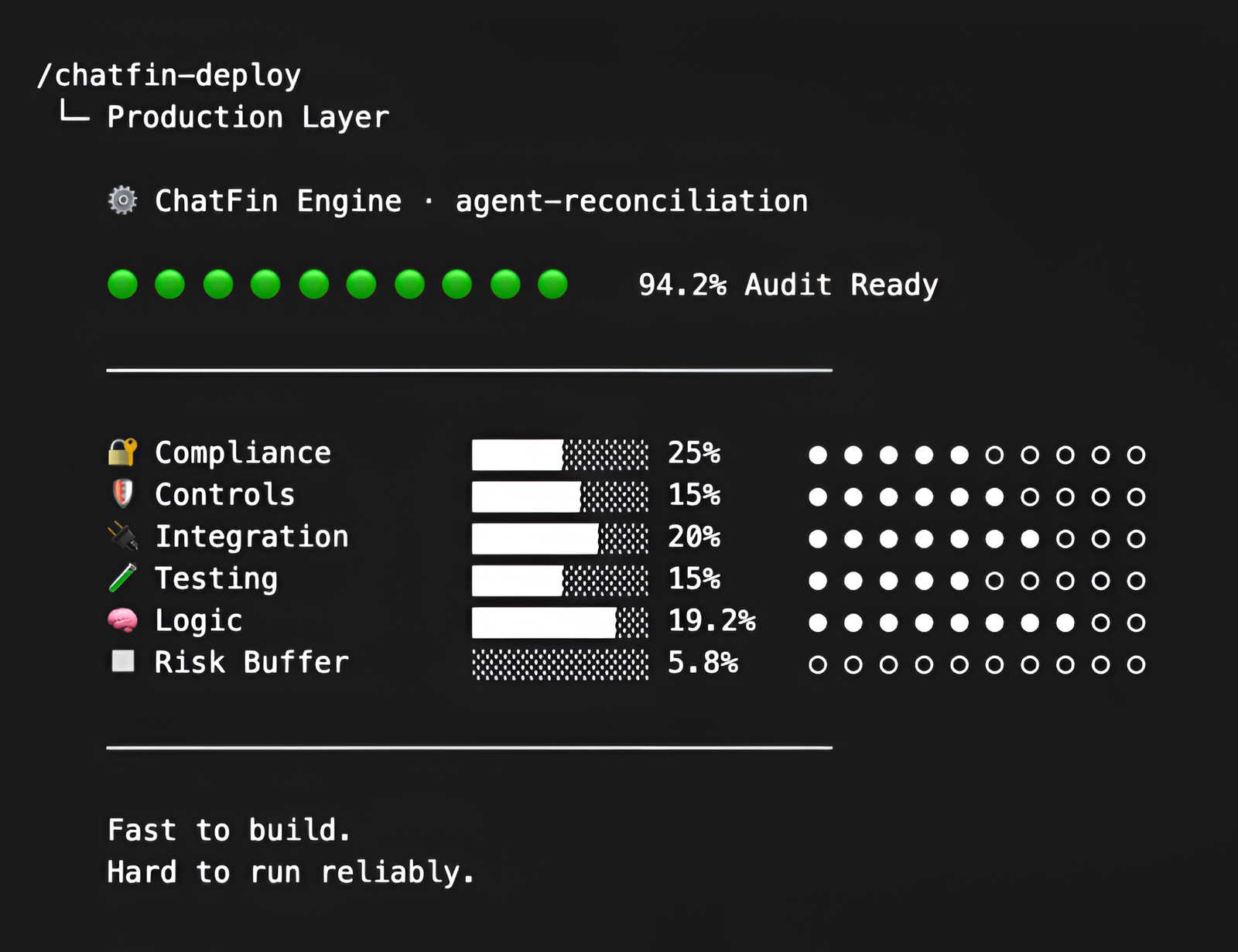
A confident wrong number is worse than a slower right one. The model choice is secondary to keeping the figures sourced.
No Single Winner, Sourced Throughout
The best LLM for statement analysis depends on the step: big context for reading, careful reasoning for judgment, cheap tiers for volume.
ChatFin routes across all of them inside a governed layer with sourced numbers, so you get the strengths without betting the analysis on one model or trusting an unsourced figure.
How do you analyze financial statements with an LLM?
Financial statement analysis with a language model breaks into four jobs: read the filing, pull the figures, compute the ratios and explain what changed. Models do the first and the last well. The middle two are where errors get in, because a table pasted into a prompt can lose a column, a sign or a unit. Ask the model to name the statement and note behind every figure it uses, so each one can be checked against the source.
A workable routine runs in passes. First ask for a summary of the notes and any change in accounting policy. Second, have it list the figures it plans to use with their sources. Third, recompute the ratios yourself or in code. Fourth, ask it to explain the movements using only the confirmed numbers. If two models disagree on a figure, the filing settles it.
Ashok Manthena, CEO of ChatFin and host of the AgentCFO podcast, on reading numbers with AI.
“Even if you're scanning just an invoice and you're getting all the values by scanning an invoice, how do you know if that number is correct? Sometimes four can be read as six. ... AI can alert him, hey, I'm not sure about this number. Can you check?”
Statement Analysis Jobs Worth Giving to a Model
Each of these starts with the model reading and ends with an analyst checking the figures that matter.
- Policy changes in the notes. The model reads revenue, lease and debt notes across two years and lists where the wording changed. The analyst checks the real changes instead of comparing two PDFs side by side.
- A peer table from several filings. The same line items are pulled from each company into one table. The analyst confirms the definitions line up, since one company's adjusted measure may not match another's.
- Why cash differs from profit. The model walks from net income to operating cash flow using the working capital lines and writes the bridge in plain language. The reviewer ties each step back to the cash flow statement.
- Debt terms and headroom. A lender-side reader asks the model to list the covenants described in the debt note and the ratios they use. The analyst recomputes the ratios from the statements before saying how much room is left.
- Management's story against the filing. The model compares what the earnings narrative claims with the figures in the filed statements and flags the sentences that the numbers do not support.
Quick Answers on LLMs and Financial Statements
Which LLM is best for financial statement analysis?
It depends on the step. A large-context model such as Gemini 3.1 Pro suits reading a whole filing, Claude suits careful reasoning and clear explanation, and GPT-5.6's cheaper tiers suit bulk extraction. Whichever you use, recompute the ratios before they reach a memo.
Can ChatGPT analyze financial statements?
Yes, for reading statements you give it and drafting commentary on what changed. Check every figure it quotes against the source and recompute the ratios yourself, because a misread table or a flipped sign can sit inside a confident explanation.
Can Claude read a 10-K or an annual report?
Claude can read a filing you supply and explain the notes and the drivers behind the numbers. For long documents, ask it to name the section behind each figure so you can verify it, and recompute any ratio it reports.
Is Gemini good for long financial reports?
Its 1 million token context lets it take a full filing in one pass, which suits whole-document reads. Still verify the judgment-heavy notes yourself, since seeing the whole document does not make every conclusion correct.
How accurate is AI at financial statement analysis?
Good at reading and explaining, weaker at arithmetic and at pulling figures out of tables. Treat it as a fast first reader and keep the numbers traceable to the statements, so an error shows up the moment you check.
What should I check when AI analyzes a balance sheet?
Check that the totals tie, that each figure matches the statement line it came from, and that units and periods are consistent across columns. Then recompute any ratio the model quotes before it goes into a report.
Why a language model is not a maths engine
Paul Barnhurst, The FP&A Guy, on the Agent CFO Podcast about why the same inputs can give a language model different answers, with ChatFin's video conversation with him opening at that point.
“It’s a large language model. It’s not a large math model.”
“If I give the same inputs to an Excel formula, I get the same output a thousand times. If I give the same inputs to gen AI and let it find the answer, it’s not going to be the same answer a thousand times.”
Quotes are trimmed for filler words and checked against the episode transcripts.
Related Articles
Diagrams and screenshots: ChatFin. Video and podcast quotes: the Agent CFO Podcast on the ChatFin YouTube channel.