
Best AI Agents for Workday Financials
Workday ships Illuminate finance agents and continuous financial testing. Here is what they cover, where they stop, and how a cross-source agent layer fits on top.

- Workday ships Illuminate finance agents plus a Data Cloud, Prism, Live Data Query, and continuous financial testing, aiming at lights-out finance. Enable these first.
- The native agents and testing run within Workday's model and data.
- A cross-source agent layer carries workflows that span Workday and the systems around it, on top through its APIs.
- Workday stays the system of record. Every agent action keeps its trail, and a named controller signs.
Workday has pushed hard toward what it calls lights-out finance. Its Illuminate finance agents automate transactional and analytical work, and features like the Data Cloud, Prism, Live Data Query, and continuous financial testing keep controls running against live data rather than at period end.
If you run Workday, enabling Illuminate is the honest first move. It is a capable native layer. What it works from is Workday's own model, and the workflow that spans Workday and the systems around it still needs a view that crosses the boundary, which is where a cross-source agent layer fits on top.
Turn on the Workday Illuminate agents first
Workday Illuminate brings finance agents that automate transactional and analytical tasks across the suite, backed by the Workday Data Cloud, Prism analytics, and Live Data Query for querying live data in place.
Continuous financial testing runs controls against transactions as they happen rather than sampling at period end, which is a meaningful shift toward always-on assurance for teams that adopt it.
For a Workday shop, this native capability is the first win. It handles real work within Workday's model and keeps controls continuous.
Where the native AI stops
Illuminate and continuous testing work from Workday's own data and model. They automate and assure within that boundary.
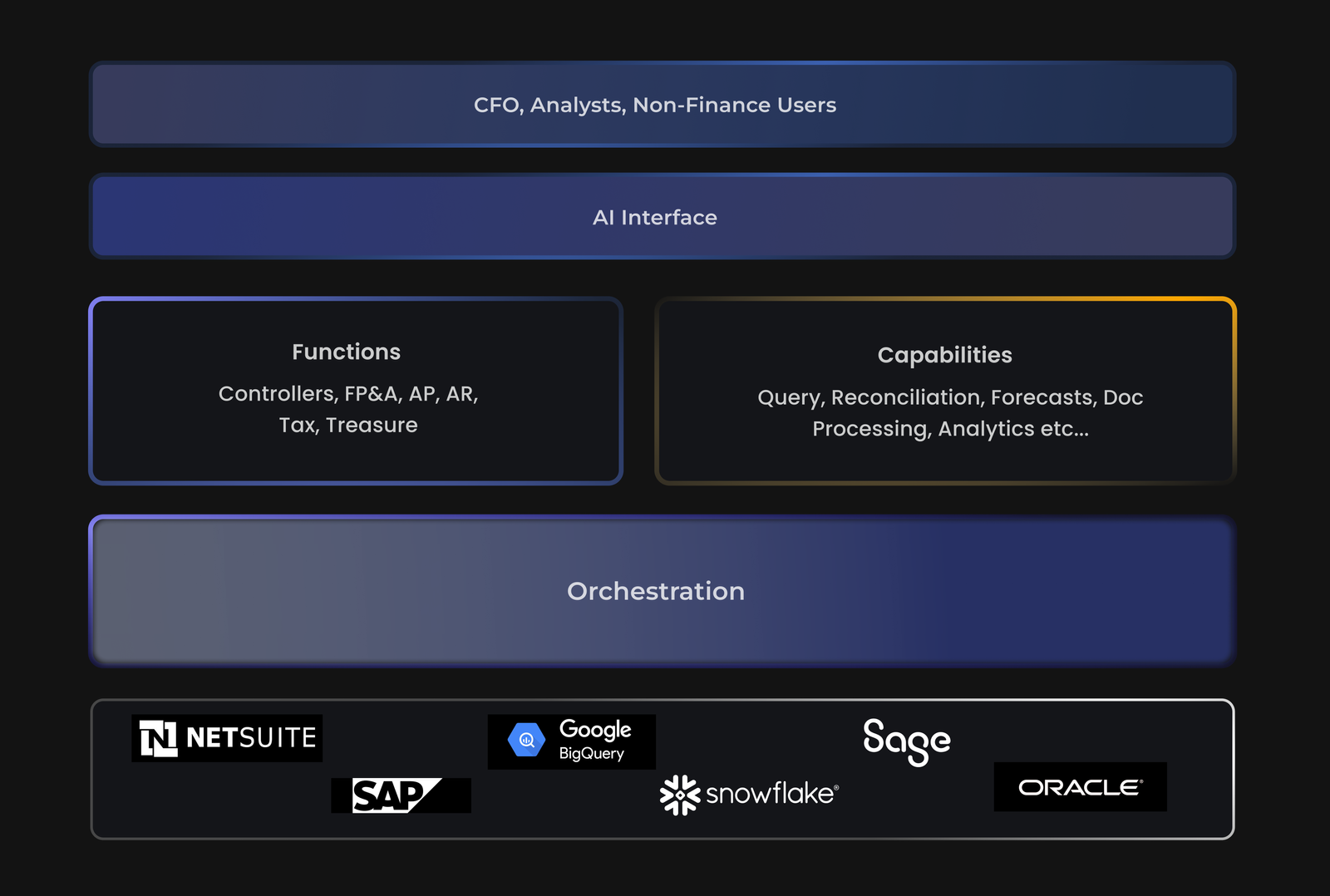
A close often reaches past it: a bank feed, a subledger in another system, a contract repository, a group consolidating Workday with other ERPs. The workflow that ties those together crosses systems, and a single-suite agent set does not span them.
That is the gap: Workday carries its own model well and continuously, and a cross-source agent layer carries the workflow across the systems around it, using Illuminate as an input.
Reconciliation the agent layer carries end to end
How it runs
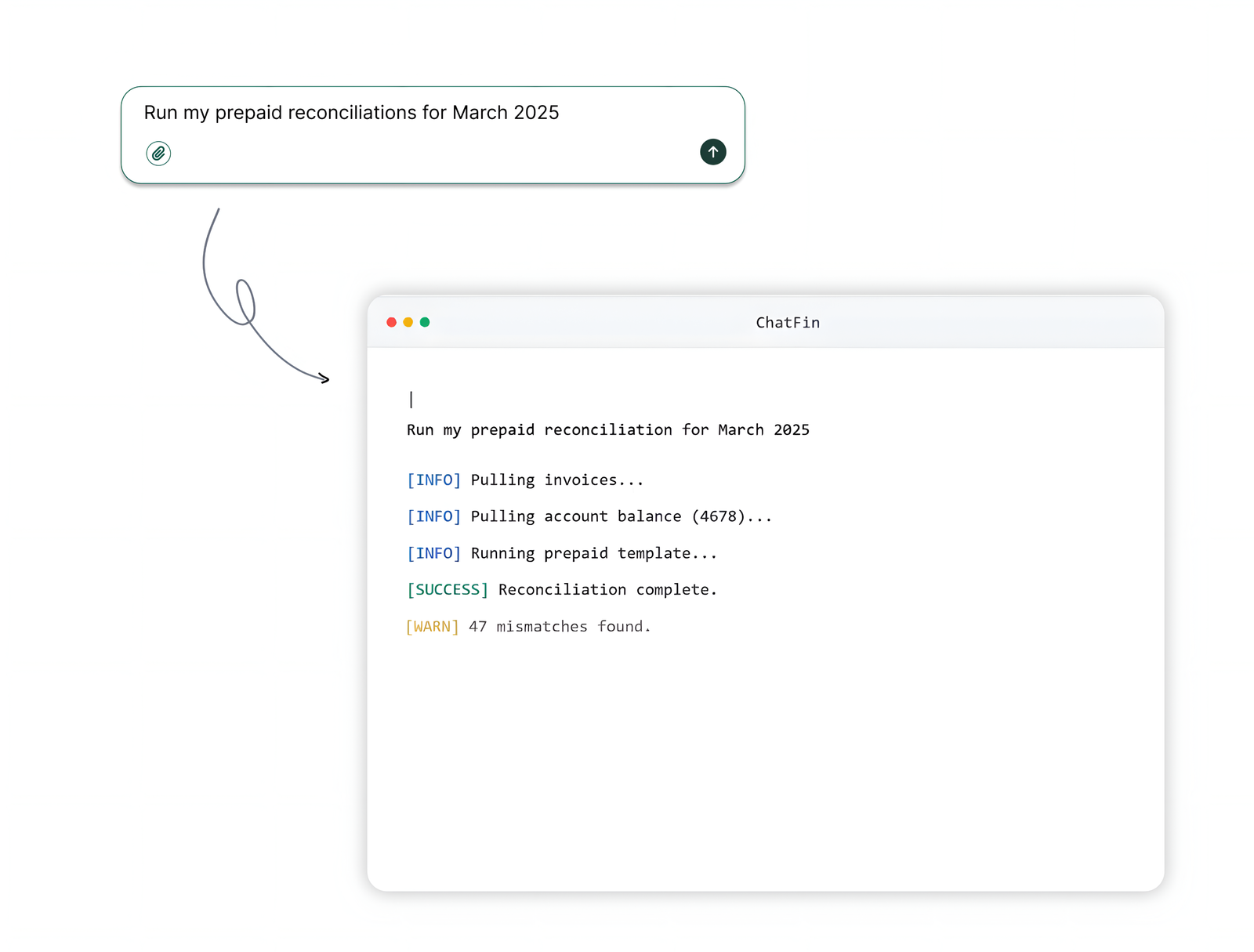
ChatFin reads transactions from Workday through its APIs, alongside bank feeds and subledgers in other systems, into one matching workspace. It normalizes and matches on rules and history, then flags each exception with a plain explanation.
Where Illuminate works inside Workday, the agent layer takes the cross-source remainder, resolving breaks that span Workday and the systems around it, and rolling status into a live close view.
Workday carries its own model well and continuously. Carrying the workflow across the systems around it is the second job.
Ashok ManthenaA close that coordinates itself
How it runs
GL activity, subledger data, and operational metrics across systems are read continuously. The agent tracks dependencies, flags missing entries, and predicts where the close will stall, complementing Workday's continuous testing rather than duplicating it.
Accountants get guided tasks in order and leadership gets a live progress view, with the variance narrative naming drivers across systems.
AP and accruals, checked before they post
How it runs
Invoices are ingested and digitized, then validated against purchase orders and contracts before payment. The agent layer adds the three-way match and routes only the exceptions, with clean invoices flowing to payment with a full history.
For accruals, historical spend and contracts feed a suggested accrual with a rationale and a confidence range. Finance reviews and approves, and the accrued-to-actual variance improves the next estimate.
Ask a question, get a sourced answer
How it runs
Workday's Live Data Query answers within the suite. The agent layer extends this to questions that cross the ERP boundary, joining Workday data with bank, subledger, and contract sources, and returning an answer with every figure sourced.
The number and the reason arrive together, linked back to the transaction behind each figure.
Governance, write-back, and the person who signs
Every agent action is bounded the same way. ChatFin reads through the interfaces the ERP already supports, applies your policy, and prepares the write-back as a payload a person approves before it posts. Nothing moves money or touches the ledger on its own authority.
The trail is the point. Each step keeps the prompt, the response, and the prepared payload, so an auditor can see not just what changed but why the agent proposed it. The ERP stays the system of record, and a named controller still signs.
Illuminate first, cross-source layer second, Workday as the record throughout.
Enable Workday Illuminate and continuous financial testing, because they are real and always-on. Then add an agent layer that carries the cross-source workflow Workday alone does not span, reading and writing through the APIs with the trail intact.
Workday stays the system of record. The agents draft the work and a named controller signs, which is what keeps it defensible during an audit.
See agents carry a Workday close across systems.
Turn on Illuminate, then bring one close. We will show cross-source reconciliation, the variance narrative, and governed write-back through the Workday APIs, with Workday as the system of record.