
Best AI Agents for SAP S4HANA Finance
SAP ships Joule and Business AI across S/4HANA. Here is what they cover, where they stop, and how a cross-module agent layer fits with a clean core.
- SAP ships Joule, its generative copilot, and Business AI across S/4HANA. Enable these first.
- Joule assists inside SAP. Carrying a cross-module workflow as one motion is a separate job, and integration should respect the clean-core principle.
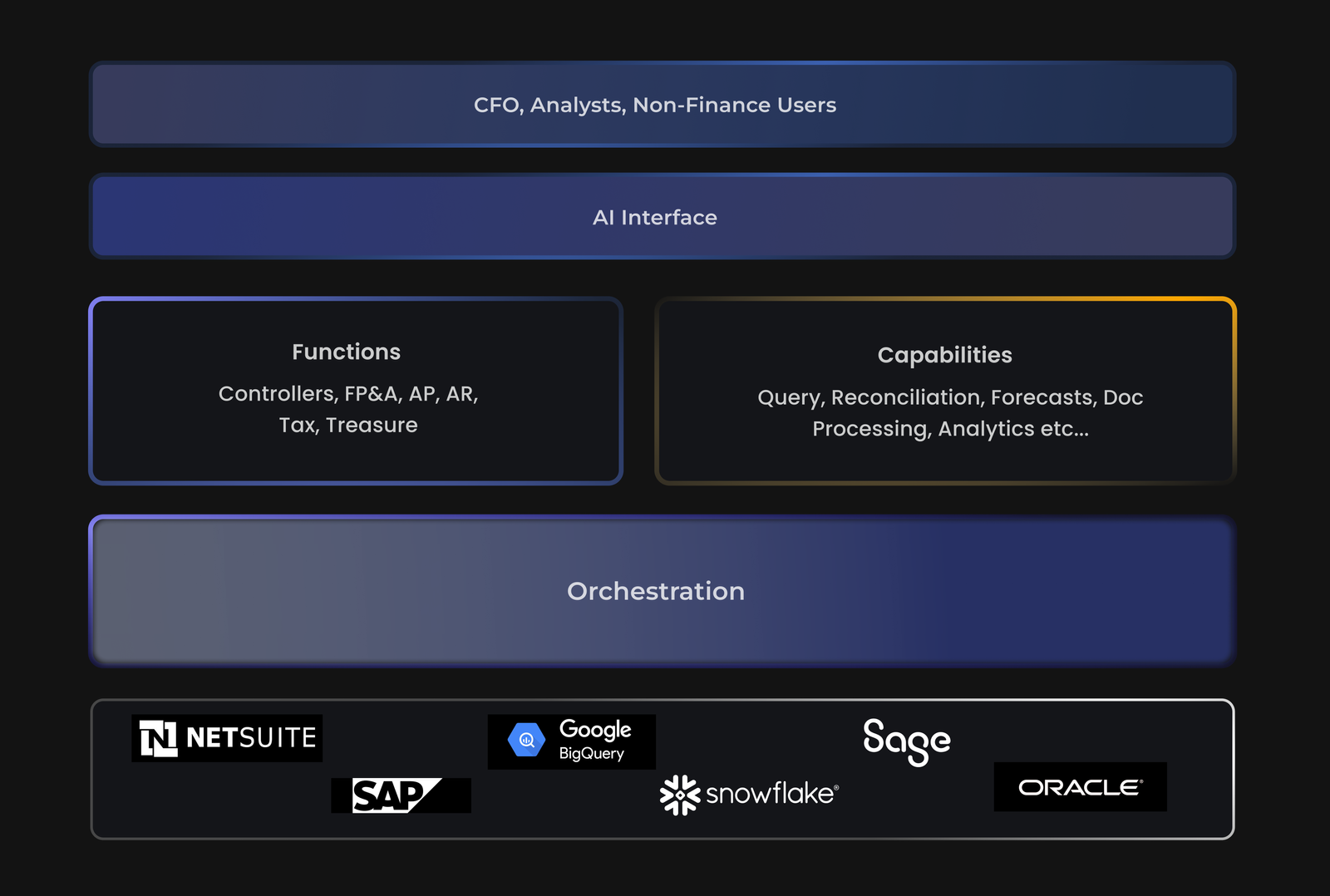
- A cross module agent layer sits on top of S/4HANA through published APIs, plus BAPIs on Private Edition or on premise, keeping the core clean and writing back only approved payloads.
- SAP stays the system of record. Every agent action keeps its trail, and a named controller signs.
SAP has put generative AI across S/4HANA through Joule, its copilot, and the wider Business AI portfolio. Joule answers questions, drafts, and helps navigate the suite, and it is the natural first thing to enable for an S/4HANA finance team.
In the SAP world the clean core comes first: extend and integrate through supported interfaces instead of modifying the core. Joule assists inside SAP, and a cross-module agent layer that respects the clean core carries the workflow across modules on top of it.
Turn on SAP Joule first
Joule is SAP's generative AI copilot, embedded across S/4HANA and the broader SAP portfolio. It answers plain-language questions, helps navigate transactions, and drafts and summarizes within the SAP environment, part of the wider Business AI set of capabilities.
For an S/4HANA finance team, enabling Joule is the sensible first step. It is native, it respects SAP's security model, and it removes friction from everyday navigation and lookup.
If you are on S/4HANA and have not enabled Joule, that is the first win before evaluating any external layer.
Where the native AI stops
Joule assists inside SAP and works from SAP's data. It helps a user move faster within the suite.
A close reaches across modules and often across systems: the bank feed, subledgers, a contract repository, other entities. The workflow that ties those together as one coordinated motion is not what a copilot is for, and in SAP the integration has to respect the clean-core principle rather than bolting logic into the core.
SAP is moving past the copilot too. Its Sapphire 2026 guide (May 12, 2026) lists Joule Assistants for the financial close, receivables, billing and tax, planned for general availability in Q2 2026, and its Accounting Accruals Agent was in restricted availability in September 2026. Check what is generally available on your release before you buy around it.
That is the gap the agent layer fills, through supported interfaces.
Reconciliation the agent layer carries end to end
How it runs
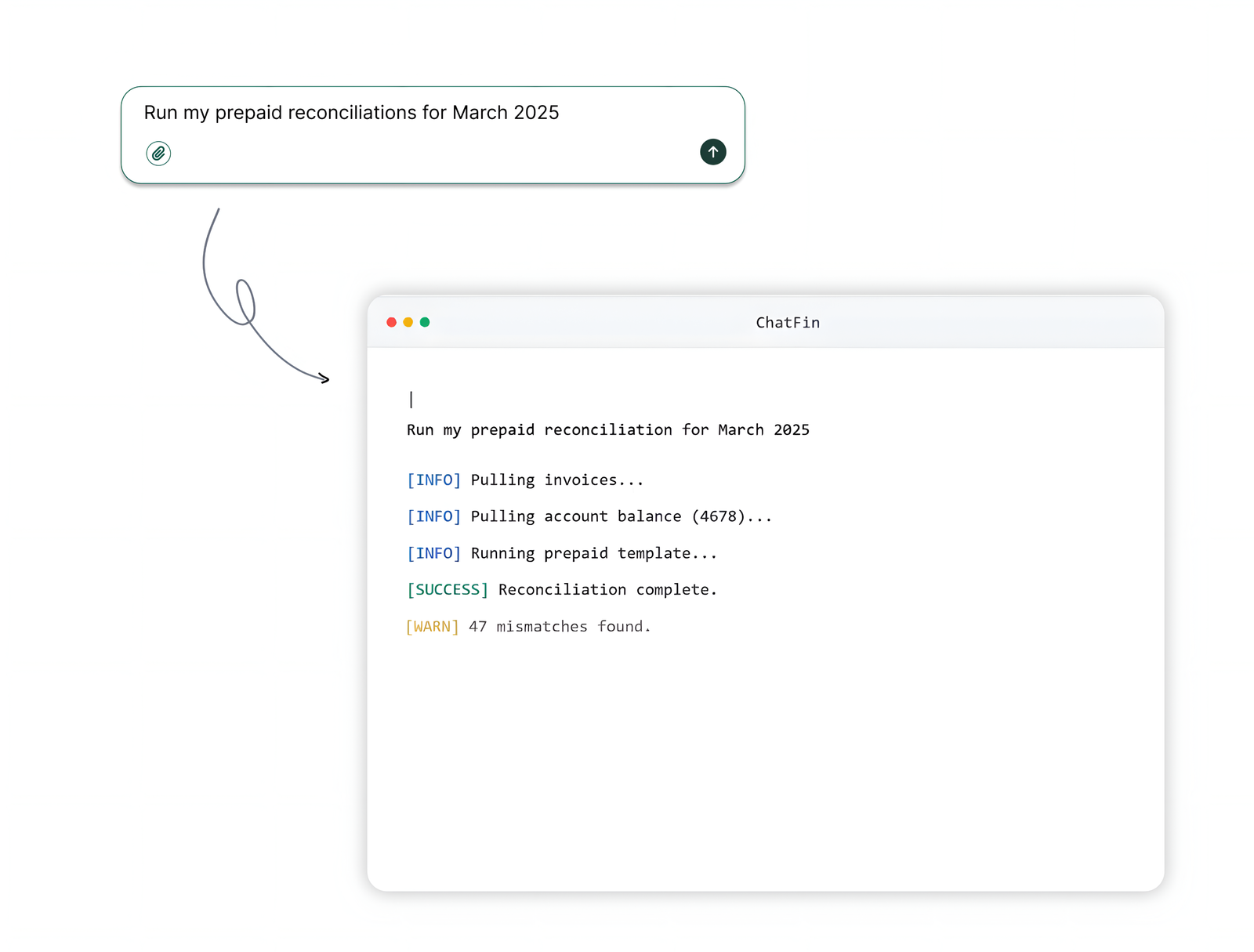
ChatFin reads transactions from S/4HANA through released CDS views and published APIs, plus BAPIs where you run Private Edition or on premise, alongside bank feeds and subledgers, into one matching workspace. It normalizes and matches on rules and history, then flags each exception with a plain explanation.
The agent layer takes the cross-module and cross-system remainder, resolving breaks that span the modules and the sources around SAP, and rolling status into a live close view, all without touching the core.
Joule assists inside SAP. Carrying the workflow across modules while keeping the core clean is the second job.
Ashok ManthenaA close that tracks its own status
How it runs
GL activity, subledger data, and operational metrics are read continuously through supported interfaces. The agent tracks dependencies, flags missing entries, and predicts where the close will stall.
Accountants get guided tasks in order and leadership gets a live progress view, with the variance narrative naming drivers across modules and systems.
AP and accruals, checked before they post
How it runs
Invoices are ingested and digitized, then validated against purchase orders and contracts before payment. The agent layer adds the three-way match and routes only the exceptions, with clean invoices flowing to payment with a full history.
For accruals, historical spend and contracts feed a suggested accrual with a rationale and a confidence range. Finance reviews and approves, and the accrued-to-actual variance improves the next estimate.
Ask a question, get a sourced answer
How it runs
Joule answers within SAP. The agent layer extends this to questions that cross the ERP boundary, joining S/4HANA data pulled through OData with bank, subledger, and contract sources, and returning an answer with every figure sourced.
The number and the reason arrive together, linked back to the transaction behind each figure.
Governance, write-back, and the person who signs
Every agent action is bounded the same way. ChatFin reads through the interfaces the ERP already supports, applies your policy, and prepares the write back as a payload a person approves before it posts. Nothing moves money or touches the ledger on its own authority. On S/4HANA that means published APIs, and since April 27, 2026 SAP's API Policy limits AI agents that choose their own API calls to SAP endorsed routes. Our guide to connecting Claude to SAP S/4HANA covers both.
Each step keeps the prompt, the response, and the prepared payload, so an auditor can see what changed and why the agent proposed it. The ERP stays the system of record, and a named controller still signs.
Joule first, cross-module layer second, SAP as the record with a clean core.
Enable Joule, because it is native and it respects your security model. Then add an agent layer that carries the cross-module workflow through OData and BAPIs, keeping the core clean and the trail intact.
SAP stays the system of record. The agents draft the work and a named controller signs, which is what keeps it defensible during an audit.
SAP's limits on AI agents, and working inside the ERP
The video covers what SAP's rules for AI agents on S/4HANA mean for finance teams, and the two quotes are from a podcast conversation on working within the ERP.
“Speak the language of the ERP system. They designed it to work a certain way. Learn that way.”
“You don’t need a separate close management software, a special reporting tool, a working capital tool. You need a good system of action with an AI layer.”
Quotes are trimmed for filler words and checked against the episode transcripts.
See agents carry an S/4HANA close with a clean core.
Turn on Joule, then bring one close. We will show cross-module reconciliation, the variance narrative, and governed write-back through OData and BAPIs, with SAP as the system of record and the core untouched.
Diagrams and screenshots: ChatFin. Video and podcast quotes: the Agent CFO Podcast on the ChatFin YouTube channel.